
Dental implants are one of the most reliable ways to replace a missing tooth. The question patients ask most often is a practical one: how long will they actually hold up?
The honest answer is that it depends on which part of the implant you are asking about. It also depends on how well you care for it over time.
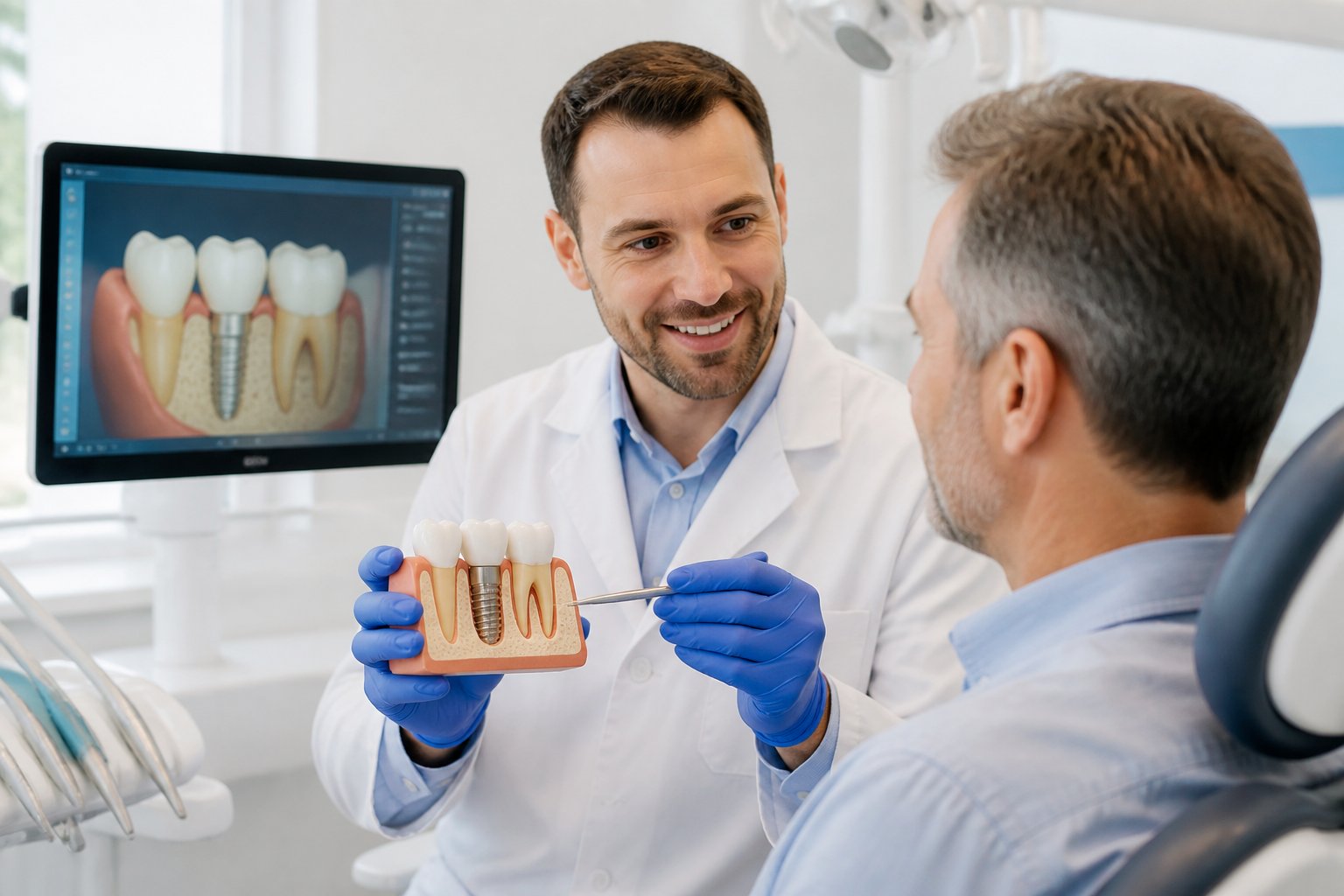
The implant post itself, when properly placed and maintained, can last 20 to 30 years or even a lifetime, while the crown sitting on top typically needs replacement every 10 to 15 years. Clinical studies tracking thousands of implants show survival rates around 96.8% at 10 years and roughly 94% at 15 years. This puts implants well ahead of traditional bridges or dentures in long-term durability.
What separates a thriving implant from a failing one comes down to a handful of controllable factors: bone health, oral hygiene, lifestyle habits, and consistent professional follow-up. Understanding those factors gives you real leverage over the outcome.
Key Takeaways
- The implant post can last decades or a lifetime, but the crown typically needs replacement after 10 to 15 years.
- Bone quality, gum health, oral hygiene, and habits like smoking or teeth grinding have the greatest influence on how long an implant remains successful.
- Routine dental visits and early attention to warning signs are the most reliable ways to protect your implant investment long term.
If you are in the Sherman Oaks area and want a clear picture of whether implants are right for you, our team at Riverside Dental can walk you through your options. You can reach us at (818) 784-5889 or visit riversidedentalshermanoaks.com/contact to request an appointment.
Average Lifespan Of Implant Components
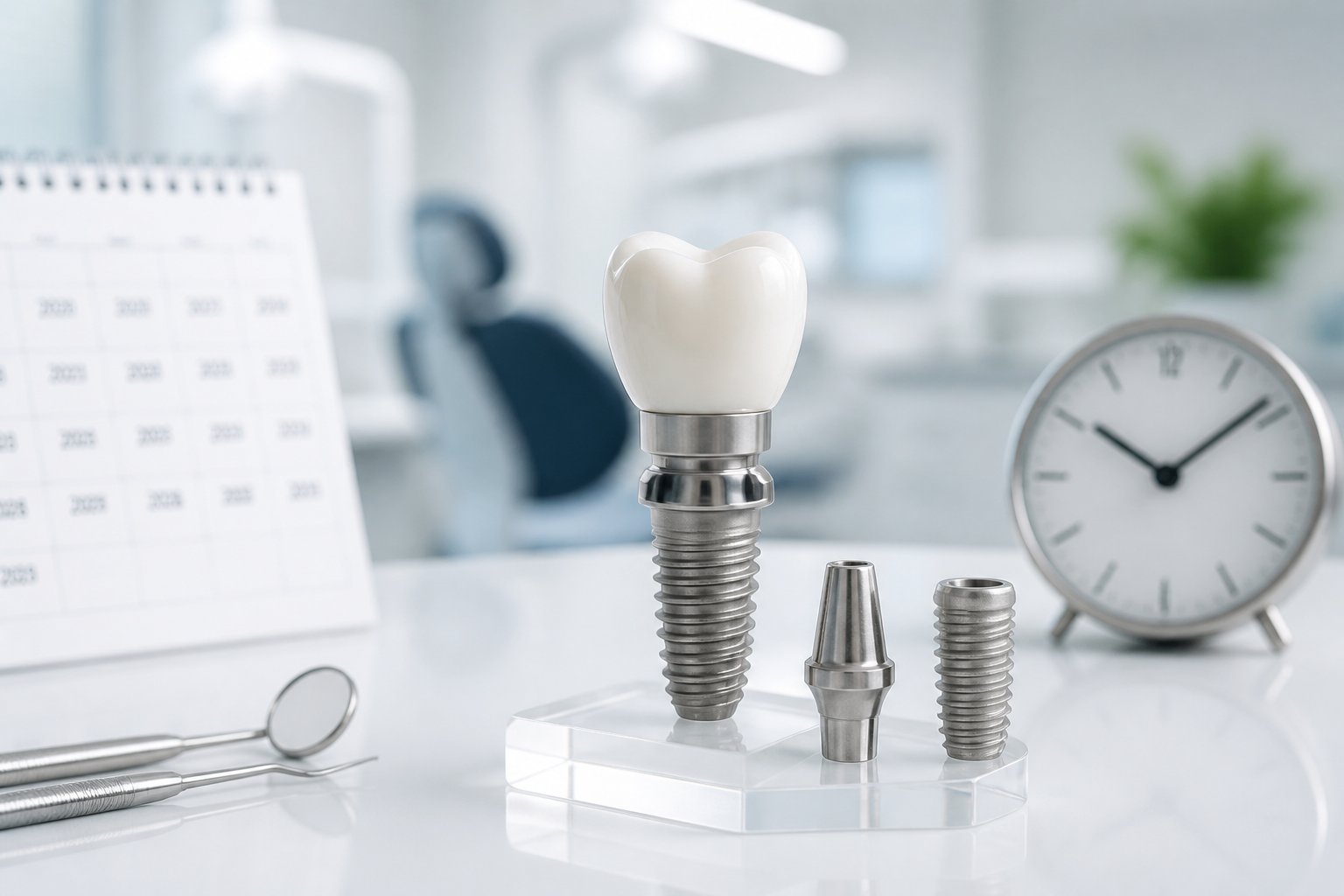
A dental implant is not a single object. It consists of three separate components, each with its own expected lifespan: the titanium post embedded in the jaw, the abutment connecting the post to the crown, and the crown itself.
Knowing the timeline for each one helps you plan realistically and avoid surprises.
How Long The Implant Post Can Last
The implant post is a small titanium screw surgically placed into the jawbone. Over a period of three to six months, the bone fuses to the titanium surface through a process called osseointegration.
This creates an anchor that is genuinely stable. When this integration succeeds and the surrounding bone remains healthy, the post can last 20 to 30 years or more.
Many patients keep their original post for a lifetime. The post itself does not decay or corrode the way natural tooth roots can, which gives it a durability advantage over other tooth replacement methods.
When The Crown May Need Replacement
The crown is the visible tooth-shaped cap that takes the full force of chewing every day. That constant mechanical stress means it wears down faster than the post beneath it.
Most crowns last 10 to 15 years before they need replacement. Porcelain crowns can chip or crack under heavy bite pressure, while zirconia crowns tend to wear more slowly.
Grinding your teeth at night, chewing hard foods habitually, or clenching can shorten that window considerably. Replacing a worn crown is a straightforward procedure that does not disturb the post below.
Why Abutments Usually Last For Many Years
The abutment is the connector piece between the post and the crown. It is typically made from titanium, zirconia, or a gold alloy, and it experiences less direct wear than the crown above it.
In most cases, the abutment lasts as long as the implant post itself. It may occasionally need to be tightened or repositioned, but full replacement is far less common than crown replacement.
Its longevity makes it the most quietly reliable component of the three.
What Affects Long-Term Success
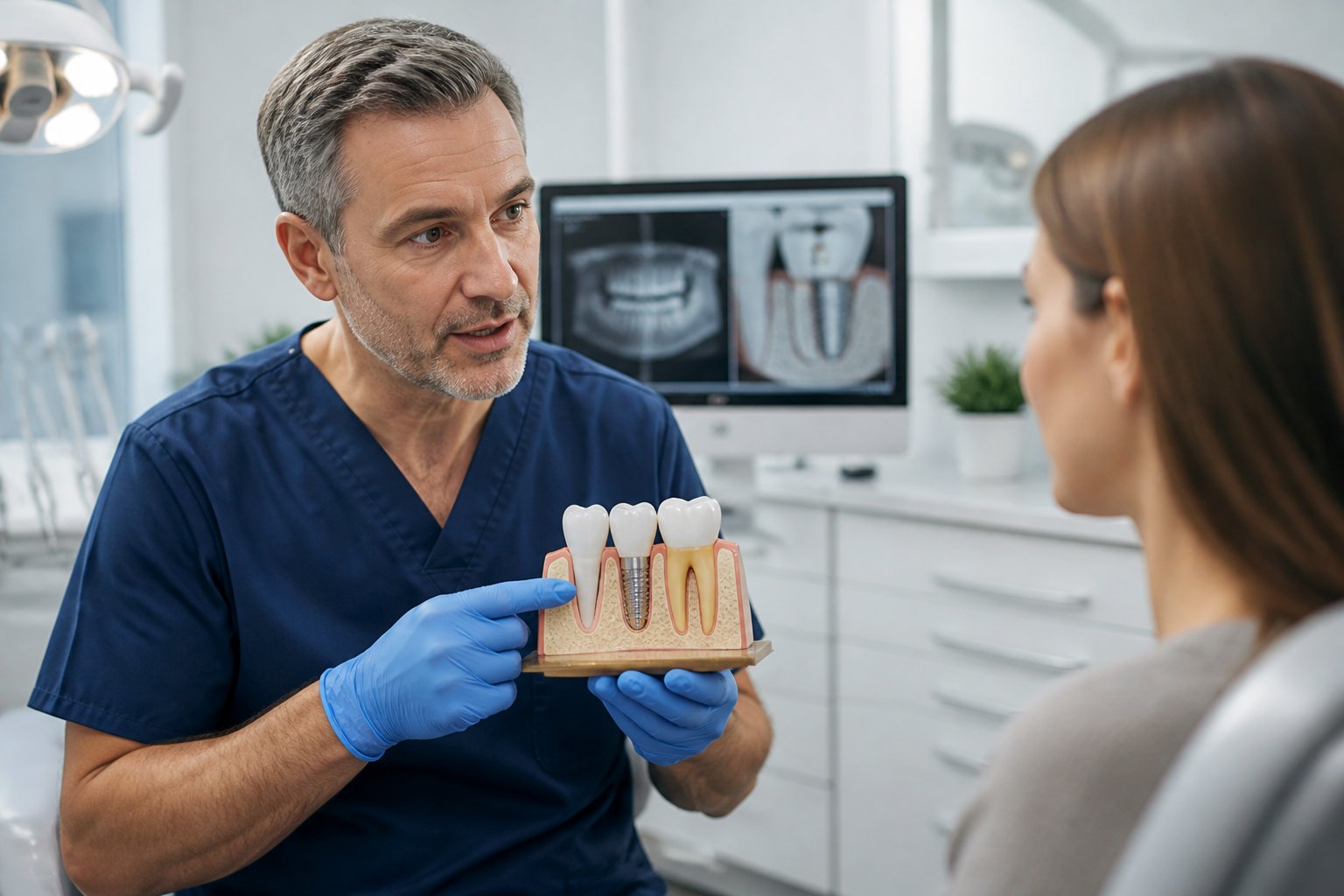
Implant longevity is not passive. The biology of your jaw, the habits you keep daily, and the health conditions you manage all shape how your implant performs over years and decades.
Several specific factors carry the most weight.
Bone Health And Gum Condition
The implant post relies on living bone for support. If bone density is low or continues to decrease after placement, the post loses its anchor and stability suffers.
Gum disease, which attacks the soft tissue and bone around a tooth, is one of the leading causes of implant failure. Peri-implantitis, an infection of the tissue around an implant, affects a meaningful percentage of patients over time and can lead to bone loss if left untreated.
Keeping gum tissue healthy through cleaning and professional care protects the foundation the implant depends on.
Oral Hygiene Habits
Bacteria do not distinguish between a natural tooth and an implant. Plaque buildup around the implant post and crown creates the same inflammatory response that damages natural teeth.
The consequences for an implant can be just as serious. Brushing twice daily, flossing carefully around the implant, and using a water flosser if recommended by your provider all reduce the bacterial load that threatens surrounding tissue.
Patients who maintain strong home hygiene consistently show better long-term implant outcomes.
Smoking And Tobacco Use
Smoking is one of the most well-documented risk factors for implant failure. Nicotine restricts blood flow to the gum tissue and bone, slowing healing after placement and reducing the quality of osseointegration.
Studies show significantly lower success rates among smokers compared to non-smokers. If you smoke and are considering implants, your provider will likely discuss quitting as part of the treatment plan.
Bite Pressure And Teeth Grinding
Bruxism, the habit of grinding or clenching teeth, places repeated abnormal force on the crown and post. Research shows that implant survival rates drop to around 70 to 72% at five years for patients with untreated bruxism, compared to roughly 96% for those without it.
A custom night guard distributes bite pressure more evenly and dramatically reduces the mechanical stress that shortens implant life.
Medical Conditions And Medications
Certain systemic conditions, including uncontrolled diabetes, osteoporosis, and autoimmune disorders, impair the healing and bone maintenance processes that implants depend on. Some medications, particularly bisphosphonates used to treat bone loss, can interfere with osseointegration or complicate removal if needed.
Your provider needs a complete picture of your health history before placement to assess these risks accurately and plan accordingly.
How Providers Evaluate Durability Before Treatment
A careful pre-treatment evaluation is what separates a well-planned implant from one that struggles from the start. Providers look at bone structure, overall oral health, and positioning before a single instrument touches your jaw.
Getting these three areas right gives an implant its best possible foundation.
Examining Bone Support
The jawbone must have enough height, width, and density to anchor the titanium post and maintain that anchor over years of use. Providers use digital X-rays and, in many cases, cone-beam computed tomography scans to measure bone volume precisely.
If bone density is insufficient, a bone graft may be recommended before or during implant placement. This step is not optional for long-term success.
Placing a post in inadequate bone creates a predictable path toward failure.
Reviewing Overall Oral Health
Active gum disease, untreated cavities in adjacent teeth, or existing infections create an environment where implants are far more likely to fail. Providers address these problems first, before proceeding with implant surgery.
A thorough evaluation of your bite pattern also matters. If you show signs of clenching or uneven wear on existing teeth, that information shapes the treatment plan and may mean a night guard is part of your care from the beginning.
Planning Implant Placement With Modern Imaging
Precise positioning affects how the implant integrates with bone, how the crown aligns with opposing teeth, and how bite forces are distributed. Modern imaging allows providers to map the jawbone in three dimensions and plan the exact angle, depth, and location of each post.
This kind of planning reduces surgical guesswork and lowers the risk of complications such as nerve proximity issues or insufficient bone contact. It is one of the clearest ways that modern technology translates into better long-term outcomes for patients.
Warning Signs An Implant Needs Attention
Most implant problems respond well to treatment when caught early. The challenge is that some warning signs are easy to dismiss or attribute to something minor.
Paying attention to specific changes in your mouth gives you the best chance of protecting both the implant and the surrounding bone before damage becomes significant.
Persistent Pain Or Swelling
Some tenderness in the days after surgery is expected. Pain or swelling that continues beyond the initial healing period, or that returns after months or years of comfort, is not normal and should not be ignored.
Persistent discomfort often signals an infection such as peri-implantitis or a problem with how the post has integrated with the bone. The sooner a provider examines it, the more options are available for treatment.
Loose Crown Or Implant Movement
The crown should feel completely solid during normal chewing and speaking. Any sense of wobble, clicking, or movement in the crown or the post itself is a sign that something has shifted.
A loose crown sometimes means only the abutment screw needs tightening, which is a simple fix. Movement in the post itself is more serious and indicates that osseointegration has been disrupted.
Either issue requires prompt evaluation.
Gum Recession Around The Implant
The gum tissue surrounding an implant should sit flush against the crown base. If you notice that the metal post is becoming visible, or that the gum line around the implant appears to be pulling back, that is a sign of tissue loss.
Recession can expose the post to bacteria and signals potential bone loss beneath the surface. Catching it early makes a meaningful difference in what treatment is possible.
Difficulty Chewing Normally
An implant that is functioning correctly should allow you to chew without discomfort or avoidance. If you find yourself favoring the other side of your mouth or noticing pain when biting into food, that functional change deserves attention.
Bite alignment problems, a cracked crown, or changes in the bone beneath the post can all produce this symptom. A bite adjustment or imaging can clarify the cause quickly.
Ways To Help Implants Last Longer
The actions that protect implants over the long term are straightforward and largely within your control. Combining strong home habits with regular professional care creates the conditions that allow an implant to last decades rather than years.
Keeping Up With Home Care
Treat the implant the same way you would a natural tooth. Brush twice daily with a soft-bristled brush, paying attention to the gum line where bacteria accumulate.
Floss around the implant carefully using regular floss, implant-specific floss, or an interdental brush. A water flosser can be particularly effective for clearing bacteria from tight spaces around the abutment.
The goal is reducing the bacterial load that leads to peri-implantitis.
Scheduling Routine Dental Visits
Professional cleanings and check-ups give your provider the chance to spot early changes in bone level, gum tissue, or the crown itself. X-rays taken at regular intervals can detect bone loss around the post before it becomes visible or symptomatic.
Most providers recommend professional cleanings every six months, though patients with a history of gum disease may benefit from more frequent visits.
Using A Night Guard When Needed
If your provider identifies signs of bruxism during your evaluation, a custom night guard is one of the most effective tools available for protecting your implant. Over-the-counter options exist, but a custom-fitted guard distributes pressure more evenly and is more comfortable to wear consistently.
Wearing a night guard regularly reduces the mechanical stress that wears down crowns prematurely and can loosen the abutment over time.
Addressing Small Problems Early
A slightly loose abutment screw, a small chip in the crown, or mild gum sensitivity around the implant may seem minor. Waiting to see whether these issues resolve on their own allows small problems to develop into larger ones.
Contacting your dental provider as soon as something feels off is a habit that pays off consistently in implant care. Early intervention almost always means simpler treatment and better outcomes.
When Replacement Or Repair May Be Necessary
Even with excellent care, some implant components eventually need attention. The type of problem you are dealing with determines whether repair is possible or whether a more involved intervention is needed.
Understanding the distinction helps you approach that conversation with your provider clearly.
Replacing A Worn Crown
Crown replacement is the most common implant repair procedure. It does not require touching the post or abutment in most cases.
A worn, chipped, or cracked crown is simply removed and replaced with a new one, often using the existing abutment as the attachment point. This process is much simpler and less expensive than a full implant replacement.
Most patients find it straightforward and recover quickly. Crowns in high-stress positions, such as molars, may need replacement more than once over the life of the implant post.
Managing Implant Failure
When osseointegration fails, either shortly after placement or years later due to infection or bone loss, the post may need to be removed. This is more disruptive than crown replacement but is not necessarily the end of the road for an implant in that location.
After removal, the area is allowed to heal and the bone is assessed. In many cases, a bone graft restores the site to a point where a new implant can be placed successfully.
The second attempt often succeeds when the underlying cause of the first failure has been identified and addressed.
Comparing Repair With Full Replacement
Not every implant problem requires full removal. A loose abutment can often be tightened.
Early-stage peri-implantitis can sometimes be managed with deep cleaning and antimicrobial treatment. A cracked crown is replaced without disturbing anything beneath it.
Full replacement becomes necessary when the post itself has lost integration or the surrounding bone has deteriorated beyond what conservative treatment can restore. Your provider’s imaging and clinical examination will determine which path makes sense for your situation.
Frequently Asked Questions
What is the typical lifespan of a dental implant and its crown?
The titanium post can last 20 to 30 years or a lifetime with proper care, while the crown typically needs replacement every 10 to 15 years due to normal wear. Clinical studies report survival rates above 94% at 15 years for well-maintained implants.
The abutment generally matches the post’s lifespan and rarely requires full replacement.
Which factors most influence how long a dental implant remains successful?
Bone density, gum health, and daily oral hygiene have the strongest influence on implant longevity. Smoking, uncontrolled diabetes, and untreated bruxism are among the most significant risk factors for early failure.
Proper pre-treatment planning and consistent professional follow-up also play a major role.
How does oral hygiene affect the longevity of dental implants?
Plaque buildup around an implant triggers the same inflammatory response that damages natural teeth, leading to peri-implantitis and potential bone loss. Brushing twice daily, flossing carefully around the implant, and attending professional cleanings reduce bacterial accumulation that threatens the surrounding tissue.
Patients with strong hygiene habits consistently show better long-term implant outcomes in clinical data.
Do implants last longer in the upper jaw or the lower jaw, and why?
Lower jaw implants generally show slightly higher long-term success rates than upper jaw implants. The lower jaw tends to have denser bone, which supports faster and more complete osseointegration.
Upper jaw bone is typically less dense, particularly near the sinuses, which can make integration more variable.
What are the most common reasons dental implants fail over time?
Peri-implantitis, which is infection of the tissue and bone surrounding the implant, is one of the leading causes of late implant failure. Insufficient bone support, uncontrolled systemic conditions like diabetes, and excessive bite pressure from bruxism also contribute significantly.
Poor oral hygiene and smoking create conditions where failure becomes far more likely over time.
How often should implants be checked, and what maintenance is required to keep them stable?
Most providers recommend professional cleanings and check-ups every six months. Periodic X-rays are also advised to monitor bone levels around the post.
At home, daily brushing and flossing around the implant are essential. Wearing a night guard is recommended if bruxism is present.
Patients with a history of gum disease may benefit from more frequent professional visits. This helps to stay ahead of any tissue changes.