
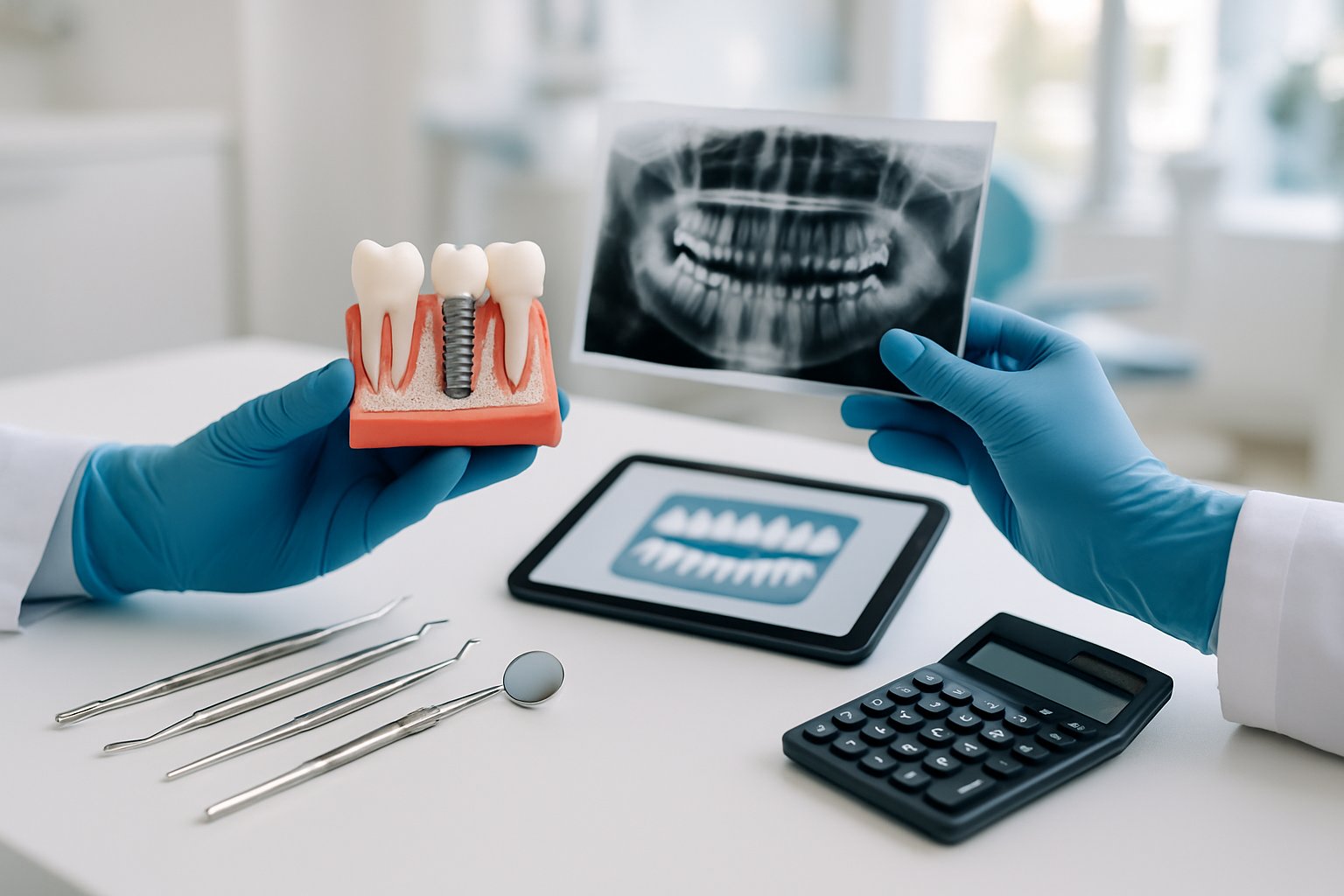
Search for the cost of a dental implant and you will find numbers ranging from suspiciously cheap to alarming. None of them tell you what you will actually pay.
That is not because dentists are hiding the price. It is because an implant is a surgical procedure planned around your jaw, your bone, and your health, and no honest office can price that from a phone call.
The real answer to what dental implants cost is a short list of factors: how many teeth you are replacing, what condition your bone is in, what preparatory work is needed, and how the final tooth is built. Understand those and every quote you receive starts making sense.
This guide walks through each factor, explains why quotes vary so much between offices, and covers the insurance picture honestly, including the Medi-Cal question we hear every week.
The first step toward a real number is an exam. At Riverside Dental in Sherman Oaks, our $75 New Patient Special covers a comprehensive exam and a full set of digital X-rays, and you can reach the office at (818) 784-5889 to get on the schedule.
Key Takeaways
- No trustworthy office can quote an exact implant price without an exam and imaging, because bone condition and preparatory work drive the total.
- A quoted price may or may not include the implant post, the abutment, the crown, imaging, and any extractions or grafting, which is why quotes vary so widely.
- Most dental insurance treats implants as a partial benefit at best, and Medi-Cal Dental generally does not cover them, though it may cover alternatives like dentures.
Why Nobody Will Quote You One Number

Call five offices and ask what an implant costs, and you will get five hedged answers. That is frustrating, but it is also the correct response.
A dental implant is not a product on a shelf. It is a titanium post placed surgically into your jawbone, a connector piece, and a custom crown, planned around imaging of your specific anatomy. Two patients replacing the same tooth can need very different amounts of work.
One patient has dense bone and a cleanly healed extraction site. Another lost the tooth years ago, the bone has shrunk, and grafting is needed before an implant can even be placed. Same tooth, very different treatment plans, very different totals.
An office that quotes you a firm number over the phone is either quoting the cheapest possible scenario or planning to revise the price later. Neither helps you budget.
The Cost Factors That Actually Move The Price
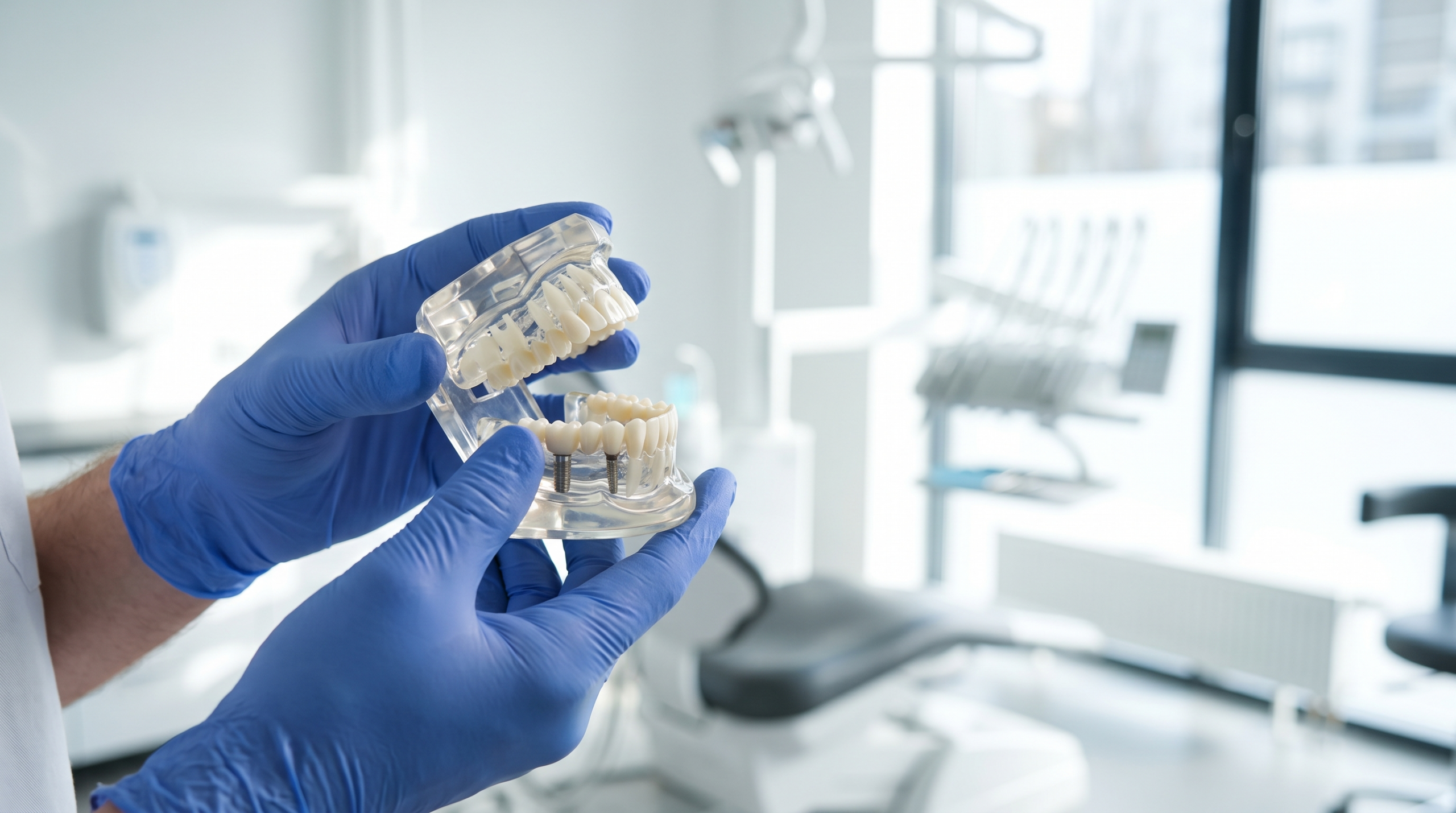
Every implant quote is built from the same handful of components. Here is what they are and why each one matters.
The Implant Has Three Parts, Not One
What patients call an implant is really three pieces: the titanium post in the bone, the abutment that connects it to the tooth, and the crown you actually chew with. Some quotes cover all three. Some cover only the post.
This is the single biggest source of confusion when comparing prices. Always ask whether a quote is for the complete tooth or just the surgical portion. Our explainer on what dental implants are and how they work breaks down each part in plain language.
Preparatory Work: Extractions And Bone Grafting
If the failing tooth is still in place, it needs a tooth extraction first. If the bone at the site is too thin or too soft, a graft rebuilds it before or during placement. Some patients need neither. Some need both.
Bone grafting is the most common surprise line item on an implant plan. It is not an upsell. An implant placed in inadequate bone fails, and redoing a failed implant costs far more than grafting ever would.
Imaging, Sedation, And The Number Of Teeth
Implant planning uses 3D imaging so the post can be positioned safely around nerves and sinuses. Sedation beyond local anesthetic, if you want it, adds to the total. And the count matters: replacing three separate teeth means three implants, but replacing several neighboring teeth can sometimes be done with fewer posts supporting a bridge.
This is why a full exam comes first. Every one of these variables is visible on imaging and none of them are visible over the phone.
Why Quotes Vary So Much Between Offices
Two legitimate offices can quote meaningfully different prices for the same treatment plan. The difference usually lives in a few places.
Implant systems are not all the same. Established implant brands with decades of published research cost the practice more than generic hardware. Crown quality varies too: a crown milled and characterized by a skilled lab costs more than a budget lab crown, and it shows in how the tooth looks and lasts.
Experience is priced in as well. Implant placement is a skill, and clinicians who place them routinely, with proper planning technology, are not competing with the lowest advertised price in the Valley.
Be careful with teaser pricing. An unusually low advertised implant price almost always covers the post alone, with the abutment, crown, imaging, and any grafting billed separately. By the final invoice, the cheap quote is often not cheap.
Insurance, Medi-Cal, And Denti-Cal: The Honest Picture

This is where implant pricing conversations get uncomfortable, so let us be direct.
Private Dental Insurance
Many private plans historically excluded implants entirely. More plans now cover a portion, often treating the implant like other major work, but annual maximums on dental plans are low relative to the cost of implant treatment. Insurance usually softens the bill rather than covering it.
Some plans will pay their portion of the crown even when they exclude the surgical post. A good office bills for every dollar your plan allows and shows you the math in writing before you commit.
The Medi-Cal And Denti-Cal Reality
We hear this question constantly, and the honest answer is that Medi-Cal Dental generally does not cover dental implants. Implants are treated as beyond the scope of the program in all but rare, medically exceptional cases.
What Medi-Cal Dental does cover for missing teeth is typically the removable route, meaning full or partial dentures. That is a real option, not a consolation prize, and for some patients it is genuinely the right call. If you are weighing the two paths, our honest comparison of whether implants are worth the investment lays out the tradeoffs without the sales pitch.
Ways To Make Implants Affordable
If the total makes you flinch, you have more room to work with than you might think.
Third party healthcare financing can spread treatment over monthly payments, often with promotional interest terms. Ask the office which financing partners they work with and have the coordinator run the numbers with you before you decide anything.
Phasing is the other lever. Implant treatment has natural pauses built in, because the bone needs months to heal around the post anyway. Extraction and grafting can happen in one budget year, placement in the next, and the crown after that, letting insurance maximums reset along the way.
And keep the alternatives on the table. A bridge or a well made denture restores chewing and appearance at a lower upfront cost. They involve their own tradeoffs, which we cover elsewhere, but a plan you can actually afford beats a perfect plan you delay for years while the bone keeps shrinking.
How To Get A Real Number For Your Mouth
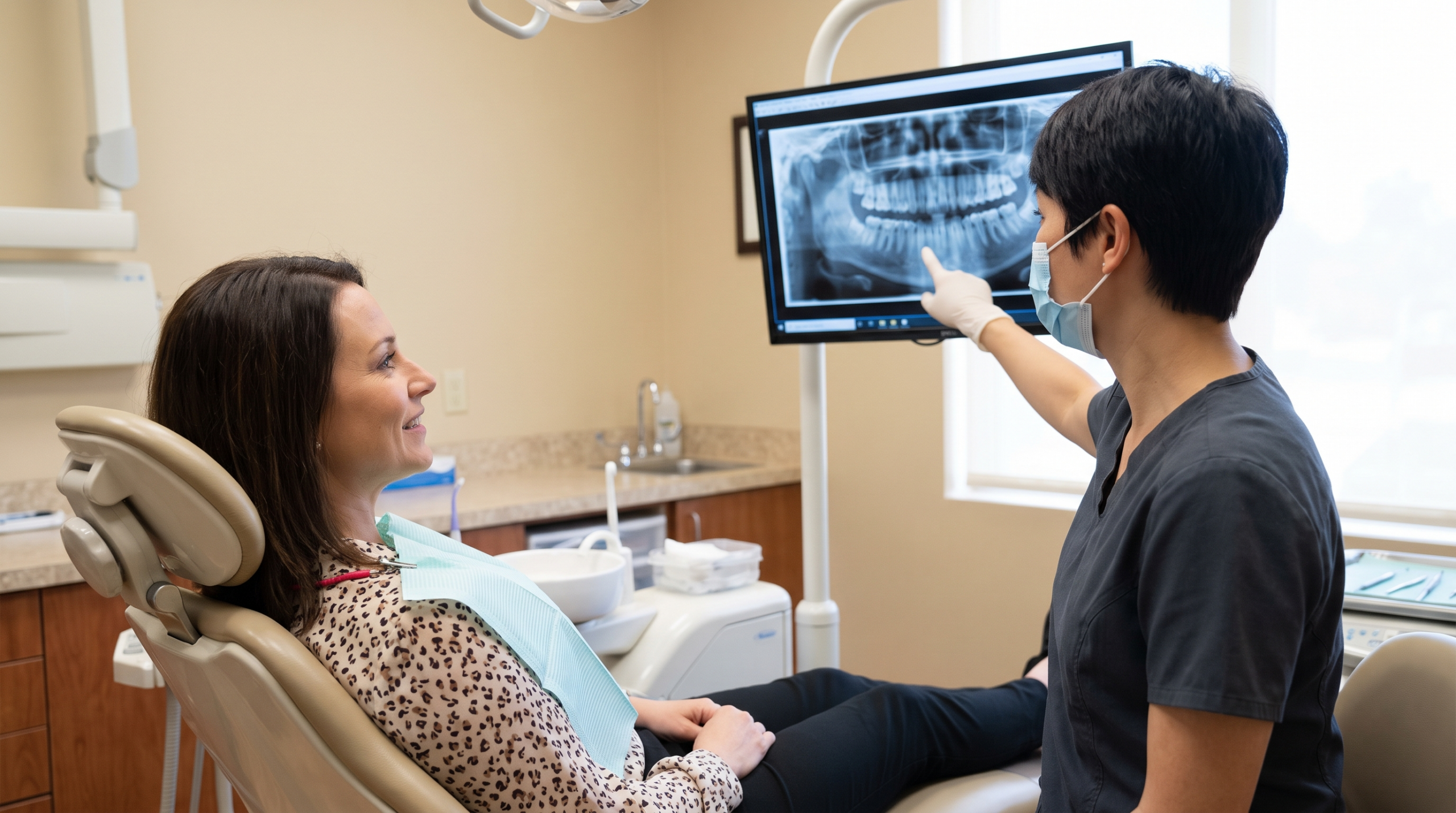
The path from vague ranges to an exact figure is short: an exam, imaging, and a written treatment plan.
The dentist evaluates the site, measures your bone on the X-rays, and identifies any preparatory work. You leave with an itemized estimate showing each component, what your insurance is expected to pay, and what your share would be. Every visit after that follows a known sequence, which we walk through step by step in our guide to the dental implant process from consultation to final crown.
A few questions worth asking when you review any implant quote, here or anywhere else: Does this include the post, abutment, and crown? Is grafting anticipated, and is it priced in? What implant system do you use? What happens if the implant fails to integrate?
An office confident in its work answers all four without flinching.
Frequently Asked Questions
Why is there such a big price range for implants?
Because the quoted item varies. Some prices cover only the surgical post, while a complete single tooth replacement includes the post, abutment, crown, imaging, and sometimes extraction or grafting. Patient anatomy varies just as much, so the honest range is wide.
Does Medi-Cal cover dental implants?
Generally no. Medi-Cal Dental covers implants only in rare, medically exceptional circumstances. It does typically cover removable options such as full or partial dentures, which is why many Medi-Cal patients choose that route for missing teeth.
Is the cheapest implant quote a bad idea?
Not automatically, but read it carefully. Confirm it covers all three components, uses a reputable implant system, and includes planning imaging. A low headline price that excludes the crown and grafting can end up costing more than a complete quote from a careful office.
Can I pay for an implant in installments?
Usually yes. Most offices, ours included, work with healthcare financing companies that spread treatment into monthly payments. The multi month implant timeline also lets you phase treatment across insurance years to stretch your benefits.
Get A Straight Answer In Sherman Oaks
You do not need to guess at internet price ranges. An exam and a set of X-rays turn the whole question into an itemized plan with a real number on it.
At Riverside Dental, the $75 New Patient Special covers your comprehensive exam and full digital X-rays, which is exactly the information an implant estimate is built from. We will walk you through your options, including implants and the alternatives, with the numbers in writing.
We are at 12926 Riverside Dr, Suite D, Sherman Oaks, CA 91423, an easy drive from Studio City, Encino, Valley Village, and Van Nuys. Call (818) 784-5889 or use our contact page to book. If a broken or infected tooth is hurting right now, do not wait on a cost guide: see our dental emergency page and call us today.