
Losing teeth does more than change your smile. It can really impact how you eat, talk, and even how you feel about yourself.
When you need to replace missing teeth, you usually have two main choices.
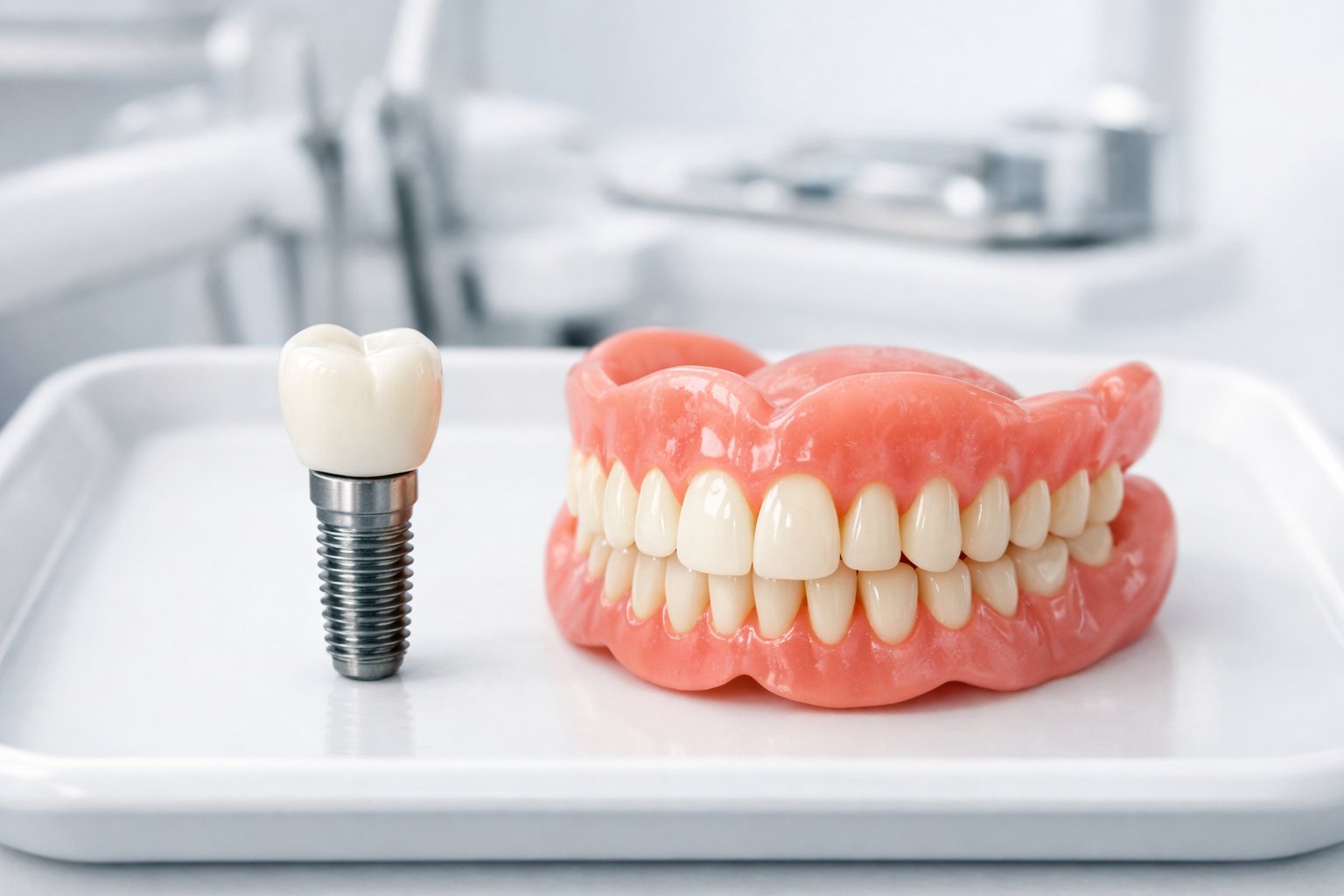
Deciding between dental implants and dentures comes down to your budget, oral health, jawbone, and how long you want your new teeth to last. Dental implants are artificial roots that dentists place into your jawbone, and they hold permanent replacement teeth. Dentures are removable appliances that rest on your gums to fill the gaps. Both come with different costs, care routines, and benefits.
If you understand how these options work, it’ll be a lot easier to pick what fits your needs. This guide will walk you through what really matters when you’re deciding between implants and dentures.
Key Takeaways
- Dental implants stay fixed in your jawbone, while dentures are removable and rest on your gums.
- Your budget, jawbone health, lifestyle, and how long you want your teeth to last all play a role in your decision.
- Both options let you eat and smile again, but they feel different, need different care, and come with different price tags.
Dental Implants vs Dentures: Key Differences and How Each Works
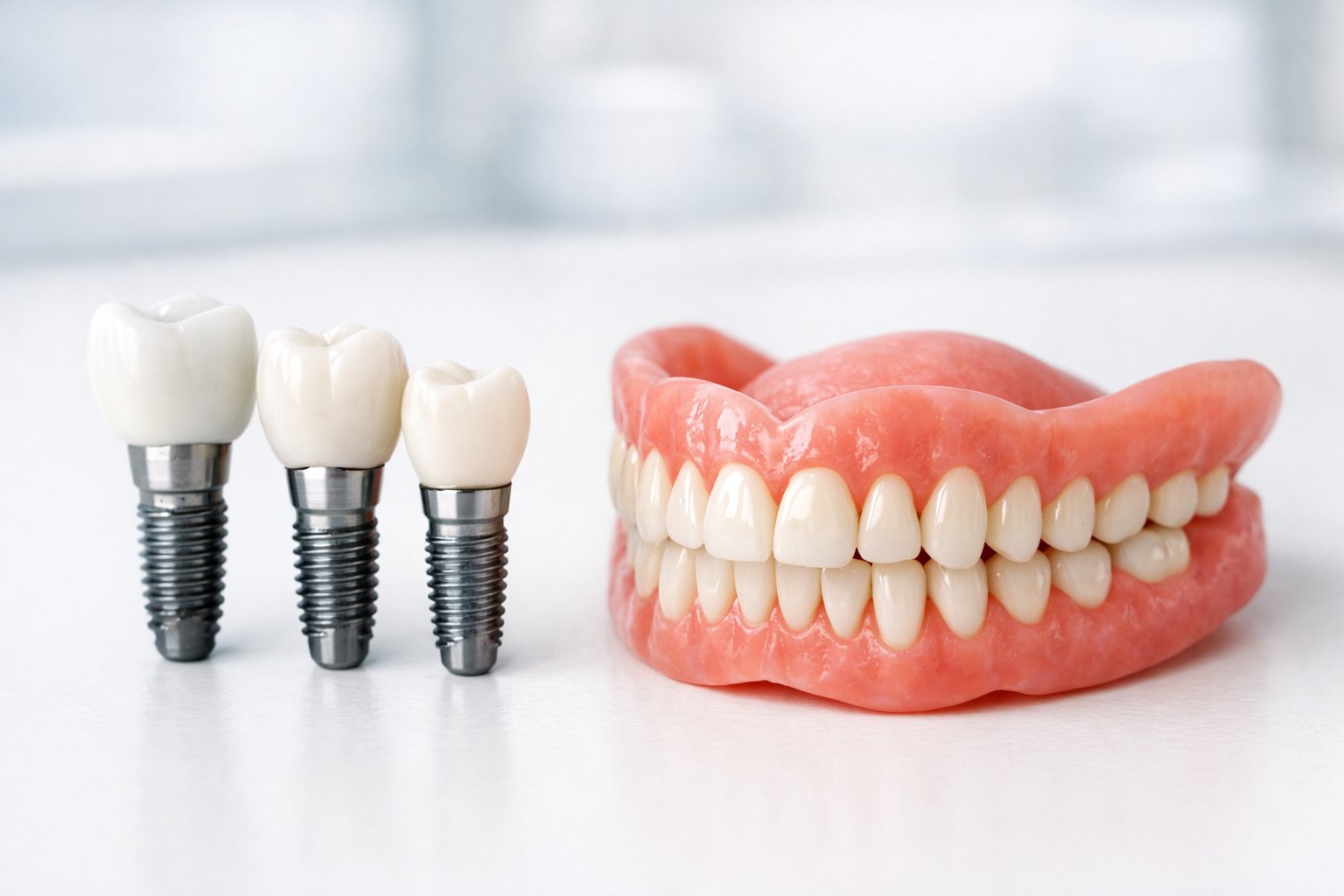
Dental implants are permanent tooth roots that a dentist places in your jawbone. Dentures are removable and sit on your gums.
They both replace missing teeth, but they do it in very different ways.
What Are Dental Implants?
Dental implants are tiny titanium posts that your dentist puts into your jawbone. These posts work as artificial roots for your new teeth.
After placing the implant, your jawbone grows around it in a process called osseointegration. This can take a few months.
Once your bone heals, your dentist attaches an abutment to the post. The abutment is a small connector that sits above your gums.
A custom crown then goes on the abutment. This crown looks and works like a real tooth.
You can get a single implant for one tooth or several implants for multiple teeth.
Dental implants stay in your mouth. You brush and floss them just like your natural teeth.
What Are Dentures?
Dentures are removable false teeth made from acrylic, metal, or both. They replace missing teeth and some gum tissue.
Full dentures replace all the teeth in your upper or lower jaw. Upper dentures cover your palate, while lower ones are shaped to leave space for your tongue.
If you still have some natural teeth, you might get partial dentures. These fill in the gaps and usually attach to your existing teeth with little metal clasps or attachments.
Partial dentures also help keep your other teeth from shifting around.
Dentures stay in place with suction and the shape of your gums. Some people use adhesive for a more secure fit.
You need to take dentures out for cleaning and usually remove them at night.
Types of Dentures and Implant-Supported Options
Removable dentures come in a few styles:
- Conventional dentures: Made after your gums heal from extractions, usually after 8 to 12 weeks.
- Immediate dentures: Placed right after your teeth are pulled, so you’re never left without teeth.
- Flexible dentures: Made from softer plastic, so they’re more comfortable but may not last as long.
Implant-supported dentures blend both worlds. These snap onto dental implants in your jaw, giving you more stability than regular removable dentures. They also cost less than getting an implant for every missing tooth.
All-on-4 is a popular choice. Dentists place four implants in your jaw, then attach a full set of teeth to them. This denture doesn’t slip or move like regular dentures.
Some implant-supported dentures pop out for cleaning. Others stay fixed, and only your dentist can remove them.
How Dental Implants and Dentures Replace Missing Teeth
Dental implants replace both the root and the crown of your missing tooth. The titanium post acts as the root, and the crown is the part you see.
Because the implant stimulates your jawbone, it helps prevent bone loss.
Traditional dentures only replace the part you see. They rest on your gums and don’t keep the jawbone healthy. Over time, your jawbone can shrink, which changes your face shape and makes dentures fit worse.
Dentures stay put with suction, your mouth’s shape, and sometimes adhesive. Implant-supported dentures anchor to implants, so they’re much more stable.
Both restore your ability to eat and speak, but implants feel more like real teeth. Dentures take some getting used to, and you might need a little practice to eat and talk with them.
Choosing Between Dental Implants and Dentures: Factors That Matter
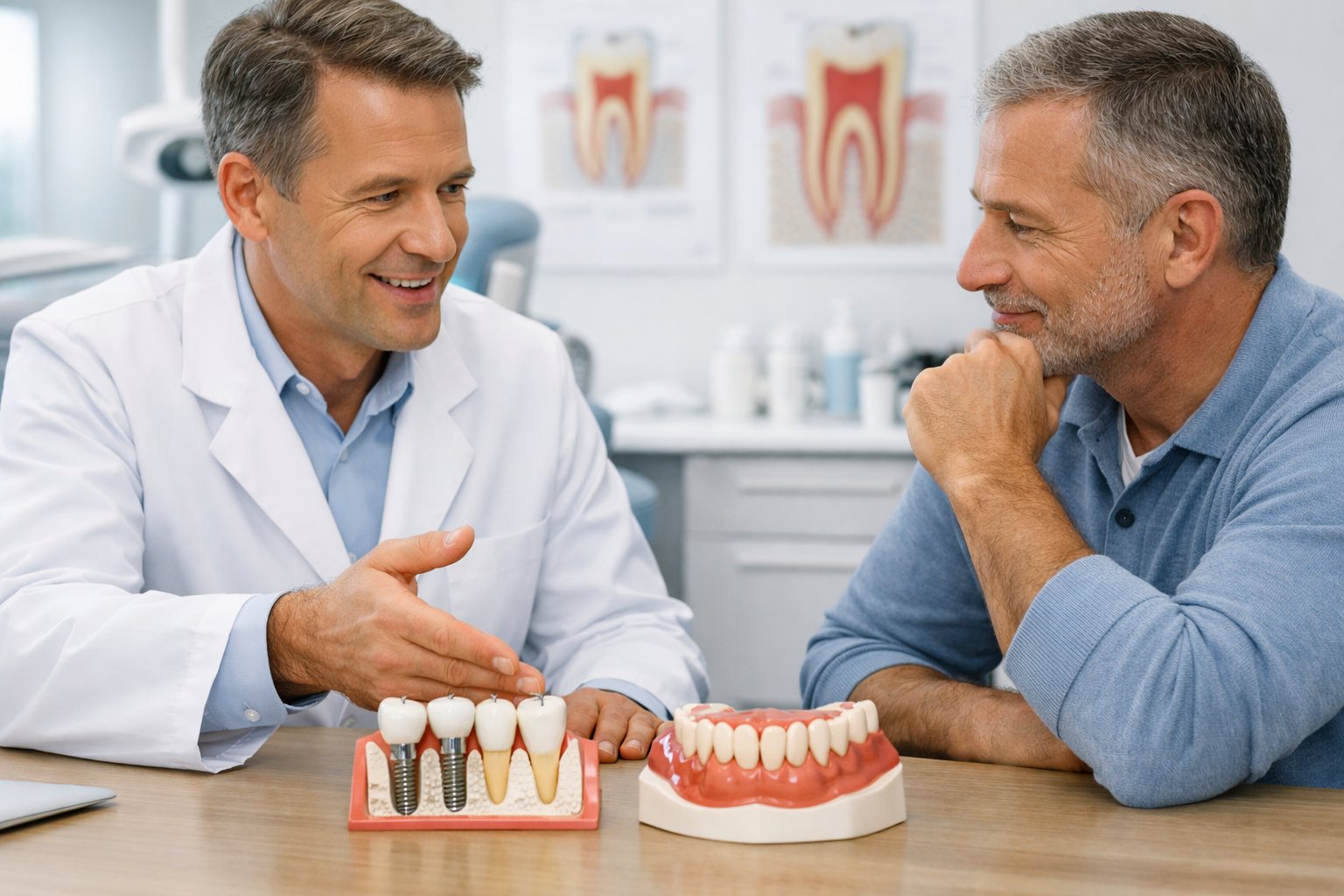
A few big things will affect whether implants or dentures are right for you. Your oral health, budget, what you want your teeth to look like, and your lifestyle all matter.
Oral Health and Jawbone Considerations
Your jawbone’s thickness is a big deal if you want dental implants. You need enough bone to hold the implant post.
If you’ve lost teeth for a while, your jawbone might have shrunk. Sometimes, you’ll need a bone graft to build it up before getting implants. That adds extra time and cost, but it makes implants possible for more people.
Your dentist will check your jawbone with X-rays or scans.
Dentures don’t need a strong jawbone since they just rest on your gums. This makes them an option for more patients, even if you’ve had bone loss.
Still, wearing dentures long-term can cause your jawbone to shrink more, since they don’t stimulate the bone.
Your overall oral health counts too. If you have gum disease or uncontrolled diabetes, you might heal slower after surgery, which can raise the chances of implant failure.
Cost and Long-Term Value
Dentures usually cost less upfront than implants. A full set of dentures might cost between $600 and $8,000, while implant-supported teeth can run from $20,000 to $45,000 for a full mouth.
Implants are pricier at first, but they last longer. With good care, they can last 20 years or even a lifetime.
Dentures usually need replacing every 5 to 8 years as your mouth changes.
Keep in mind the ongoing costs:
- Dentures: You’ll need to pay for relines, adjustments, adhesives, cleaning products, and eventually new dentures.
- Implants: Once they heal, they don’t need much extra care. Rarely, you might need a repair or another procedure.
- Dental bridges: These last about 10 to 15 years and may require the dentist to file down nearby teeth.
Insurance varies a lot. Many plans help with denture costs, but not always with implants. That’s starting to change, though, and some plans now cover the implant crown or surgery.
Aesthetics and Comfort
Dental implants usually look and feel the most natural. They don’t move or slip, and the crowns are matched to your other teeth.
Modern dentures look a lot better than they used to, but they still might not look as real as implants.
Implant-supported dentures offer a blend: more stable than regular dentures, but not as expensive as getting an implant for every tooth.
For comfort, implants win out because they’re anchored in your jaw. You won’t get sore spots or pressure points like you might with dentures.
Traditional dentures can feel bulky, may cause sore spots at first, and sometimes affect how you talk or taste food because they cover your palate.
Lifestyle, Maintenance, and Daily Care
Your daily routine changes depending on which option you pick.
Dental implants need the same care as natural teeth. Brush, floss, and see your dentist regularly. You don’t take them out.
Denture wearers need to remove and clean their dentures every day, usually soaking them overnight. This takes a little more time, but you get used to it.
You also have to clean your gums and any natural teeth.
Food choices are different too:
- Implants: You can eat almost anything, even hard or sticky foods.
- Dentures: You might have to skip sticky candies, tough meats, or really hard foods that could break or loosen your dentures.
Confidence is a big deal for lots of people. Implants take away the worry about teeth slipping during a meal or conversation. You don’t need adhesives or have to worry about them falling out.
Dental implants do come with surgery, so there’s a healing period and some temporary food restrictions. The whole process takes a few months, while dentures can be made much faster.
Suitability for Different Patients and Treatment Outcomes
Younger people with healthy jaws usually make great candidates for dental implants. If you’re going to have your replacement teeth for decades, the investment often makes sense.
Older adults or people with health conditions that slow healing might do better with dentures. Smoking, certain medications, or uncontrolled diabetes can raise the risk of implant problems.
The number of missing teeth matters too. If you’re missing just one tooth, an implant might be perfect. If you’ve lost all your teeth, dentures could be the more affordable choice. For a few missing teeth in a row, a dental bridge might work if your other teeth are strong.
Your dentist or prosthodontist will help you make a plan that fits your needs. They’ll look at things like:
- Your age and health
- The amount and quality of your jawbone
- Your budget and insurance
- Any medications or health problems
- What you want and how you live
Some people mix and match. Maybe you get implants on the bottom (where dentures don’t fit as well) and regular dentures on top. This approach can balance the pros and cons of dentures and implants while keeping costs down.
Both options work well when fitted and cared for properly. Implants have about a 95% success rate over 10 years. Well-made dentures can last for years with good care and adjustments.
Frequently Asked Questions
If you’re thinking about replacing teeth, you probably have some of the same questions as everyone else. Let’s clear up a few of the big ones.
What are the pros and cons of dentures versus dental implants?
Dentures are removable and sit on your gums. They cost less upfront and don’t need surgery. You can usually get them in a few weeks.
Still, dentures can slip or move when you eat or talk. They might not feel as natural, and you have to take them out at night for cleaning.
Dental implants are posts your dentist puts in your jawbone, and they hold your new teeth. They look and feel like real teeth and don’t move around.
Implants require surgery and take a few months to finish. They also cost more than dentures. You need good jawbone and healthy gums to get them.
How does the cost of dental implants compare to traditional dentures?
Regular dentures usually cost between $1,000 and $3,000 per arch. So, a full set (top and bottom) is about $2,000 to $6,000.
A single dental implant costs $3,000 to $4,500. Full mouth implants can run from $20,000 to $45,000 or more.
Dentures need to be replaced every 5 to 8 years. Implants can last 25 years or more if you take care of them. Even though implants cost more upfront, they might save you money over time since they last a lot longer.
At what age are dental implants or dentures typically recommended?
Dental implants work for adults of any age, as long as the jaw has finished growing. Most dentists suggest waiting until women turn 18 and men reach 21.
There’s really no upper age limit for getting implants or dentures. Your overall health and jawbone density matter a lot more than your age. Plenty of people in their seventies or even eighties get dental implants and do just fine.
Your dentist checks your bone health and any medical conditions you have. These things decide whether you’re a good candidate, regardless of how old you are.
How do snap-in dentures differ from traditional implants?
Snap-in dentures attach to dental implants that your dentist places in your jaw. You can pop them out for cleaning, but they stay pretty secure when you’re wearing them. Usually, dentists use two to four implants to hold the denture in place.
Traditional full dental implants are different. They replace each tooth with its own implant or sometimes use several implants to support a permanent bridge. You can’t remove these yourself. They act just like real teeth.
Snap-in dentures usually cost less than full implant teeth. They’re more stable than regular dentures, but not quite as locked in as permanent implants. If you’re looking for something between traditional dentures and full dental implants, snap-in dentures might be the answer.
What factors should one consider when choosing between an implant, a denture, or a bridge?
Jawbone health is a big deal here. Implants need enough bone density to stay put. Your dentist will check this with x-rays or scans.
The number of missing teeth you have makes a difference too. If you’re missing just one or two teeth, a bridge could work well. Dentures are better for replacing several teeth or a whole arch. Implants can handle anything from a single tooth to a full mouth restoration.
Your budget matters a lot. Bridges usually run $2,000 to $5,000 for each tooth. Dentures are the most affordable. Implants cost the most upfront.
Think about maintenance, too. Dentures need to come out every day for cleaning. Bridges and implants just need regular brushing and flossing, like your natural teeth.
Does Medicare offer any coverage for dental implants?
Original Medicare doesn’t cover dental implants. It skips dentures and routine dental care too.
Sometimes, Medicare Part A steps in if you need dental work before a medical procedure. For instance, it might pay for a tooth extraction right before heart surgery. That kind of coverage pops up only in special medical situations.
Some Medicare Advantage plans throw in dental benefits. Coverage really depends on the plan, so you’ll want to check your own policy to see if implants or dentures make the cut.