When you hear people talk about All-on-4 dental implants in simple terms, they really mean this: four titanium implants can replace a whole arch of missing teeth with a set of permanent, fixed teeth. If you’ve been struggling with tooth loss, failing teeth, or those uncomfortable removable dentures, All-on-4 might be the solution to bring back your smile, without needing an implant for every single tooth.
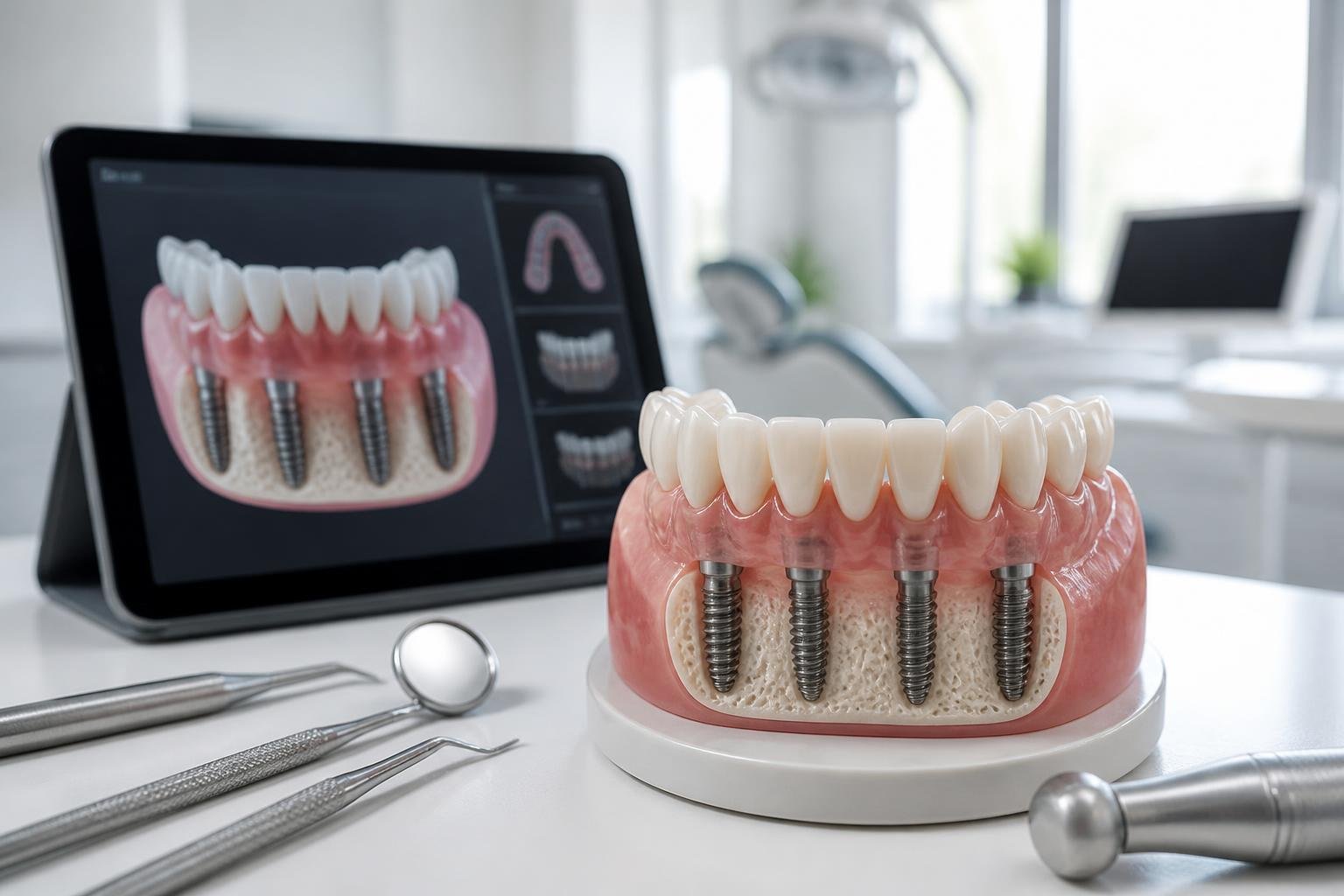
Dentists place two straight implants at the front of your jaw and two angled ones at the back. This setup uses your existing bone density and usually skips bone grafting, so more people can get the procedure.
A full-arch prosthesis gets attached to those four implants. You get teeth that look and work pretty much like the real thing.
Removable dentures just sit on your gums and often slip or feel awkward. All-on-4 implants stay put. You can eat, talk, and smile with a lot more confidence.
Key Takeaways
- Four well-placed implants support a full arch of fixed teeth. Most people don’t need bone grafting.
- The process goes from digital planning and implant surgery to a temporary prosthesis and finally a zirconia bridge.
- Keeping your new teeth healthy means good home care and professional cleanings every three to six months.
How the Treatment Works From Evaluation to Final Teeth
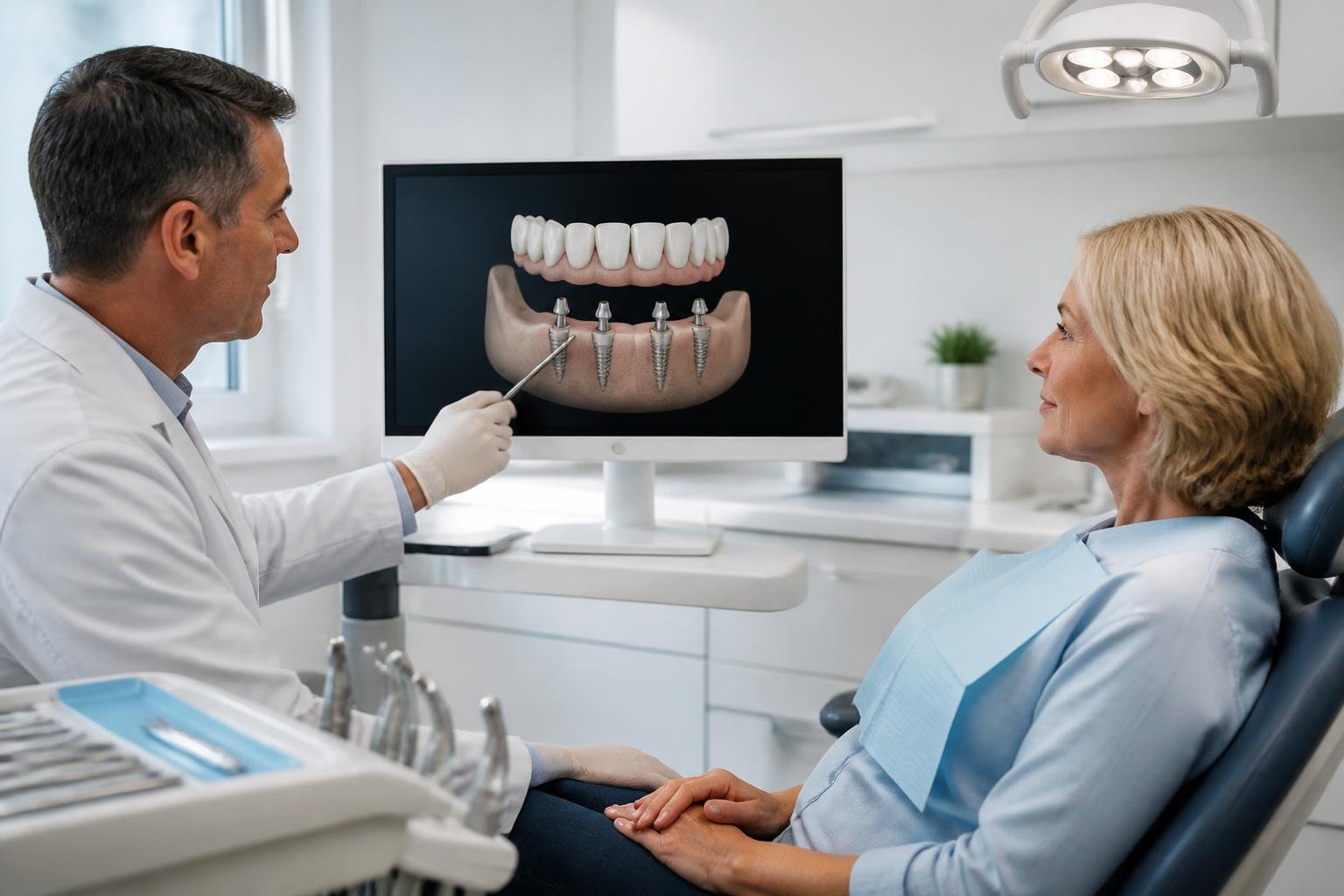
The All-on-4 process has a few clear steps. You start with a dental exam and finish with your permanent new teeth.
Dentists look at your bone density, remaining teeth, and overall health before moving forward.
Who Is a Good Candidate
If you’ve lost a lot of teeth, have failing teeth, or wear dentures, you’re probably a good candidate for All-on-4. Most adults with enough jawbone can get these implants, and because of the angled design, many people avoid bone grafting.
If you smoke a lot, have uncontrolled diabetes, or certain bone issues, you might not be the best fit. Your dentist or oral surgeon will go through your medical history during your visit.
Exam, Imaging, and Digital Planning
Before anything else, your dentist will do a full dental exam and take advanced images. This usually means dental X-rays, CT scans, or CBCT scans, plus 3D scans to map out your jaw.
They use these images to check bone density and plan where each implant goes. Often, they make a surgical guide from this digital plan to help with precise placement.
Implant Placement and Same-Day Temporary Teeth
On the day of surgery, the dentist removes any failing teeth first. Then, they place four titanium implants into your jaw using the guide. The two in the back are angled up to 45 degrees to get the best grip on your bone.
One thing people love about All-on-4 is you don’t have to wait for teeth. You get a temporary prosthesis attached to the implants that same day. You walk out with a full set of teeth.
Healing, Osseointegration, and the Final Prosthesis
The healing phase usually takes three to six months. During this time, the titanium implants bond with your jawbone, a process called osseointegration.
Once your dentist checks that the implants are secure, they swap out the temporary prosthesis for the final restoration. Most people get a zirconia bridge for its strength and natural look. With good care, this final set of teeth can last for years.
Benefits, Costs, Risks, and Long-Term Maintenance

All-on-4 dental implants definitely have some big advantages over dentures. Still, the price, possible complications, and aftercare are things you’ll want to think about before you decide.
Main Advantages Compared With Dentures
All-on-4 really shines when you compare it to removable dentures. Fixed teeth don’t move around, you won’t need sticky adhesives, and the implants help keep your jawbone healthy to avoid bone loss.
A few big perks:
- Fixed teeth for eating and speaking with confidence
- Usually no bone grafting needed thanks to fewer implants
- Same-day temporary teeth for instant results
- Full-arch prosthesis looks and feels natural
- Easier oral hygiene than dealing with a bunch of separate implants
What Affects the Total Cost
The cost of All-on-4 in the US usually falls between $20,000 and $30,000 per arch, but it can change based on a few things.
| Factor | Impact on Cost |
|---|---|
| Geographic location | Higher in big cities |
| Provider experience | Specialists tend to charge more |
| Material used | Zirconia bridges cost more than acrylic |
| Need for extractions | Adds to your total bill |
| Imaging and diagnostics | Sometimes billed separately |
Most dental insurance plans don’t cover the whole procedure, though you might get some help under major restorative benefits. Many dental offices offer financing to make payments easier.
Possible Complications and Implant Failure
Every surgery has risks, and All-on-4 is no different. Sometimes implants don’t bond with the bone, especially if you smoke or have certain health problems.
Peri-implantitis—an infection around the implant—is a long-term risk. You might notice swelling, bleeding, or bone loss near the implant. Regular dental check-ups catch these problems early.
Aftercare and Professional Maintenance
Taking care of your new teeth at home is super important. Use a water flosser and an interdental brush every day to clean under and around the prosthesis. A regular toothbrush can’t reach those spots well.
Plan on professional cleanings every three to six months after your All-on-4 surgery. Your dentist will check the implants, make sure your prosthesis fits right, and keep an eye on your gum health at each visit.
Frequently Asked Questions
What is the All-on-4 approach and who is an ideal candidate for it?
All-on-4 uses four dental implants to support a fixed arch of teeth. It works best for adults with a lot of missing or failing teeth who still have enough jawbone. Heavy smokers, people with uncontrolled health issues, or very little bone may need extra evaluation.
How does the All-on-4 procedure work step by step from consultation to final teeth?
First, you get a dental exam, X-rays, and 3D scans to plan where the implants will go. During surgery, any remaining teeth are removed, four titanium implants are placed, and you get a temporary prosthesis that same day. After three to six months, once the implants have bonded, you’ll get a permanent zirconia bridge.
What are the main disadvantages and risks associated with All-on-4 implants?
The biggest risks are implant failure, peri-implantitis, and possibly needing more surgery if something goes wrong. It’s a pricey procedure, and you can’t just reverse it like you can with dentures. Smoking and poor oral hygiene make long-term problems more likely.
What type of prosthesis is used with All-on-4, and how is it maintained over time?
Most people end up with a zirconia bridge, though acrylic is a cheaper option. You should use a water flosser and interdental brush daily to clean under the arch. Professional cleanings every three to six months are a must for keeping your implants and gums healthy.
How much do All-on-4 implants typically cost, and what does insurance usually cover?
In the US, All-on-4 usually costs between $20,000 and $30,000 per arch. Standard dental insurance rarely pays for the whole thing, but some plans might help with surgery or the prosthesis. Most dental offices have financing plans if you need to spread out the payments.
What factors influence where to get All-on-4 implants at the lowest total cost without compromising quality?
Where you live, the credentials of your provider, and the materials for the final restoration all play a big role in the price. Some providers in areas with a lower cost of living or board-certified oral surgeons who handle a lot of cases can actually offer better deals without cutting corners.
It’s a smart move to get a few consultations and look over detailed treatment estimates. This way, you can really weigh your options before making a decision.