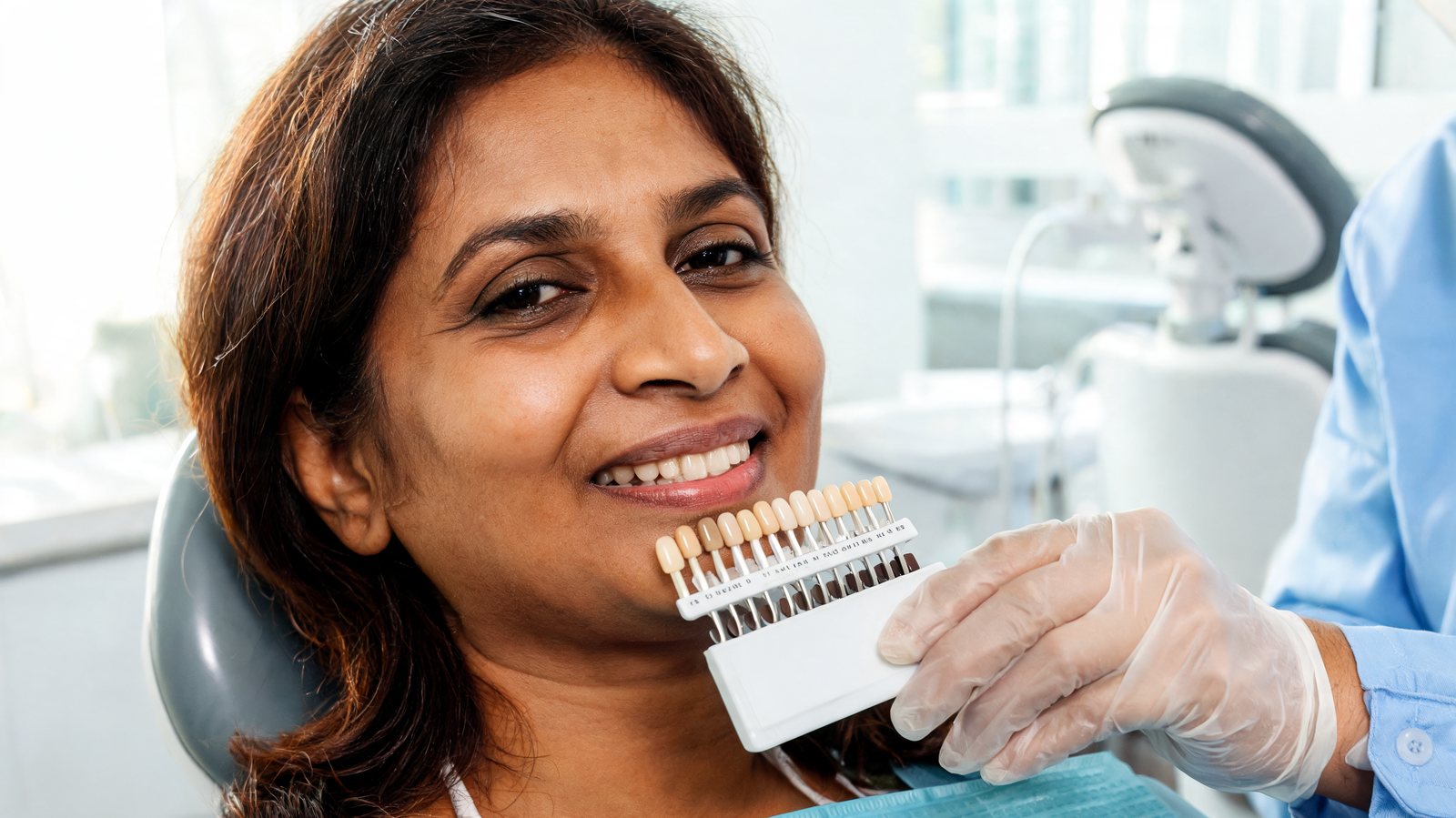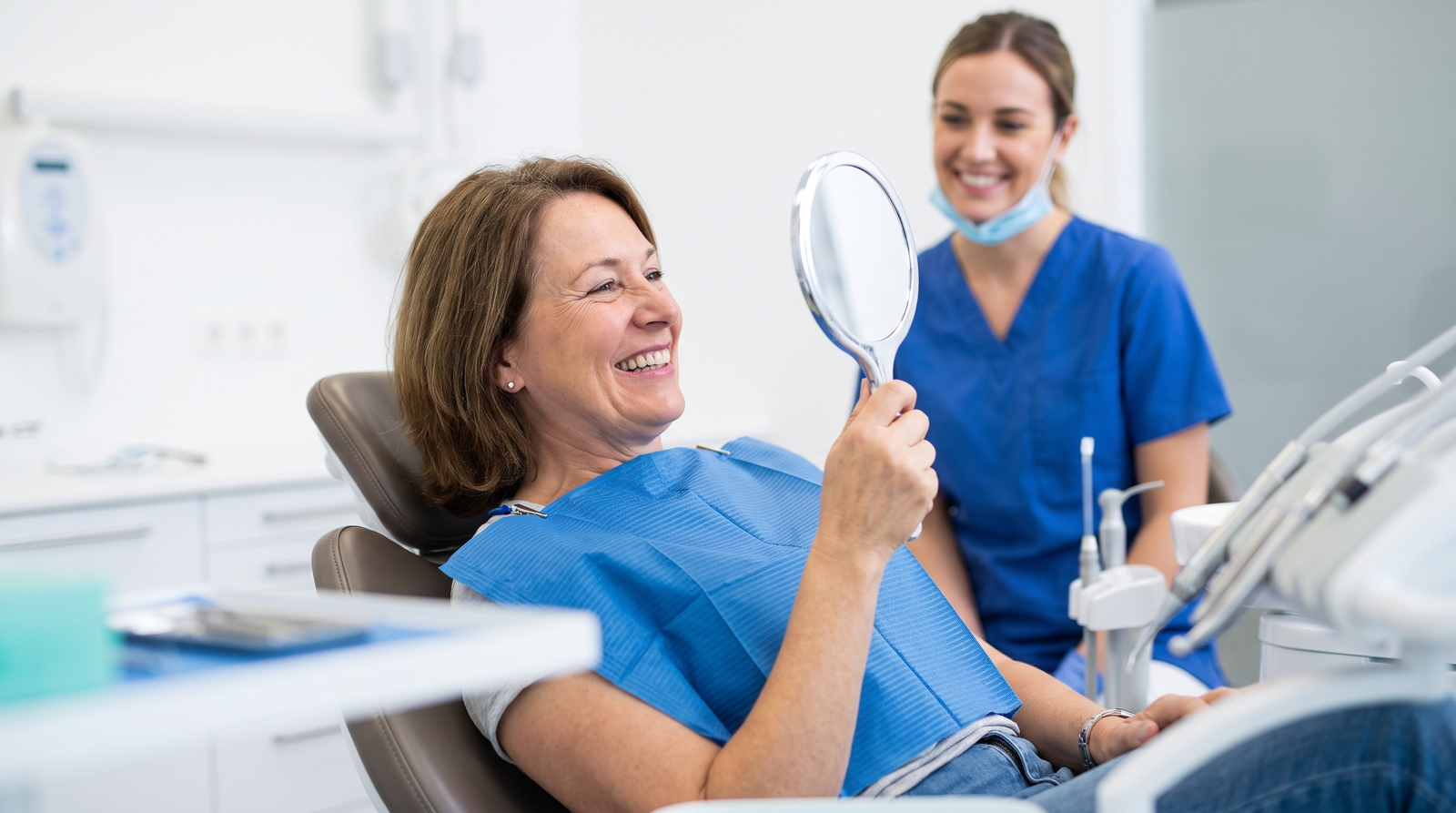

Book with a new dental office and the first appointment is usually a comprehensive exam. It sounds formal, and most people have no idea what it means.
Some expect a quick look and a cleaning. Others brace for a sales pitch. Neither is right.
A comprehensive dental exam is where a dentist builds a complete picture of your mouth, from every tooth surface to your gums, bone, bite, and soft tissue, so nothing important gets missed.
It is the foundation everything else is built on. Without it, a dentist is guessing and you are agreeing to treatment you cannot evaluate.
At Riverside Dental in Sherman Oaks, the new patient visit is built around exactly this. Our $75 New Patient Special covers a comprehensive exam and a full set of digital X-rays, and you can reach the office at (818) 784-5889 to get on the schedule.
Key Takeaways
- A comprehensive exam is a full baseline assessment, not the quick visual check you might get at a routine recall visit.
- It combines a hands on clinical exam with full digital X-rays, because roughly half of what matters is not visible to the naked eye.
- You should leave with a clear explanation of what was found and a treatment plan in priority order, with no pressure to say yes on the spot.
Why A Comprehensive Exam Is Different From A Routine Checkup
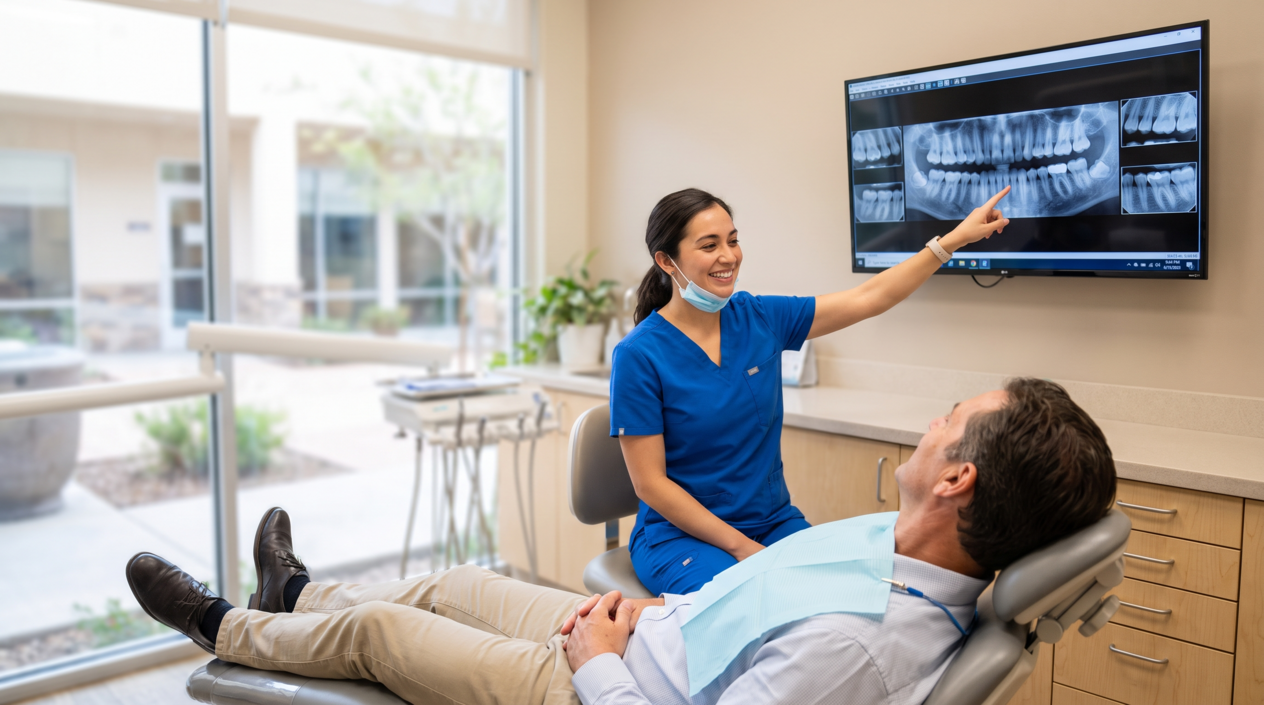
Both involve a dentist looking in your mouth, so the difference is not obvious from the chair. It lies in the depth, and in the record created.
A Full Baseline, Not A Quick Look
A periodic checkup asks a narrow question: has anything changed since last time? A comprehensive exam asks a larger one: what is the complete state of this mouth, and what is likely to happen next?
That means charting every existing filling, crown, and missing tooth, measuring the gum tissue around each one, and documenting wear and cracks. It becomes the reference point every future visit is measured against.
Why New Patients Always Start Here
If you are new to a practice, the dentist has no history with you. There is no way to know whether a dark spot on a molar appeared last month or has been stable for a decade.
The comprehensive exam solves that, and it protects you. A dentist who has seen the whole picture is far less likely to treat a symptom while missing the cause.
How Long It Usually Takes
Plan on forty five minutes to an hour, including X-rays and the conversation at the end. That extra time is the point.
Worth knowing: the exam is diagnostic, not a cleaning. Our $75 new patient offer covers the exam and full X-rays, and a professional cleaning is booked separately, once the dentist knows what kind your gums need.
What Your Dentist Actually Checks
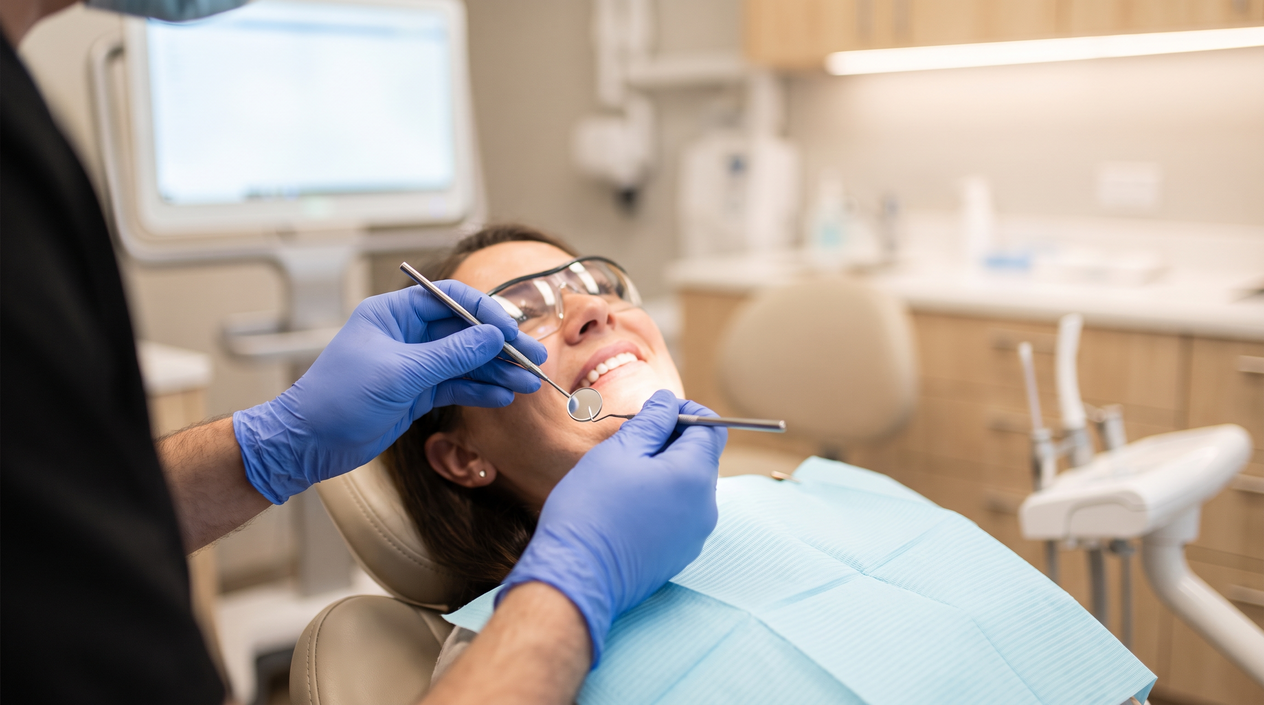
The clinical portion moves through your mouth in a set sequence, unhurried by design.
Tooth By Tooth: Decay, Cracks, And Old Work
Every tooth is checked on every surface with a mirror and an explorer, looking for soft spots that signal decay, hairline cracks, chips, and leaking edges on existing restorations.
Old fillings are a common finding. One placed twenty years ago can be perfectly sound or quietly failing underneath. Small problems get handled with a tooth colored filling, larger ones may need a crown. What pushes a tooth into crown territory is covered in 5 signs you might need a dental crown.
Gum And Bone Health
This is the part patients most often overlook, and arguably the most important. A small probe measures the depth of the pocket between each tooth and the gum around it, usually at six points per tooth.
Shallow, tight measurements mean healthy tissue. Deeper pockets, bleeding, or recession point toward inflammation or active gum disease, which is usually painless until it is advanced. Our guides to the warning signs of gum disease and the difference between gingivitis and periodontitis explain what those findings mean.
Bite, Jaw Joint, And Wear Patterns
The dentist watches how your teeth come together, checks whether your jaw joint clicks or feels tender, and looks for flattened wear facets that signal grinding.
Bite problems are sneaky. They surface as cracked teeth, sore jaw muscles, or restorations that keep failing in the same spot. Treating the tooth without addressing the bite repeats the problem, and a custom night guard is often the fix.
Head, Neck, And Oral Cancer Screening
The exam includes soft tissue: tongue, cheeks, floor of the mouth, palate, throat, and the lymph nodes in your neck. The dentist is checking for lumps, patches, or sores that have not healed.
It takes about two minutes and is one of the highest value things at a dental visit. Read what an oral cancer screening involves, or see our screening page. It is a reminder of how closely oral health ties to overall health.
The Role Of Full Digital X-Rays
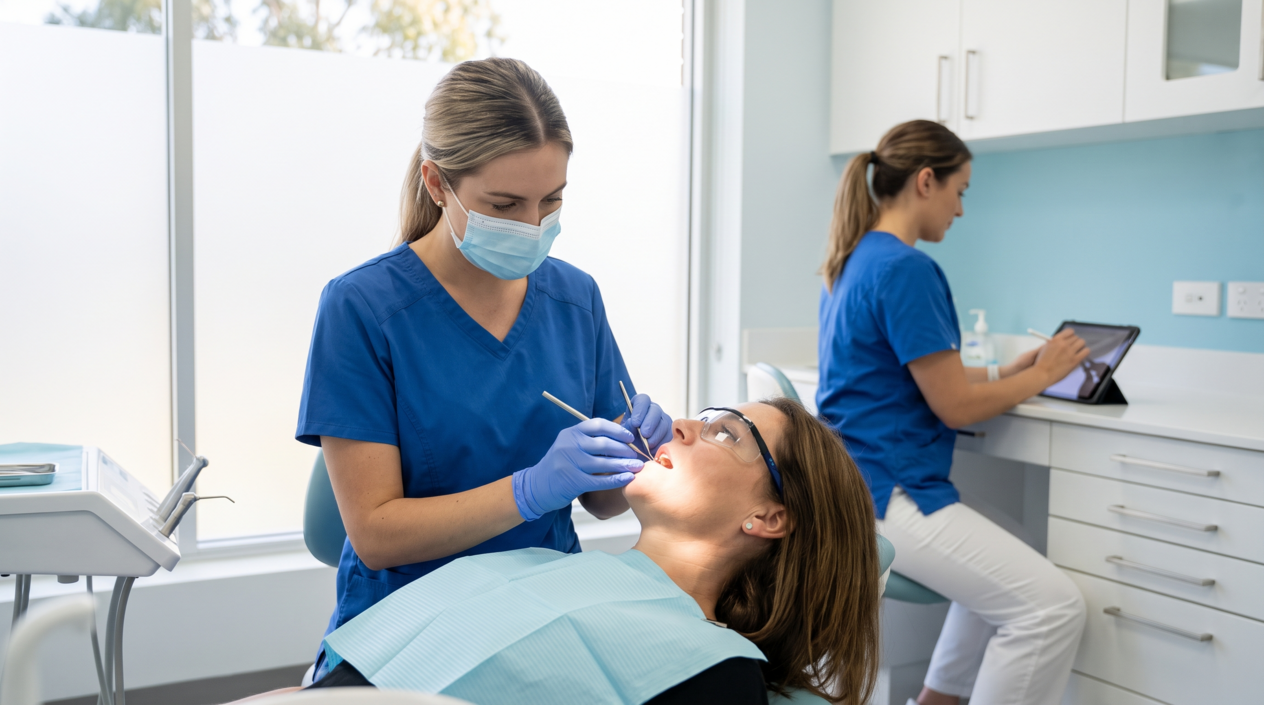
The clinical exam covers what can be seen and felt. Imaging covers everything else, which is why a full set is included with the new patient visit.
What X-Rays Show That The Eye Cannot
Decay starting between two teeth is invisible from above until it is well established. So are root tip infections, bone loss, cysts, impacted wisdom teeth, and decay hiding beneath a crown.
Finding an infection early can mean a straightforward root canal instead of an emergency and a lost tooth. That is the argument for imaging in one sentence.
Which Images Are Usually Taken
A full series typically includes bitewings, which show the contact points between back teeth where decay starts, and periapical images, which capture the whole tooth down to the root tip.
Many practices also take a panoramic image, a single wide view of both jaws, sinuses, and jaw joints. It is the fastest way to spot impacted wisdom teeth. See the technology we use on our digital dental X-rays page.
Safety And How Often They Are Needed
Digital sensors use a small fraction of the radiation old film required, and a protective apron limits exposure further. The American Dental Association recommends basing imaging on individual risk rather than a fixed schedule.
If you have had X-rays elsewhere in the past year, ask that office to forward them. A good practice uses recent images rather than repeating them.
What Happens After The Exam

The exam is only half the appointment. What you do with the findings is what changes your dental health.
Reviewing The Findings With You
You should see your own images on a screen while the dentist walks you through them. The shadow of decay on a bitewing is more convincing than being told it is there.
Ask questions here. If something is not explained in plain language, say so. A dentist who cannot explain a recommendation simply is a red flag.
A Treatment Plan In Priority Order
A good plan is sequenced, not dumped on you at once. Anything painful, infected, or spreading comes first, structural repairs next, cosmetic work last, because it is elective by definition.
You are allowed to phase treatment over months, to ask what happens if you wait, and to get a second opinion. None of that should be met with pressure.
Insurance And Costs
Before you leave, you should have a written estimate showing what your plan is expected to cover and what your share would be. Our guide to how dental insurance works is a useful primer, alongside our breakdown of what a dental cleaning costs. Regular professional cleanings are usually the best value on the list.
No insurance? Ask about promotions before you book. Our special offers page stays current.
How To Get The Most Out Of Your First Visit
A little preparation makes the appointment far more useful.
What To Bring
- Your dental insurance card, or a note that you are paying out of pocket
- A current list of medications and supplements, since many affect saliva and healing
- Any recent X-rays or records from a previous dentist
- Anything that has been bothering you, even if it seems minor
- Medical history such as diabetes, heart conditions, pregnancy, or a recent joint replacement
Questions Worth Asking
Ask what your gum measurements were and whether they are healthy. Ask which findings are urgent and which are worth watching. Ask what you could do at home that would make the biggest difference.
That last one is often the most valuable question you will ask all year. Sometimes the answer is a better flossing habit, sometimes it is understanding why tartar cannot be brushed away.
If You Feel Nervous About Going
A comprehensive exam is one of the gentlest appointments in dentistry. No drilling, no injection, just looking and measuring.
If it has been years since your last visit, you will not be lectured. Practices across Sherman Oaks, Studio City, Encino, Valley Village, and Van Nuys see returning patients constantly. Our post on how dentists help nervous patients relax covers the comfort options, and sedation dentistry is there for later treatment.
Frequently Asked Questions
Does a comprehensive dental exam include a cleaning?
No. The exam is diagnostic and a cleaning is a separate treatment appointment. The split is practical: the exam determines what kind of cleaning you need. Healthy gums call for a routine cleaning, while deeper pockets and bone loss call for a deep cleaning below the gum line. Riverside Dental’s $75 New Patient Special covers the exam and full digital X-rays, with a cleaning scheduled separately.
How long does a comprehensive dental exam take?
Most take forty five minutes to an hour. That covers paperwork and medical history, the full set of digital X-rays, the clinical exam including gum measurements and an oral cancer screening, and the review of findings.
Do I really need X-rays if nothing hurts?
Yes, and the absence of pain is exactly why. Decay between teeth, bone loss, and infections at the root tip are painless early on and invisible during a visual exam. By the time a tooth hurts, the treatment is bigger. Digital X-rays use a small fraction of the radiation older film required.
How often should I have a comprehensive exam?
Once when you join a practice, then generally every three to five years. In between, your six month checkups are periodic exams, shorter and focused on what has changed. A new one makes sense after a long gap in care, after major dental work, or if you develop a condition such as diabetes.
What if the dentist finds a lot of problems?
A long list is common after years away from care, and it does not mean everything happens at once. Ask the dentist to sort the plan into urgent, important, and optional. Most practices will phase treatment around your budget.
Can I get a comprehensive exam without dental insurance?
Absolutely, and many patients do. Without insurance, a comprehensive exam with full X-rays commonly runs well over one hundred dollars in the Los Angeles area, which is why new patient offers exist. Riverside Dental’s $75 New Patient Special covers exactly this.
Book Your Comprehensive Exam In Sherman Oaks
If it has been a while, or you have never had a proper baseline taken, this is the appointment that tells you where you stand.
At Riverside Dental, Dr. Ruben Soleymani, USC trained, and Dr. Aryan Sadighim, a UCLA and USC graduate, handle new patient exams personally. The practice holds a 5.0 star rating across more than 185 Google reviews. Learn more about our practice and the $75 New Patient Special, which covers your comprehensive exam and a full set of digital X-rays.
We are at 12926 Riverside Dr, Suite D, Sherman Oaks, CA 91423, a short drive from Studio City, Encino, Valley Village, and Van Nuys, with easy parking. Call (818) 784-5889 or use our contact page to book. If you are in pain right now, see our dental emergency page and call us rather than waiting.