
A chipped front tooth has a way of taking over your whole day. You feel the sharp edge with your tongue every few seconds, you check it in every mirror you pass, and you start wondering whether you should smile in photos until it is fixed.
The good news is that front tooth chips are among the most fixable problems in dentistry. Many small chips are repaired in a single visit, often without numbing, and the result can be very hard to spot.
This guide covers what to do in the first few hours, how to tell whether it is urgent, and the real repair options, from simple smoothing to bonding, veneers, and crowns, with honest notes on which one fits which kind of chip. If the tooth is painful or the break is large, skip ahead and call us at (818) 784-5889.
TL;DR
Rinse with warm water, use a cold compress if your lip or face is sore, save any broken piece, and call your dentist. Small chips are usually fixed with dental bonding in one visit. Larger chips, chips with discoloration, or several worn front teeth may be better served by a porcelain veneer. A big break, or a tooth with the nerve exposed, usually needs a crown and sometimes a root canal first. Pain, a pink or red spot in the break, or swelling means it should be seen quickly.
Key Takeaways
- A chip that hurts, shows a pink or red dot, or comes with swelling needs prompt care. A small painless chip can usually wait a few days.
- Bonding repairs most small chips in a single visit, usually without anesthesia.
- Veneers suit larger chips or when you also want to change color or shape across several teeth.
- Crowns cover the whole tooth and are used when a large part of it has broken away.
- Keep the broken piece in milk or water and bring it with you. Sometimes it helps with the repair.
First Things First: What To Do In The First Few Hours

You do not need to panic, but a few simple steps protect the tooth until you can be seen.
- Rinse your mouth with warm water to clean the area. The American Dental Association’s guide to dental emergencies recommends this for a cracked tooth.
- Use a cold compress on the outside of your lip or cheek if there is swelling or soreness.
- Find the broken piece if you can. Keep it in a small container of milk or water and bring it with you.
- Cover a sharp edge with a small piece of sugarless gum or dental wax if it is cutting your lip or tongue.
- Chew on the other side and avoid very hot, very cold, or hard foods until the tooth is checked.
- Take an over the counter pain reliever if you need one, following the label.
Then call your dentist. Even a painless chip deserves a look, because a crack can run deeper than it appears.
Is It An Emergency Or Can It Wait?
Not every chip is urgent. Here is a simple way to sort it.
Call right away if
- The tooth hurts on its own, throbs, or is very sensitive to air, hot, or cold.
- You see a pink or red spot in the broken area. That can mean the inner pulp of the tooth is exposed.
- The tooth feels loose, has moved, or you cannot bite together normally.
- Your lip, gum, or face is swelling.
- The chip came from a hard blow to the face. Get checked for other injuries too.
It can usually wait a few days if
- The chip is small, painless, and only along the edge.
- The only problem is a rough edge or the look of it.
Even then, do not leave it for months. Small chips can grow, and a rough edge can irritate your tongue and lip. Our dental emergency page explains how we handle urgent visits, including same day and next day appointments when available.
Chipped a front tooth? Call us and tell us what happened. We will tell you how soon you should be seen.
Call (818) 784-5889Book onlineYour Repair Options, From Smallest Fix To Biggest
The right repair depends on how much of the tooth is missing, whether the nerve is involved, how the tooth meets your bite, and what you want your smile to look like afterward. Here are the main options, starting with the most conservative.
Smoothing and polishing
For a very small chip along the biting edge, the dentist can sometimes simply smooth and polish the edge so it no longer feels sharp or catches the light. It only works when the chip is tiny and reshaping does not leave the tooth looking noticeably shorter.
Dental bonding
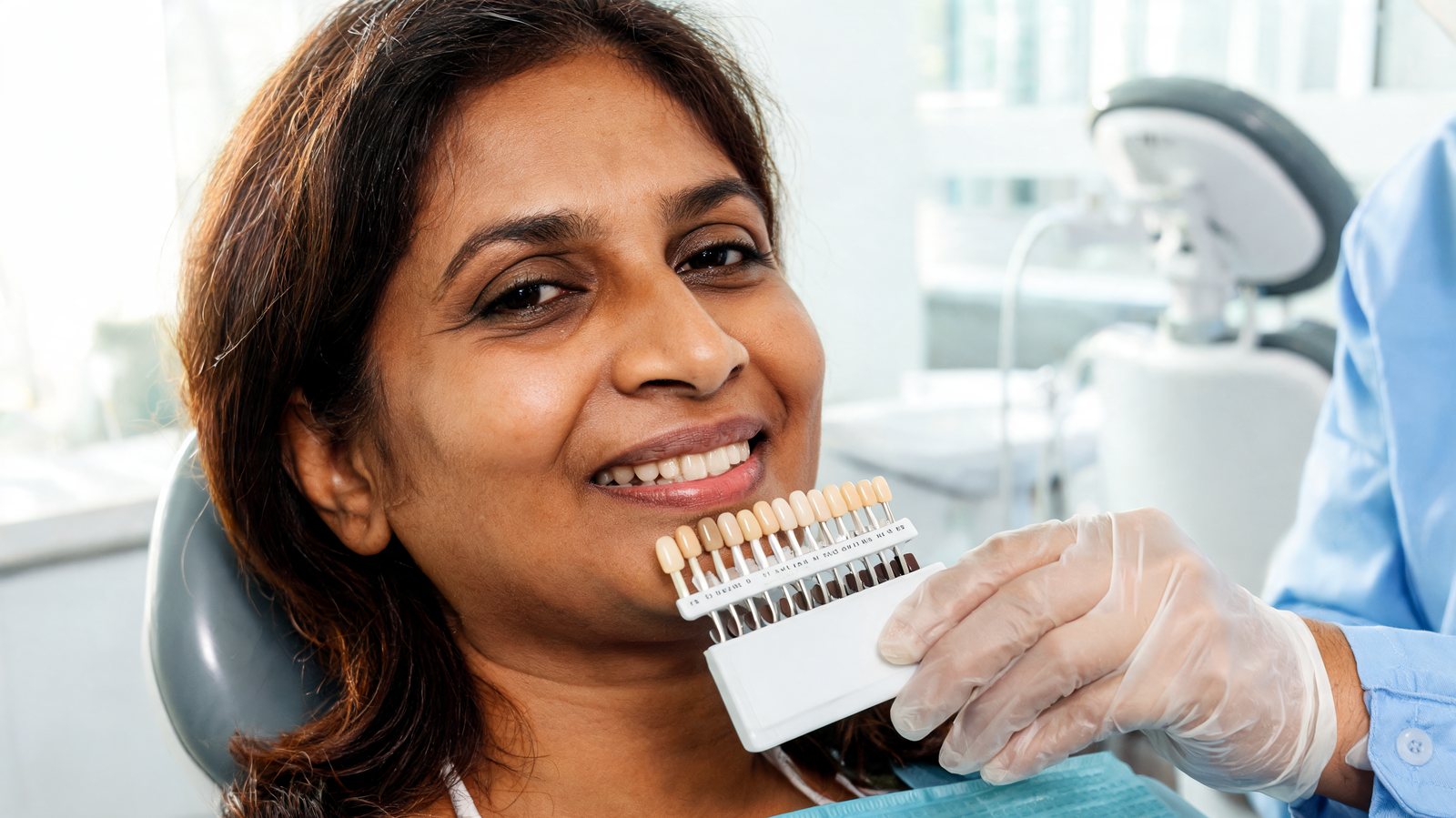
Bonding is the most common fix for a chipped front tooth. A tooth colored composite resin is shaded to match your tooth, sculpted onto the chipped area, hardened with a curing light, and polished so it blends in. On our dental bonding page we explain the details: it is usually done in one visit, usually without anesthesia, and costs less than a veneer or crown.
Bonding commonly lasts 5 to 10 years depending on your bite and habits. Resin can pick up stains from coffee or red wine over time, and if bonding chips, it can often be repaired without starting over. For most small and medium chips, it is the best place to start.
Porcelain veneers
A porcelain veneer is a thin custom shell bonded to the front of the tooth. Veneers are a good choice when the chip is larger, when the tooth is also stained or misshapen, or when you would like several front teeth to match in shape and color. Porcelain resists staining better than resin, and with good care veneers typically last 10 to 15 years.
The trade off is that a thin layer of enamel is removed to make room for the veneer, so it is considered irreversible, and the process usually takes two to three appointments. The ADA’s MouthHealthy page on veneers is a good neutral overview if you are weighing this option.
Dental crowns
When a large part of the tooth has broken away, a dental crown covers and protects the whole visible tooth. For front teeth, porcelain crowns give the most natural look. The tooth is shaped, a scan or impression is taken, and you wear a temporary crown for about one to two weeks while the final crown is made.
When the nerve is involved
If the break reaches the pulp, or the tooth becomes painful or darkens after the injury, it may need root canal therapy before it is restored. That sounds like a lot, but the goal is simple: keep your natural tooth. Only if a tooth cannot be saved do we talk about replacing it.
How To Choose: A Quick Comparison
- Tiny chip, edge only, no pain: smoothing or bonding. Usually one short visit.
- Small to medium chip on one tooth: bonding is usually the first choice. Fast, conservative, and repairable.
- Large chip, or chip plus staining or uneven shape: a porcelain veneer, sometimes on neighboring teeth too for a matched look.
- Large break, weak tooth, or a tooth with a root canal: a crown for strength and protection.
- Pain, exposed nerve, or a darkening tooth: an exam and X-ray first, then treatment of the nerve if needed, then the restoration.
Whatever option you choose, we match the color to your natural teeth so the repair blends in. If you are planning to whiten, tell us first, because bonding, veneers, and crowns do not change color with whitening. It usually makes sense to whiten before the repair so we can match your new shade.
What About Cost And Insurance?
The cost depends on which repair you need, so the honest answer starts with an exam. In general, bonding costs less than a veneer or a crown. Many dental plans cover part of the cost when a repair is needed to restore a broken tooth, while purely cosmetic changes are often not covered. Coverage varies by plan.
At Riverside Dental we verify your benefits before treatment and give you a clear estimate in writing, and we offer CareCredit and other financing options. We accept most insurance plans, including Medi-Cal and Denti-Cal. See our insurance and financing page for details.
Preventing The Next Chip

Once your tooth is fixed, a few habits help keep it that way:
- Wear a mouthguard for sports. Basketball, soccer, skateboarding and martial arts all put front teeth at risk.
- Do not chew ice, popcorn kernels, or hard candy. The ADA lists all three as common causes of cracked teeth.
- Do not use your teeth as tools to open packages or bottles.
- Protect against grinding. If you clench or grind at night, a custom night guard protects both your natural teeth and any bonding or veneers.
- Keep up with checkups. Regular exams catch weak spots, worn edges, and old fillings before they break.
Frequently Asked Questions
Can a chipped front tooth be fixed in one visit?
Often, yes. Most small and medium chips can be repaired with dental bonding in a single visit, usually without anesthesia. Veneers and crowns take two or more visits.
Is a chipped front tooth an emergency?
It is urgent if the tooth hurts, you see a pink or red spot in the break, the tooth is loose, or there is swelling. A small, painless chip can usually wait a few days, but should still be checked.
How long does bonding last on a front tooth?
Bonding commonly lasts 5 to 10 years depending on your bite and habits. It can stain over time, and if it chips it can often be repaired without replacing it.
Should I choose bonding or a veneer for a chipped tooth?
Bonding is usually best for small to medium chips on one tooth. A porcelain veneer is often better for larger chips, or when you also want to change the color or shape of several front teeth.
What should I do with the broken piece?
Keep it in a small container of milk or water and bring it to your appointment. Your dentist will decide whether it can be used.
Will my insurance cover fixing a chipped tooth?
Many plans cover part of the cost when a repair is needed to restore a broken tooth, while purely cosmetic work is often not covered. Riverside Dental verifies your benefits and gives you an estimate before treatment.
Get Your Smile Back To Normal
A chipped front tooth is fixable, and in many cases the fix is faster and simpler than people expect. The first step is an exam so we can see how deep the chip goes and recommend the most conservative repair that will last.
We are at 12926 Riverside Dr, Suite D, Sherman Oaks, CA 91423, an easy drive from Studio City, Encino, Valley Village, and Van Nuys. Call (818) 784-5889 or book online. If you are new to our office, our $75 New Patient Special includes a comprehensive exam and full X-rays.