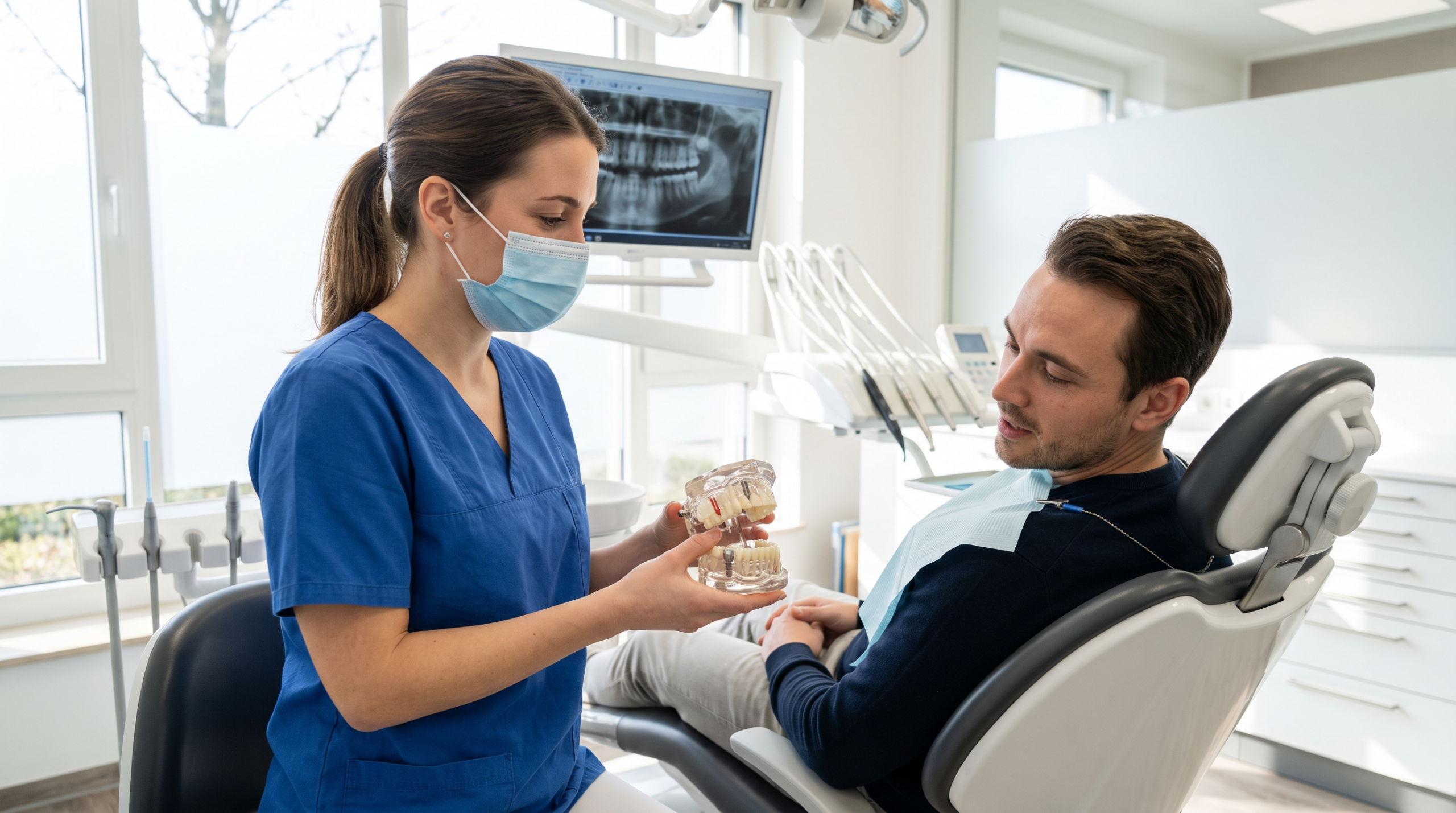
A dental implant costs several times what a bridge or partial denture does. So the question patients actually want answered is blunt: is it worth the difference?
You will not get a straight answer from an ad, because ads are written to sell implants. You deserve the version with tradeoffs in it.
For most patients who can afford the upfront cost and have the bone to support one, an implant is the best long term value in tooth replacement, because it lasts longest, protects the jawbone, and leaves neighboring teeth alone. But bridges and dentures win in specific situations, and pretending otherwise is salesmanship, not dentistry.
This article lays out the real comparison: implant versus bridge versus denture, on longevity, bone health, cost over time, and daily life.
If you want the comparison applied to your own mouth, the $75 New Patient Special at Riverside Dental in Sherman Oaks covers the comprehensive exam and digital X-rays that make the answer concrete. Call (818) 784-5889 to schedule.
Key Takeaways
- Implants cost the most upfront but are the only option that can realistically last decades without being replaced, which changes the lifetime math.
- Only an implant stimulates the jawbone the way a tooth root does; bridges and dentures leave the bone under the gap to slowly shrink.
- Bridges and dentures remain the right call in real situations: healthy crowned neighbors, budget limits, insurance coverage, or medical factors that rule out surgery.
Implants And Bridges: The Two Fixed Options
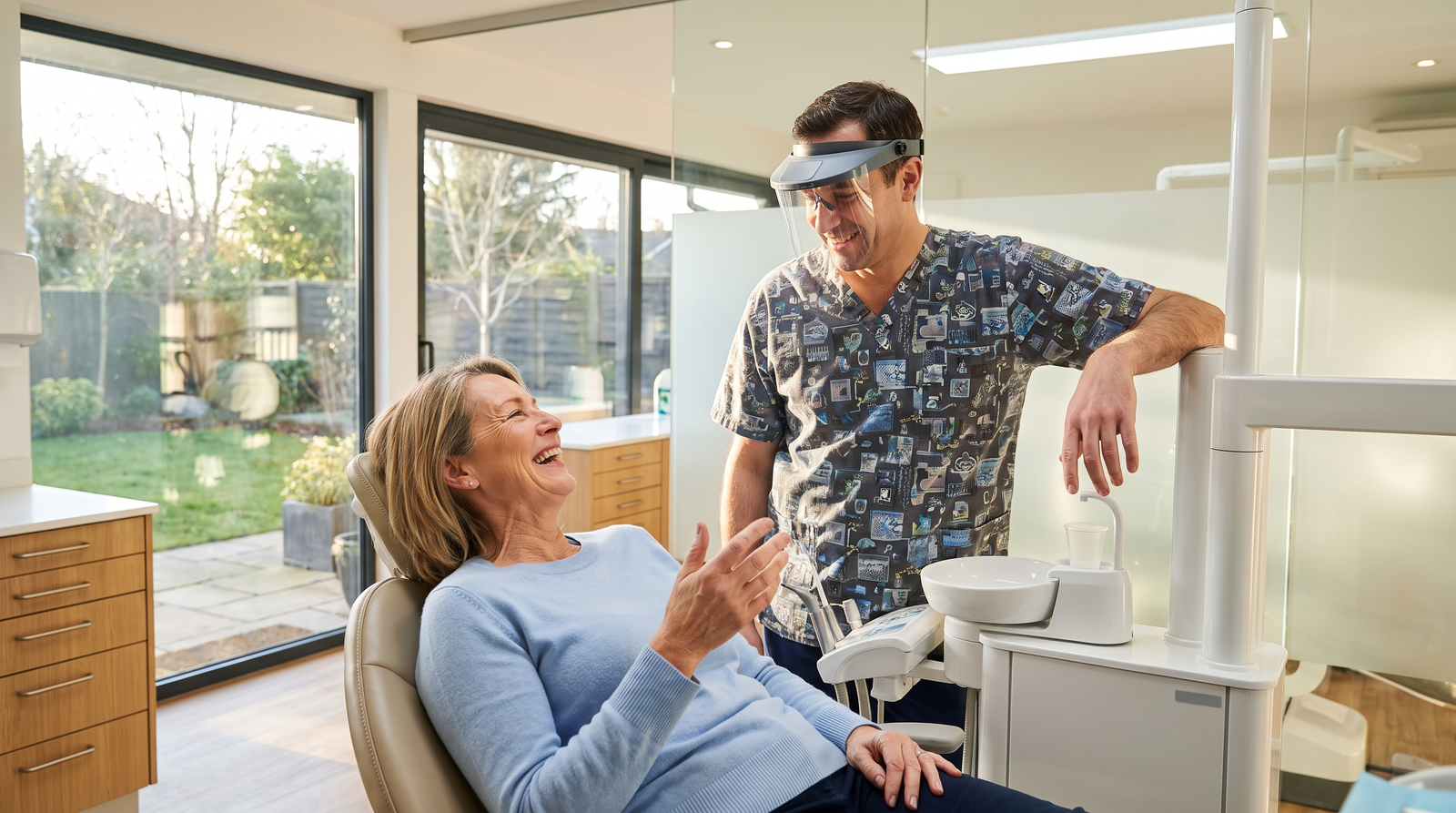
Every tooth replacement conversation comes down to three options, and each solves the problem differently.
A dental implant replaces the root itself: a titanium post in the bone with a crown on top. A bridge replaces only the visible tooth, suspending it from crowns cemented onto the teeth on either side of the gap. A removable partial or full denture rests on the gums and clasps to remaining teeth, and comes out at night.
Root replacement, tooth suspension, or removable coverage. Everything that follows flows from that difference. If you want the mechanics of how an implant integrates with bone, our explainer on what dental implants are and how they work covers it in depth.
What A Bridge Really Costs Your Other Teeth
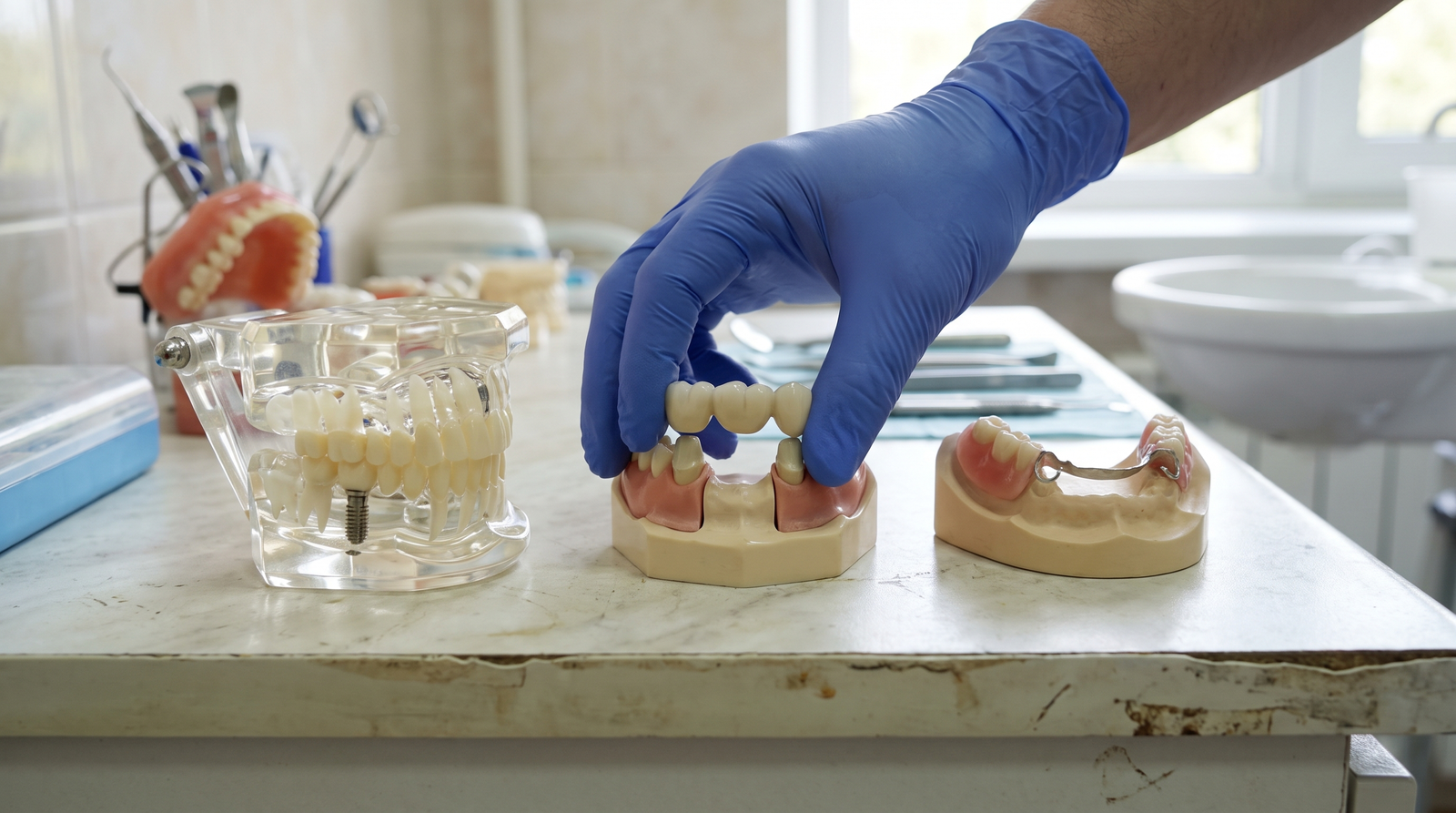
Bridges are proven, fast, and non surgical. But they have a cost that never appears on the invoice: the neighbors.
To anchor a bridge, the teeth on both sides of the gap are shaved down for crowns. If those teeth already have large fillings or crowns, that is no sacrifice at all, and a bridge becomes a genuinely attractive option. If they are healthy and untouched, you are permanently cutting down two good teeth to replace one missing one.
There is a maintenance angle too. The three connected units must be cleaned under, not just between, and if decay gets under one anchor crown, the whole bridge is compromised. When a bridge fails, the replacement often involves three teeth’s worth of work.
None of that makes bridges bad dentistry. It makes them a tradeoff, and the condition of the neighboring teeth is usually the deciding factor.
Dentures are the third option, and they deserve more room than this article can give them. We compare them with implants in detail in Dental Implants vs Dentures: Which Is Right for You?
Longevity: Why Implants Win The Long Game

Here is the math that reframes the upfront price.
A well placed, well maintained implant post can last decades, and often the rest of a patient’s life. The crown on top may need replacement after years of wear, but the surgical foundation typically does not. Implant dentistry has decades of published research behind those outcomes.
Bridges and dentures are replacement items. A bridge typically serves for a number of years before decay at an anchor, a fracture, or gum changes force a remake. Dentures need relines as the bone shrinks and full remakes as fit degrades. Neither is a one time purchase.
So the honest comparison is not one price tag against another. It is one implant against a bridge or denture plus its future replacements, on a timeline measured in decades. The longer you expect to live with the replacement, the better the implant math gets, which is why age is an argument for implants more often than against them.
Bone Preservation, The Benefit Nobody Mentions
Jawbone exists to hold teeth. When a tooth is lost, the bone in that spot loses its job, and the body starts reclaiming it. The process begins within months of an extraction and continues quietly for years.
This is more than a dental technicality. Bone loss is why long term denture wearers develop a sunken look around the mouth, why dentures loosen, and why patients who wait years for an implant often need grafting first.
An implant is the only replacement that interrupts this, because it puts a root back to work. Chewing force travels through the post into the bone, and loaded bone stays. A bridge spans over the gap and a denture presses down on it, but neither loads the bone from within.
This is also the argument for deciding sooner rather than later. Every year an extraction site sits empty, the site gets a little worse as implant real estate. If a failing tooth is headed for a tooth extraction, the smartest time to plan the replacement is before the tooth comes out, not years after.
When An Implant Might Not Be The Right Call

An honest comparison lists the cases where the expensive option loses.
If the teeth on both sides of the gap already carry crowns or large fillings, a bridge does double duty, restoring them while filling the gap, often faster and cheaper than an implant. If budget is fixed and financing does not fit, a well made denture or bridge you get now beats an implant you postpone indefinitely while bone shrinks. If health factors like uncontrolled diabetes or heavy smoking undermine healing, surgery may not be the responsible choice until they are managed.
Timeline matters to some patients too. An implant takes months from placement to final tooth because the bone must fuse to the post, a sequence we walk through visit by visit in the dental implant process from consultation to final crown. A bridge can be done in weeks.
The point is not that implants are always right. It is that the decision should be made with the tradeoffs on the table, matched to your mouth, your budget, and your years ahead.
Frequently Asked Questions
Are implants worth it for one missing back tooth nobody sees?
Often yes, and chewing is only part of the reason. A missing back tooth lets neighbors tilt into the gap and the opposing tooth drift out of its socket, quietly disrupting your bite. Replacing it protects the teeth around it, and an implant does so without shaving down healthy neighbors.
Is a bridge ever better than an implant?
Yes. When the neighboring teeth already need crowns, a bridge restores them and fills the gap in one treatment, often in a few weeks. It is also the practical choice when surgery is medically unwise or when bone at the site would need extensive grafting you would rather avoid.
Do implants ever fail?
A small percentage do, most often early, when the bone does not fuse to the post, or later from gum inflammation around the implant. Success rates in healthy patients are high and well documented, and the biggest controllable risk factors are smoking, poor hygiene, and untreated gum disease.
What happens if I just leave the gap?
Nothing dramatic at first, which is the trap. Over months and years, bone at the site shrinks, neighboring teeth tilt, the opposing tooth drifts, and chewing shifts to other teeth that now wear faster. Doing nothing is a choice with its own costs; they just arrive on a delay.
Talk Through Your Options In Sherman Oaks
Whether an implant is worth it for you is not a philosophy question. It depends on the state of your neighboring teeth, your bone, your budget, and your timeline, all of which are knowable.
At Riverside Dental, the $75 New Patient Special covers a comprehensive exam and full digital X-rays, which is everything needed to compare implant, bridge, and denture for your specific mouth. You get the tradeoffs explained plainly and the numbers in writing, with no pressure to decide in the chair.
Find us at 12926 Riverside Dr, Suite D, Sherman Oaks, CA 91423, close to Studio City, Encino, Valley Village, and Van Nuys. Call (818) 784-5889 or book through our contact page. And if a tooth just broke or came out, start with our dental emergency page, because acting fast preserves options.