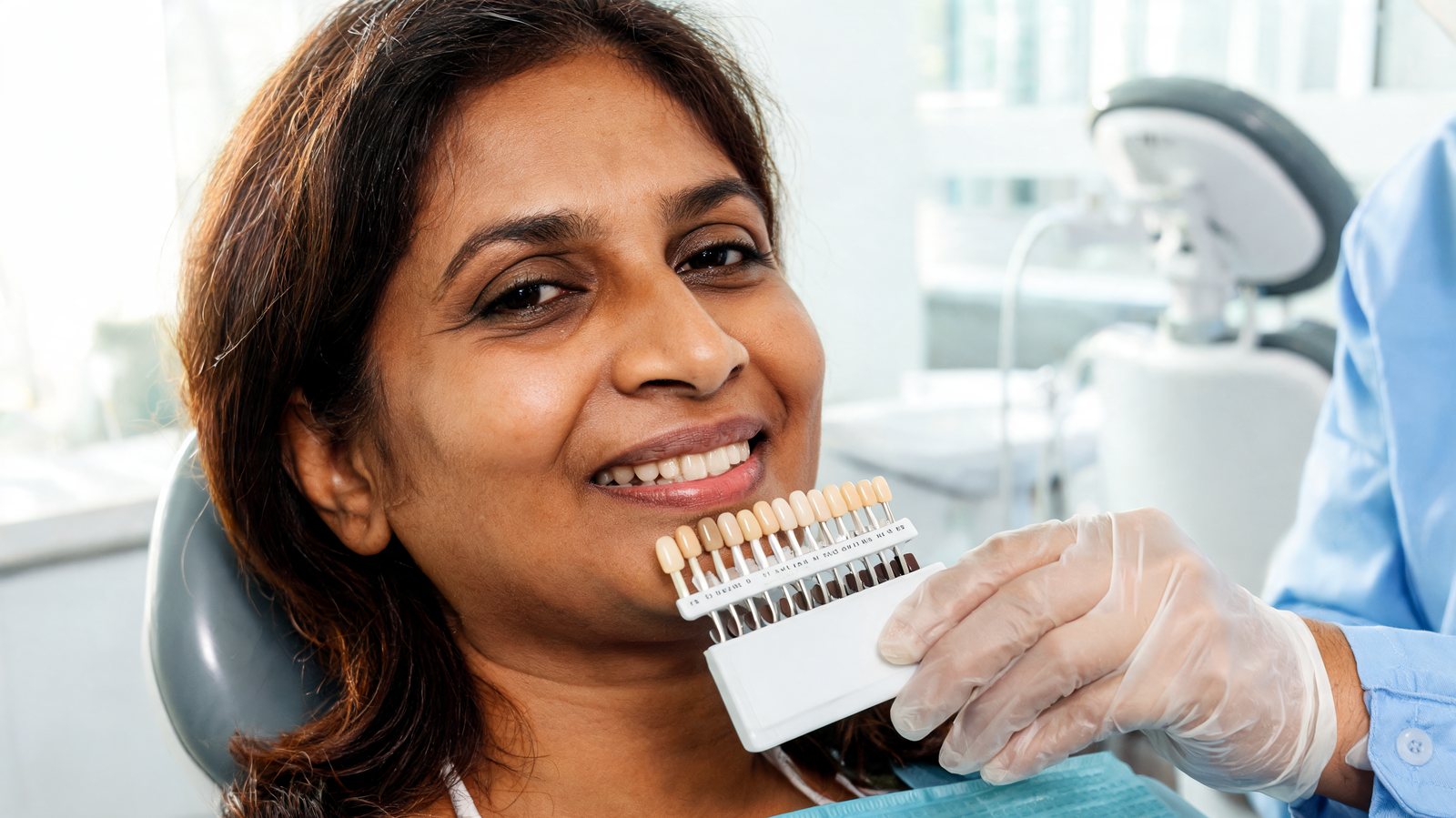
You wake up with a sore jaw, a dull headache, or teeth that feel strangely sensitive, and you have no idea why. For a lot of people, the answer is teeth grinding at night. It happens while you sleep, so most people never hear it or feel it. A partner might mention a grinding sound, or a dentist spots the wear during a checkup.
Dentists call it bruxism, and it is more common than most people think. The American Dental Association’s MouthHealthy page on teeth grinding reports that in a 2021 survey of dentists, more than 70% noticed signs of grinding and clenching in their patients.
This guide covers the signs of grinding, what causes it, the damage it can do over time, and how a custom night guard protects your teeth. If you think you might be grinding, call us at (818) 784-5889 and we can check for the signs at your next visit.
TL;DR
Teeth grinding at night (bruxism) is the involuntary grinding or clenching of your teeth while you sleep. Common signs are morning jaw pain or tightness, headaches, worn or flattened teeth, chipped or cracked teeth, and sensitivity. Stress is a common trigger, but sleep problems, a bite that does not line up, and alcohol, tobacco or coffee can play a part too. A custom night guard made from impressions of your teeth cushions your bite and protects your teeth while you sleep. A dentist can confirm the signs during an exam.
Key Takeaways
- Most people who grind their teeth at night do not know they are doing it until a partner or dentist notices.
- Morning jaw pain, dull headaches, sensitive teeth and worn or chipped edges are the most common warning signs.
- Stress is a big trigger, but sleep problems, bite alignment, alcohol, tobacco and coffee are also linked to grinding.
- Over time, grinding can crack teeth, damage fillings and crowns, and strain the jaw joint.
- A custom night guard is made to fit your teeth and absorbs the force of grinding while you sleep.
What Teeth Grinding at Night Actually Is

Teeth grinding at night is the habit of clenching your jaw or sliding your teeth against each other while you sleep. It is not something you choose to do, and you cannot simply decide to stop because it happens when you are not awake to notice.
Some people mostly clench, pressing their teeth together hard without much movement. Others grind side to side. Many do both. Either way, your jaw muscles can put far more force on your teeth during sleep than they ever do while you are chewing food, and they can keep it up for long stretches of the night.
Some people also clench during the day, especially when they are concentrating, stressed or tense. Daytime clenching is easier to catch, because you can notice your jaw is tight and relax it. Nighttime grinding is the one that quietly does the damage.
Signs You May Be Grinding Your Teeth
Because grinding happens in your sleep, the clues usually show up in the morning or at the dentist. Watch for:
- Jaw pain or tightness when you wake up, or a jaw that feels tired
- Dull morning headaches, often around the temples
- Neck aches or tension in your face and shoulders
- Worn, flattened or chipped teeth, especially along the biting edges
- Tooth sensitivity to hot or cold as worn enamel exposes the layer underneath
- Clicking or popping in your jaw joint
- Ear pain or a plugged feeling in your ears with no ear infection
- A partner hearing grinding sounds at night
- Disrupted sleep or waking up feeling unrested
You do not need every sign on the list. Even one or two, especially morning jaw pain together with worn teeth, is worth mentioning to your dentist. Dentists and hygienists are often the first to notice the wear patterns, sometimes before you have any pain at all.
Waking up with a sore jaw or headaches? We check your teeth, your jaw joint and your bite for signs of grinding. Call or book online.
Call (818) 784-5889Book onlineWhat Causes Teeth Grinding at Night?
There is rarely a single cause. Grinding usually comes from a mix of things, and what drives it for one person can be different for another.
Stress and anxiety
Stress is the trigger most people have heard about, and for good reason. Many people clench harder during busy, worried or high pressure stretches of life. Our post on how stress affects your teeth and gums goes deeper into that connection.
Sleep problems
Grinding is linked with sleep disorders. If you snore loudly, wake up gasping, or feel exhausted after a full night in bed, mention it to your doctor as well as your dentist, because the two can be connected.
A bite that does not line up
Teeth that do not meet evenly, along with missing or crooked teeth, can be part of the picture. This is one reason your dentist looks at your bite and not just your teeth.
Alcohol, tobacco and caffeine
The ADA’s MouthHealthy page notes that people who smoke or drink alcohol or coffee are about twice as likely to grind their teeth as people who do not. Cutting back, especially in the evening, can help some people.
Why Grinding Is More Than an Annoyance
A little grinding now and then may never cause a problem. Regular grinding night after night is different. Over months and years it can lead to:
- Worn enamel, which can make teeth look shorter and flatter and feel more sensitive
- Chipped or cracked teeth. Small cracks can grow over time, and our guide on what happens if a cracked tooth is left untreated explains why that matters.
- Damaged dental work, including fillings, crowns and veneers that crack or wear out sooner
- Jaw joint strain, with pain, clicking and tired jaw muscles
- Ongoing headaches and poor sleep
The good news is that most of this damage can be prevented. Protecting your teeth early costs much less, in money and in comfort, than repairing cracked teeth or replacing worn dental work later. If a tooth is already badly worn or cracked, a dental crown can restore its shape and strength.
How a Custom Night Guard Protects Your Teeth
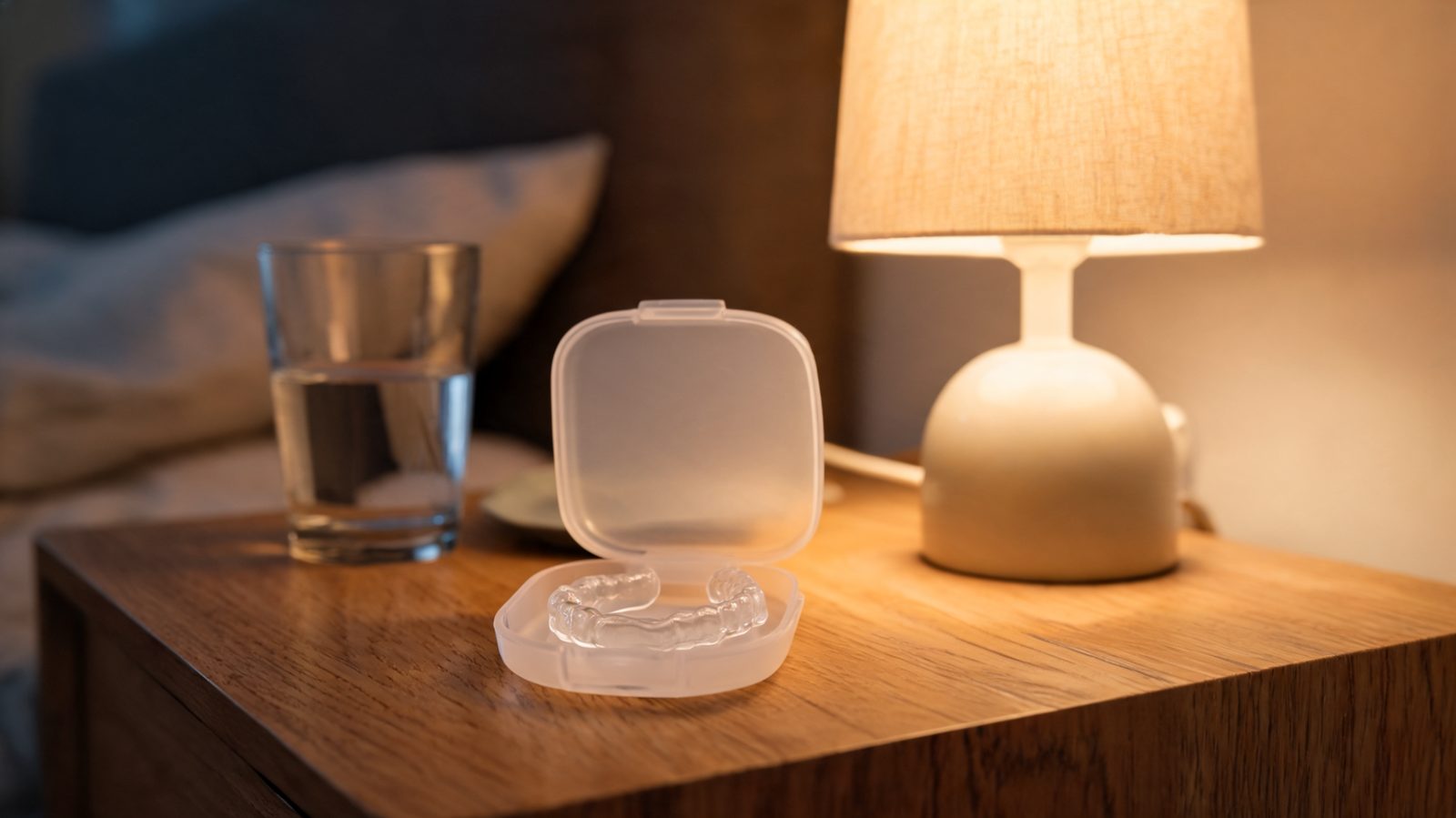
A night guard is a clear, durable appliance that fits over your upper or lower teeth while you sleep. It sits between your teeth so they cannot grind against each other. It absorbs the force of clenching, helps your jaw muscles relax, and protects your teeth and dental work.
Custom guards vs store bought guards
You can buy guards online or at the drugstore, but they are made to fit everyone, so they often fit no one very well. An over the counter guard that is loose or bulky can be uncomfortable, and some people end up chewing on it, which can make clenching worse. The ADA notes that store bought guards may not provide the same protection as one made for you. A custom night guard is made from impressions of your own teeth, so it fits closely and stays in place.
Night guards are not sports guards
A night guard is designed for grinding, not for impact. If you or your child play contact sports, ask about an athletic mouthguard as well. They are built differently and do different jobs.
How long a night guard lasts
With proper care, most custom night guards last 3 to 5 years or longer, depending on how hard you grind and the material used. Bring yours to your checkups so we can see how it is wearing.
Getting a Night Guard at Riverside Dental

Here is how the process works at our Sherman Oaks office.
1. Bruxism evaluation
We examine your teeth, your jaw joint (TMJ) and your bite to confirm the signs of nighttime grinding. A TMJ screening is part of your exam.
2. Custom impressions
We take digital or physical impressions of your teeth so the guard fits precisely and comfortably.
3. Fabrication
Your night guard is made in a professional dental lab from high grade acrylic or a softer material, depending on your needs. We offer soft and dual laminate designs.
4. Delivery and adjustment
We make sure the guard fits snugly, feels comfortable and works the way it should while you sleep, and we adjust it if anything feels off.
You can read more about the process on our custom night guards in Sherman Oaks page.
Simple Habits That Help Alongside a Night Guard

A night guard protects your teeth, but a few daily habits can help reduce clenching too:
- Notice daytime clenching. Your lips should be together and your teeth slightly apart when you are relaxed. If you catch your teeth pressed together, let your jaw go loose.
- Wind down before bed. A calmer evening routine, with screens off a little earlier, can help some people clench less.
- Go easy on evening coffee and alcohol. Both are linked with more grinding.
- Do not chew on pens, ice or gum all day. Constant chewing keeps your jaw muscles working.
- Keep up with checkups. Regular visits let your dentist spot new wear early, before it turns into a crack.
What About Cost and Coverage?
Some PPO dental insurance plans cover part or all of the cost of a night guard. We are happy to check your benefits before you start, and we accept most PPO plans and offer payment plans. You can also check our special offers page for the current Night Guard Special.
Frequently Asked Questions
How do I know if I grind my teeth at night?
Common signs are jaw pain or tightness when you wake up, dull morning headaches, worn or chipped teeth, tooth sensitivity, and a partner hearing grinding sounds. A dentist can confirm it by checking your teeth, jaw joint and bite.
What causes teeth grinding at night?
Stress is a common trigger, but grinding is also linked to sleep disorders, teeth that do not line up properly, missing or crooked teeth, and the use of alcohol, tobacco and coffee. Often it is a mix of several things.
Can teeth grinding damage my teeth?
Yes. Regular grinding can wear down enamel, chip or crack teeth, damage fillings and crowns, and strain the jaw joint. A night guard helps prevent that damage.
Is a custom night guard better than a store bought one?
Over the counter guards often do not fit well and can be uncomfortable. A custom night guard is made from impressions of your teeth, so it fits closely, stays in place and is designed to last.
How long does a custom night guard last?
With proper care, most night guards last 3 to 5 years or longer, depending on how hard you grind and the material used.
Does insurance cover night guards?
Some PPO dental plans cover part or all of the cost. Riverside Dental checks your benefits before treatment and offers payment options.
Protect Your Teeth While You Sleep
If you wake up with a sore jaw, headaches or teeth that feel worn, grinding may be the cause, and it is much easier to protect your teeth now than to repair them later. The first step is a quick evaluation of your teeth, jaw and bite.
We are at 12926 Riverside Dr, Suite D, Sherman Oaks, CA 91423, an easy drive from Studio City, Encino, Valley Village, and Van Nuys. Call (818) 784-5889 or book online. New to our office? Our $75 New Patient Special includes a comprehensive exam and full X-rays.