
When your gums bleed while brushing, they’re trying to get your attention. That bleeding might mean you have gingivitis, which is the early stage of gum disease. If you brush it off, gingivitis can turn into something more serious called periodontitis.
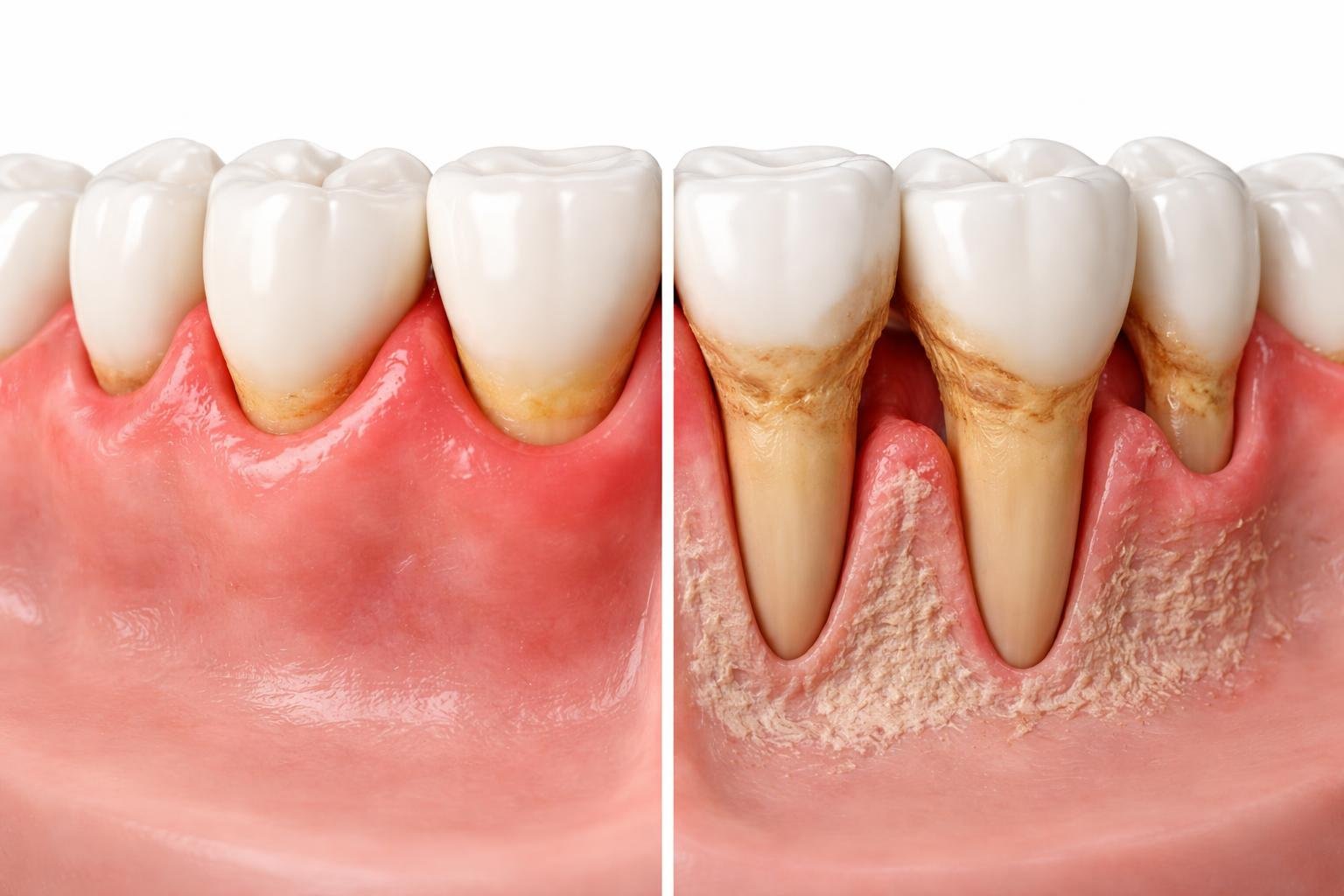
Here’s the big thing: gingivitis only affects your gums and you can fix it, but periodontitis actually damages the bone and tissue that hold your teeth in place. That damage sticks around. Gingivitis makes your gums red, puffy, and quick to bleed. Periodontitis digs deeper and can loosen your teeth or even make you lose them.
If you can spot the difference between these two, you can jump in before things get out of hand. The upside is that you can stop gingivitis in its tracks with the right care.
Key Takeaways
- Gingivitis is reversible with proper care, but periodontitis causes permanent damage to your teeth and bones.
- Early warning signs like bleeding and swollen gums are your cue to act.
- Solid oral hygiene and seeing your dentist regularly keep gum disease from getting worse.
Gingivitis vs Periodontitis: Key Differences
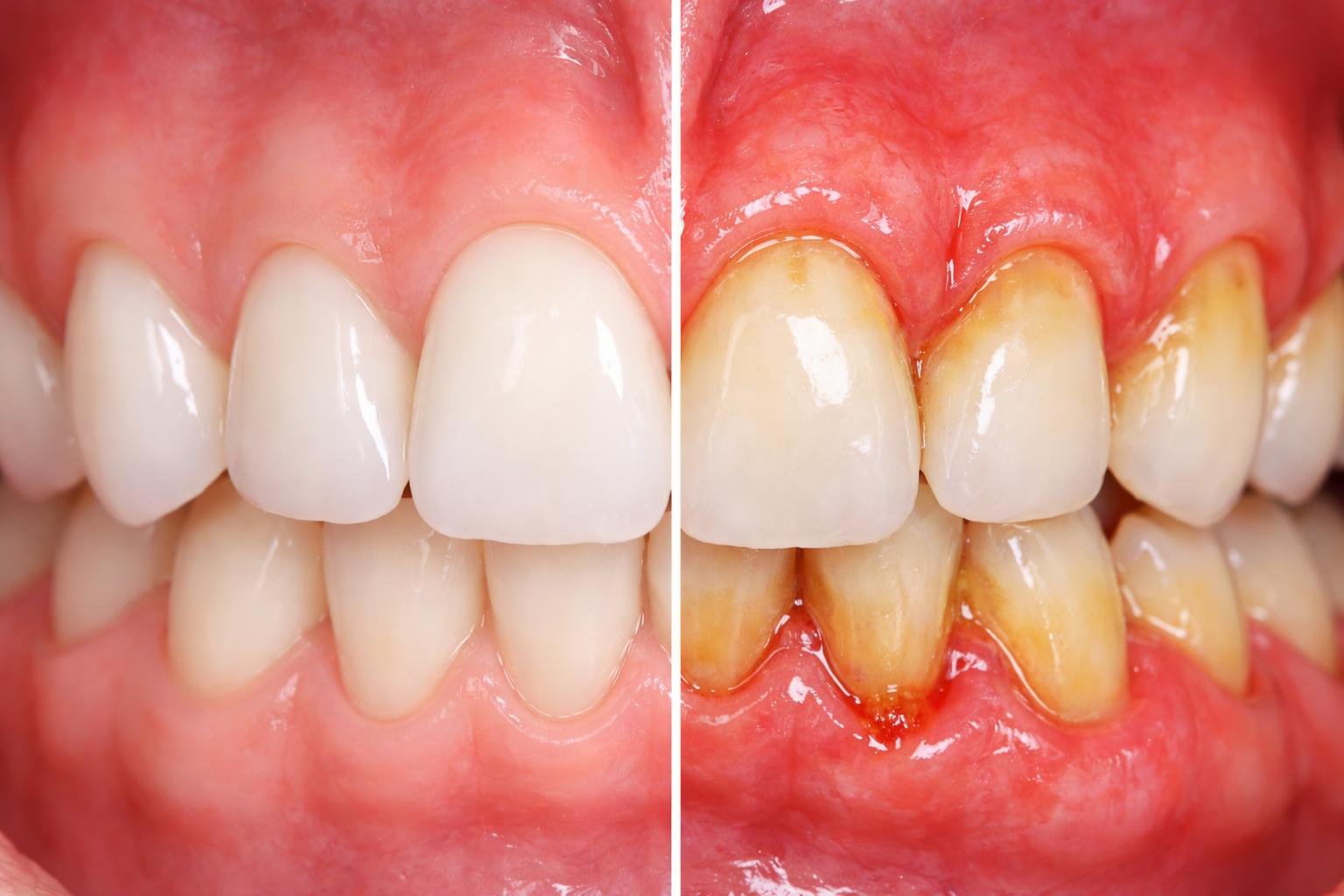
Gingivitis and periodontitis are different stages of gum disease. Gingivitis is reversible, but periodontitis causes lasting harm to the tissues and bone supporting your teeth.
What Is Gingivitis?
Gingivitis is where gum disease starts. Plaque builds up on your teeth and at the gum line.
Bacteria in that plaque irritate your gums, making them inflamed. If you let plaque harden, it turns into tartar and things get worse.
Common signs of gingivitis:
- Gums bleed when you brush or floss
- Swollen, red, or puffy gums
- Tender gums that feel sore
- Bad breath that sticks around even after brushing
The upside? Gingivitis is totally reversible. Your gums still hug your teeth, and there’s no bone loss yet. If you brush, floss, and get professional cleanings, you can get your gums back to normal.
What Is Periodontitis?
Periodontitis shows up if you ignore gingivitis. The infection moves below your gum line and starts eating away at the bone and tissues that keep your teeth steady.
Your gums pull away from your teeth, forming pockets. These pockets trap even more plaque and tartar, making the infection worse. Once you get periodontitis, you can’t undo the damage.
Symptoms of periodontitis:
- Gums recede, so your teeth look longer
- Deep gum pockets between teeth and gums
- Teeth that feel loose or start to move
- Persistent bad breath
- Pus between teeth and gums
If you don’t treat it, periodontitis leads to bone loss and, eventually, tooth loss.
Disease Progression and Stages
Gum disease gets worse if you let it slide. Gingivitis always comes first and is the mildest form.
Early periodontitis is when gums start pulling away, making shallow pockets (4-5 millimeters). You start to lose a little bone at this point.
Moderate periodontitis means deeper pockets (6-7 millimeters) and more bone loss. Your teeth might feel a bit loose.
Advanced periodontitis is the worst stage. Pockets get deeper than 7 millimeters, and you lose a lot of bone. Teeth can get very loose or even fall out.
Each stage needs more serious treatment. If you catch it early, you can keep things from getting worse.
Key Structural and Symptom Differences
You can spot the difference between gingivitis and periodontitis by looking at your gum tissue and symptoms.
| Feature | Gingivitis | Periodontitis |
|---|---|---|
| Reversibility | Fully reversible | Permanent damage |
| Pocket Depth | Normal depth | 4mm or deeper |
| Bone Loss | None | Yes |
| Gum Attachment | Still attached | Gums pull away |
| Tooth Stability | Stable | Loose or shifting |
Gingivitis only hits the surface of your gums. You might see bleeding gums and swelling, but the gums still cling to your teeth.
Periodontitis attacks the structures under your gums. Your gums recede, tooth roots get exposed, and bone loss weakens your teeth. What started as just a little bleeding can turn into constant inflammation and even tooth loss.
Causes, Risk Factors, and Prevention
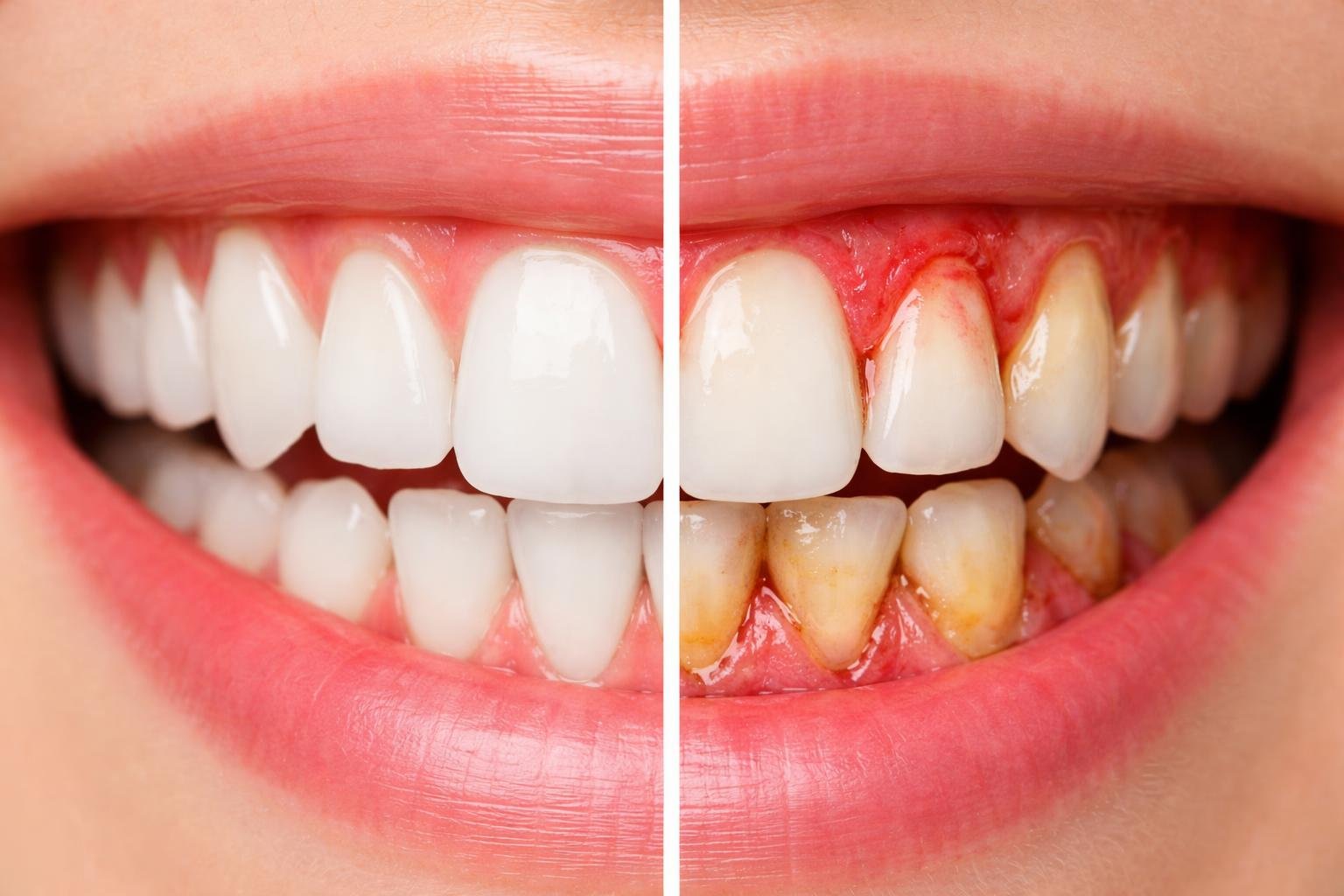
Both gingivitis and periodontitis start with plaque buildup on your teeth. But your habits, health, and lifestyle choices play a big part in what happens next.
Primary Causes of Gingivitis and Periodontitis
Plaque is the main culprit behind gingivitis. It’s a sticky film of bacteria that forms on your teeth all day.
If you don’t brush and floss, plaque hardens into tartar in just a day or two.
Only your dentist can remove tartar. It gives bacteria a place to hide along your gums.
Bacteria in plaque and tartar release toxins that bug your gum tissue. That’s why your gums get red and swollen. If you don’t practice good oral hygiene, this cycle just keeps going.
When gingivitis sticks around, it can turn into periodontitis. The constant inflammation damages the tissue and bone that hold your teeth. Gums start to pull away, forming pockets that trap even more bacteria.
Common Risk Factors
A bunch of things can raise your risk for gum disease:
Lifestyle factors:
- Smoking or using tobacco (this one really ups your risk)
- Not eating well, especially if you’re low on vitamin C
- Stress (it weakens your immune system)
Health-related factors:
- Dry mouth from meds or medical issues
- Diabetes and anything that messes with your immune system
- Hormonal changes during pregnancy, puberty, or menopause
- Genetics (some people just get unlucky here)
Oral care habits:
- Not brushing or flossing regularly
- Skipping dental checkups
- Some meds that dry out your mouth
Smoking is especially rough on your gums. It makes it harder for your body to fight infections and slows down healing.
Strategies for Prevention and Gum Health Maintenance
Stopping gum disease starts with solid dental habits. Brush twice a day with fluoride toothpaste for at least two minutes. Make sure you angle your brush toward your gum line to clear away plaque.
Floss every day to clean between your teeth, since your brush can’t get in there. An antiseptic or antimicrobial mouthwash can help, but don’t let it replace brushing and flossing.
See your dentist every six months for professional cleanings and checkups. Your dentist will remove tartar and look for early signs of gum disease.
Other ways to keep your gums healthy? Quit tobacco, eat a balanced diet full of vitamins, manage stress, and stay hydrated to avoid dry mouth. If you have diabetes or other health issues, keep them in check to support your gums.
Frequently Asked Questions
People often have questions about how to spot gum disease, what treatment costs, and whether it’s contagious.
How can you tell the difference between gingivitis and early-stage periodontal disease?
The best way to know for sure is to see your dentist. They’ll use a little probe to measure the pockets between your gums and teeth.
With gingivitis, those pockets are 3mm deep or less, and there’s no bone loss on X-rays. Your gums might look red or swollen and bleed when you brush or floss.
If you have early-stage periodontitis, pocket depths are 4mm or more. X-rays will show some bone loss. Gums may start pulling away, and you might see gaps.
What symptoms indicate gingivitis has progressed to periodontitis?
Watch out for a few warning signs. Your gums might start receding, making your teeth look longer.
If you have bad breath that sticks around after brushing, that’s another clue. You might see pus between your teeth and gums, or your gums could feel extra tender.
If your teeth feel loose or start to shift, that’s serious. Pain when you chew is a sign the bone is getting weak. If you notice these things, see your dentist right away.
Is periodontitis reversible, and what factors affect whether it can be controlled?
You can’t fully reverse periodontitis because the bone and tissue damage is permanent. But you can stop it from getting worse with the right treatment.
How well you control periodontitis depends on a few things. Starting treatment early really helps.
Your daily brushing, flossing, and regular dental visits make a huge difference. Smoking, diabetes, and some medications can make it harder to manage. Genetics also play a role in how your body heals.
What treatment options are typically used for periodontitis compared with gingivitis?
For gingivitis, your dentist or hygienist will give you a professional cleaning and help you step up your home care. They’ll remove plaque and tartar, and you’ll need to brush and floss every day to keep it from coming back.
Treating periodontitis is more involved. Scaling and root planing (a deep cleaning) removes bacteria from below the gum line and smooths out your roots. Sometimes, your dentist will prescribe antibiotics to help control infection.
If things are advanced, you might need surgery. Flap surgery lets your dentist clean out deeper areas and shrink pocket depths. Bone grafts can rebuild lost bone in some cases.
How much does professional treatment for gingivitis usually cost at a dental clinic?
A regular dental cleaning for gingivitis usually runs between $75 and $200 if you don’t have insurance. Prices vary depending on where you live and the dental office.
Most dental insurance plans cover preventive cleanings twice a year at 100 percent. If you need a deeper cleaning, it might cost $100 to $300 per visit.
Check your insurance benefits before you go in. If you don’t have insurance, many dental offices offer payment plans.
Is gingivitis contagious, and is it safe to kiss someone if you have it?
Gingivitis isn’t directly contagious like a cold or the flu. Still, the bacteria behind gum disease can move from one person to another through saliva when you kiss or share utensils.
Your chance of getting gingivitis from these bacteria really depends on how well you take care of your teeth and how strong your immune system is. If you stick to good dental habits, you’re way less likely to end up with gum issues even if you come into contact with the bacteria.
You can still kiss someone if you have gingivitis, though it’s smart to keep up your oral hygiene to protect both of you. Brushing, flossing, and getting proper treatment lower the amount of bacteria in your mouth.
Try not to share toothbrushes or eating utensils. That makes it a lot harder for bacteria to spread between you and someone else.