Losing a tooth in an accident is one of those moments that stops you cold. Whether it happens during a pickup basketball game, a fall, or an unexpected collision, the shock is immediate and the window to act is short.
What you do in the first 30 minutes after a tooth gets knocked out can determine whether you keep that tooth permanently or lose it for good.
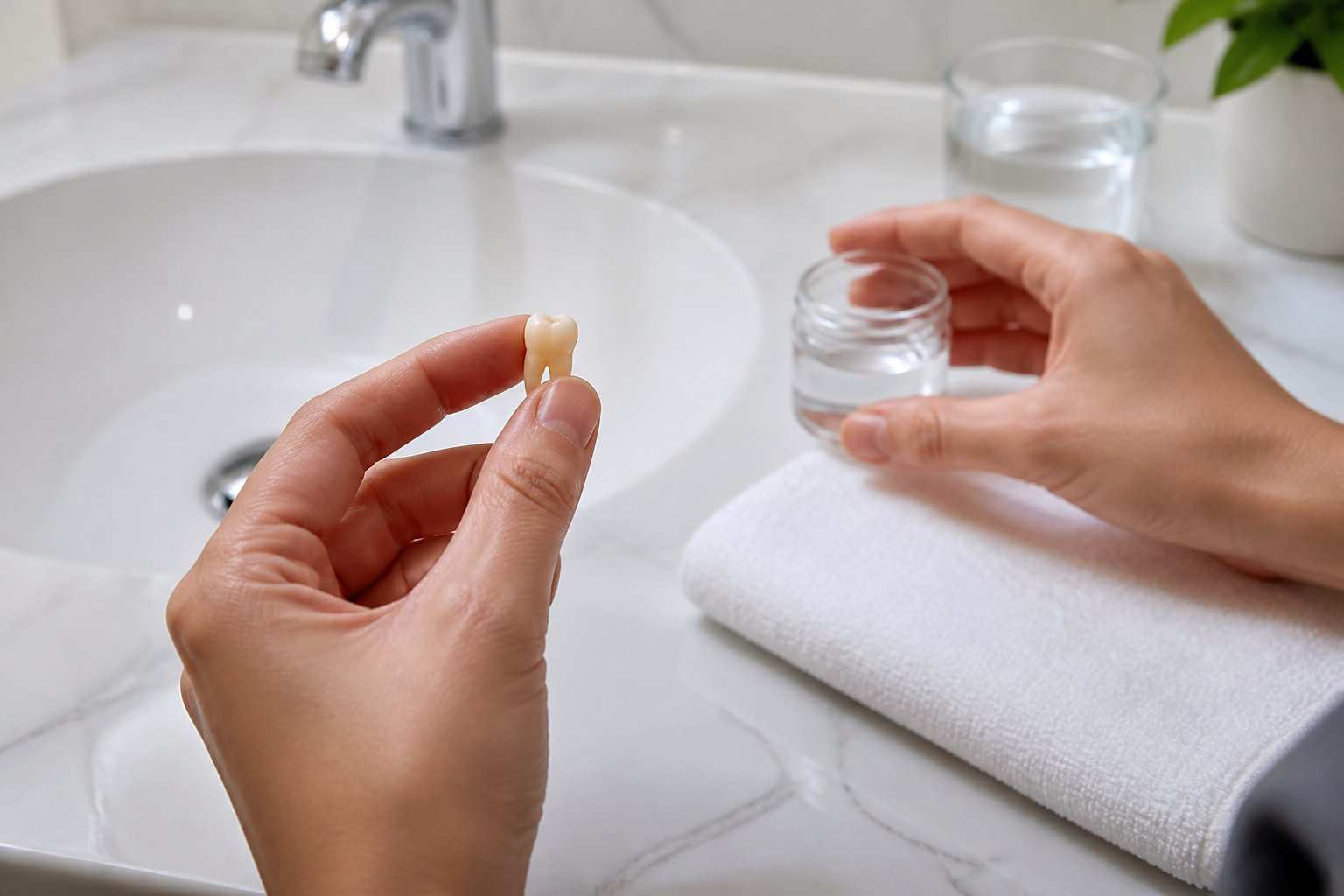
The good news is that a knocked-out tooth is not automatically a lost tooth. With the right first-aid steps and prompt professional care, successful reimplantation is genuinely possible.
The key is knowing exactly what to do, and what to avoid, before you reach a dentist. This guide walks you through every critical step, from the scene of the accident to the dental chair.
Key Takeaways
- Acting within 30 minutes gives a knocked-out tooth the best chance of being successfully reimplanted.
- How you handle and store the tooth at the scene directly affects whether it can be saved.
- Baby teeth and permanent teeth require completely different responses, so knowing the difference matters.
Why The First 30 Minutes Matter
A tooth knocked completely free from its socket is a dental emergency where time is the deciding factor. The ligament fibers attached to the root begin to deteriorate quickly once exposed to air, and reimplantation becomes significantly harder after the one-hour mark.
What Counts As A True Dental Avulsion
A dental avulsion means the tooth has been fully displaced from its socket, root and all. This is different from a chipped tooth or one that has been pushed sideways but remains partially attached.
With a true avulsion, you will hold the entire tooth in your hand. The socket will be empty, and bleeding from the gum tissue is common. This situation always qualifies as a dental emergency, regardless of pain level.
How Timing Affects The Chance Of Saving The Tooth
The periodontal ligament cells on the root surface need to stay alive for reimplantation to work. Within 30 minutes of the injury, those cells remain viable and the success rate for reimplantation is highest.
Between 30 and 60 minutes, the window narrows but treatment is still possible. Beyond 60 minutes, the ligament cells begin to die, which makes the tooth harder to reattach and increases the likelihood of complications such as root resorption.
Getting to a dentist as fast as possible, while keeping the tooth moist, is the most important thing you can do.
Immediate Steps At The Scene

Your actions in the minutes immediately after the tooth comes out have a direct impact on whether it can be saved. Stay calm, move quickly, and follow these steps in order.
Pick Up The Tooth By The Crown Only
The crown is the white, visible part of the tooth that normally sits above the gum line. Pick the tooth up by that portion only.
The root contains periodontal ligament fibers that are essential for reattachment. Touching the root, even briefly, can damage or kill those cells and reduce the chance of successful reimplantation.
Rinse It Gently Without Scrubbing
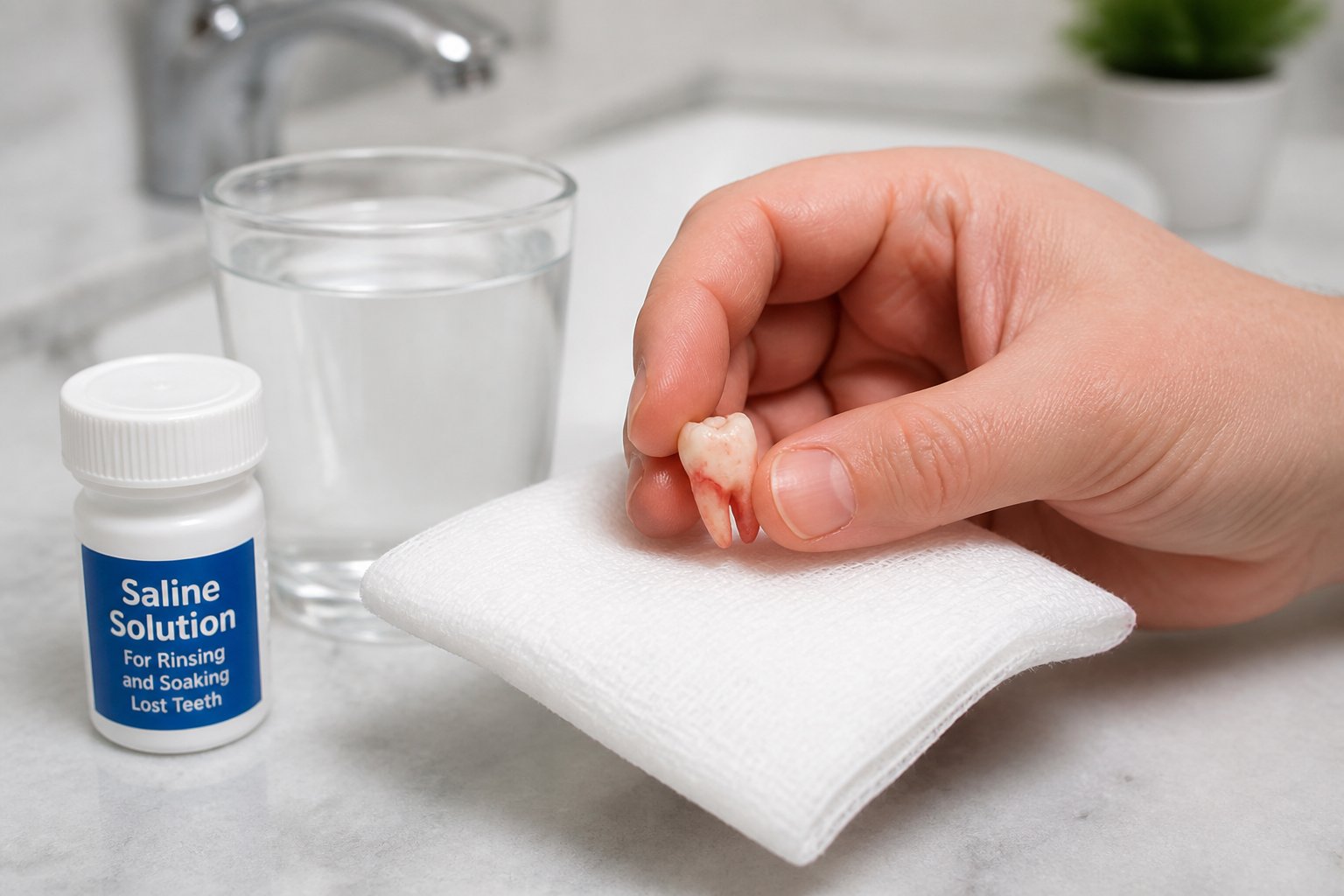
If the tooth is visibly dirty, rinse it gently with milk, saline solution, or your own saliva. Tap water is a last resort since its low mineral content can damage the root cells.
Do not scrub the tooth, use soap, wrap it in a dry cloth, or try to sterilize it. A brief, gentle rinse is all that is needed.
Try To Place It Back In The Socket If Possible
Reinserting the tooth into the socket immediately is the single best thing you can do for its survival. Hold the tooth by the crown, orient it correctly, and gently push it back into the empty socket until it sits at the same level as the surrounding teeth.
Bite down softly on a clean piece of gauze or cloth to hold it in place while you travel to a dentist.
Keep The Tooth Moist If Reinsertion Is Not Possible
If reinsertion is not an option due to pain, bleeding, or confusion about the correct position, keeping the tooth moist becomes the priority. Place it in a small cup of cold milk, which preserves the root cells better than most alternatives.
If milk is unavailable, use a saline solution or tuck the tooth between your cheek and gum. Never let it sit dry on a counter or wrap it in a dry tissue.
What Not To Do
Knowing what to avoid is just as important as knowing what to do. Several common instincts can actually reduce the tooth’s chances of survival before you ever reach a dentist.
Avoid Touching The Root
The root surface holds the living ligament tissue responsible for reattachment. Gripping the tooth by the root, even once, can strip away those cells.
Always hold the tooth by the crown, and if others are helping you, remind them of the same.
Do Not Let The Tooth Dry Out
Letting a knocked-out tooth sit in open air for more than a few minutes causes irreversible damage to the root cells. Dry storage is one of the most common mistakes people make at the scene.
If you cannot reinsert it, the tooth needs to be submerged or held in a moist environment immediately. A tooth that dries out for 20 to 30 minutes has significantly reduced viability, even if it looks intact.
Skip Home Remedies And Adhesives
Do not attempt to use super glue, denture adhesive, or any household product to reattach the tooth yourself. These substances are not safe for oral use and will complicate professional treatment.
Avoid rinsing your mouth with harsh mouthwash or applying topical pain medications directly to the tooth or socket without guidance. Simple, clean, and fast is the standard to follow until you reach professional care.
When To Seek Emergency Dental Care
A knocked-out tooth always warrants an urgent call to a dental office, but certain signs tell you exactly how fast you need to move and whether a dentist or an emergency room should be your first stop.
Signs You Need Same-Day Treatment
Any fully avulsed permanent tooth is an automatic reason to contact a dentist immediately. Beyond that, watch for heavy or uncontrolled bleeding from the socket that does not slow with gentle pressure.
Significant swelling, intense pain spreading to the jaw or head, or visible injury to surrounding teeth also signal that same-day care is necessary. Practices like Riverside Dental in Sherman Oaks offer urgent availability for situations like this, which means you do not always have to wait or go somewhere unfamiliar.
When To Go To An ER First
If the dental trauma was caused by a serious accident, go to an emergency room before a dental office. Signs that warrant ER-first care include loss of consciousness at any point, jaw pain or an inability to close your mouth properly (which may indicate a fracture), facial lacerations requiring stitches, or other injuries that need immediate medical attention.
Once those injuries are assessed and stabilized, you can follow up with a dentist for the tooth itself. Bring the tooth with you in its moist storage container regardless of where you go first.
Special Considerations For Children And Adults
The appropriate response to a knocked-out tooth changes significantly depending on whether the tooth is a baby tooth or a permanent one. Getting this distinction right at the scene can prevent additional harm.
How Baby Teeth Are Handled Differently
If a child knocks out a baby tooth, do not attempt to reinsert it. Placing a baby tooth back into the socket risks damaging the permanent tooth forming underneath, which can cause developmental problems that affect the child long-term.
Instead, apply gentle pressure to control any bleeding, keep the child calm, and call a dentist right away. Bring the tooth along to the appointment so the dentist can confirm it came out whole. The dentist may place a space maintainer later if needed.
Why Permanent Teeth Need Urgent Attention
A permanent tooth that is knocked out has no natural replacement waiting behind it. Losing it without reimplantation means exploring restorative options such as implants or bridges, which involve more time, cost, and procedures.
That is why every minute matters with an adult tooth. The urgency for a permanent tooth is much higher than for a baby tooth, and the same-day timeline for reaching a dentist should be treated as a hard deadline, not a suggestion.
What Treatment May Look Like After Arrival
Once you reach the dental office, the focus shifts from first aid to professional assessment and stabilization. Treatment is typically straightforward when the tooth has been handled correctly and arrives quickly.
Exam, Imaging, And Repositioning
The dentist will begin by examining the socket and the surrounding tissue, then take X-rays to assess the extent of the injury and confirm there is no bone damage. If the tooth was reinserted at the scene, the dentist will check its position and adjust it if needed.
If it was stored in milk or saline, the dentist will clean it carefully and reposition it into the socket. Local anesthesia is used to keep you comfortable throughout the process.
Splinting, Follow-Up Visits, And Healing
After repositioning, the dentist will attach a soft splint, typically a flexible wire bonded to the adjacent teeth, to hold the reimplanted tooth in place while the surrounding bone and ligament tissue heal. This splint usually stays in place for one to two weeks for uncomplicated cases.
Follow-up visits are needed to monitor healing, check for signs of infection, and assess root health. Root canal treatment may be recommended within a few weeks, depending on how long the tooth was outside the mouth.
Possible Next Steps If The Tooth Cannot Be Saved
If too much time has passed or the root cells have not survived, reimplantation may not be viable. In those cases, your dentist will discuss tooth replacement options.
Dental implants are the most common long-term solution, as they function and feel closest to a natural tooth. Bridges or partial dentures are alternatives depending on your situation, bone condition, and budget. Your dentist will help you weigh the options based on your specific circumstances.
Frequently Asked Questions
How should you handle a tooth that has been knocked out?
Pick the tooth up by the crown, which is the white visible portion, and avoid touching the root. Rinse it gently with milk or saline if it is dirty, then either reinsert it into the socket or store it in cold milk while you travel to a dentist immediately.
Can a knocked-out permanent tooth be put back in the socket?
Yes, a permanent tooth can often be successfully reimplanted if it is handled correctly and dental care is reached quickly. The periodontal ligament cells on the root need to remain alive, which is why proper storage and a fast response are critical to success.
How long do you have to reinsert a knocked-out tooth for the best chance of saving it?
The ideal window is within 30 minutes of the injury. Reimplantation is still possible up to about 60 minutes, but the success rate drops as time passes.
Beyond one hour, the root cells deteriorate significantly, and reimplantation becomes increasingly difficult.
Why is storing a knocked-out tooth in milk recommended?
Milk has a mineral content and pH level that help keep the periodontal ligament cells alive longer than water or dry storage. It is also widely available in most settings, making it a practical first option when reinserting the tooth is not immediately possible.
What should you do if a child’s tooth gets knocked out?
If the tooth is a baby tooth, do not try to reinsert it. Putting it back could interfere with the permanent tooth developing beneath the gum.
Control any bleeding with gentle pressure, keep the child calm, and contact a dentist as soon as possible.
What should an adult do if a tooth falls out but there is little or no pain?
Absence of pain does not reduce the urgency. You should still store the tooth in milk or saline.
Avoid letting it dry out. Get to a dental office within 30 minutes.
Low pain may indicate nerve damage rather than a minor injury. Professional evaluation is always necessary regardless of how you feel at the scene.