A dental emergency can happen to anyone at any time. You might bite down on something hard and crack a tooth, or your child might fall and knock out a tooth while playing.
These situations are scary and painful. Knowing what to do can make a big difference.

Stay calm and act quickly to protect your teeth and control any bleeding. You can often manage dental emergencies at home until you see a dentist.
Taking the right first aid steps can save your tooth and reduce your pain. Learning how to handle common dental problems helps you feel more confident during emergencies.
You can follow simple steps to save your tooth and avoid serious problems later.
Key Takeaways
- Stay calm and act quickly to control bleeding and protect damaged teeth during any dental emergency.
- Most dental emergencies need immediate first aid at home before you can get professional care.
- Knowing basic emergency steps can help save your teeth and reduce pain until you see a dentist.
Immediate Actions for Dental Emergencies
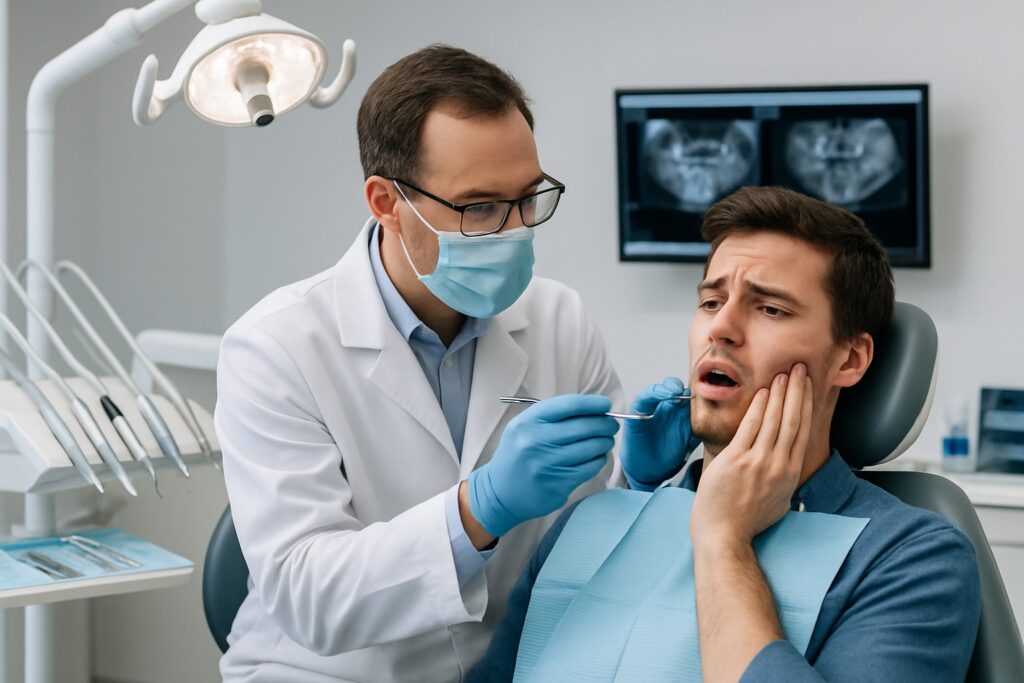
When a dental emergency strikes, stay calm and act fast. You should control bleeding, manage pain, and know when to call an emergency dentist in Sherman Oaks.
Stay Calm and Assess the Situation
Take a deep breath when a dental emergency happens. Panic makes it harder to think clearly.
Look at the problem closely. Check your mouth for loose teeth, cuts, or swelling.
Notice how much pain you feel and where it hurts most. Ask yourself:
- Is there bleeding? How much?
- Can you see broken pieces of tooth?
- Is a tooth completely knocked out?
- How bad is the pain on a scale of 1 to 10?
Write down what you see and feel. This information helps when you call your dentist.
Take photos of the injury with your phone if possible. The images help the dentist understand your situation.
Control Bleeding Effectively
Make stopping bleeding your first priority. Uncontrolled bleeding can be dangerous.
For mouth bleeding:
- Rinse gently with clean water.
- Apply pressure with clean gauze or cloth.
- Hold pressure for 10-15 minutes without peeking.
For tongue or cheek bites:
- Clean the area with water.
- Press gauze firmly on the wound.
- Replace gauze when it gets soaked.
For bleeding after tooth loss:
- Bite down on clean gauze where the tooth was.
- Keep pressure for 30-45 minutes.
- Change gauze if bleeding continues.
Call 911 if bleeding will not stop after 20 minutes of direct pressure.
Alleviate Pain and Swelling
Control pain to help you think clearly. Quick action also helps prevent swelling.
For pain relief:
- Take over-the-counter pain relievers as directed.
- Use ibuprofen for pain and swelling.
- Apply ice packs for 15 minutes at a time.
How to use a cold compress:
- Wrap ice in a thin towel.
- Hold against your cheek for 15 minutes.
- Remove for 15 minutes.
- Repeat as needed.
Never put aspirin directly on your gums. This can burn your mouth.
Pain relief options:
- Ibuprofen: reduces pain and swelling.
- Acetaminophen: helps with pain.
- Cold water rinse: gives temporary relief.
Identify When to Seek Emergency Dental Care
Some dental problems need an emergency dentist right away. Others can wait until office hours.
Call for emergency dental care immediately if you have:
- Uncontrolled bleeding
- Severe pain that medicine does not help
- Swelling in your face or neck
- A knocked-out permanent tooth
- Broken jaw or facial bones
Seek same-day care for:
- Cracked or broken teeth
- Lost fillings or crowns
- Severe toothache
- Abscess or infection signs
Wait until the next business day for:
- Small chips in teeth
- Mild tooth sensitivity
- Loose dental work that is not painful
- Minor cuts inside your mouth
Most dental offices have emergency numbers. Call this number before going to a hospital emergency room.
Emergency rooms can help with bleeding and pain but cannot fix most dental problems.
How to Address Common Dental Emergencies

Each dental emergency needs specific steps to reduce pain and prevent more damage. Acting quickly can save your teeth until you reach a dentist.
Managing Toothaches and Tooth Pain
Rinse your mouth with warm salt water to clean the area. Mix half a teaspoon of salt in a cup of warm water.
Remove food particles stuck between your teeth with dental floss. Be gentle.
Apply a cold compress to your cheek for 15-20 minutes. This helps reduce swelling and numb pain.
Take over-the-counter pain medicine like ibuprofen or acetaminophen. Follow the directions on the bottle.
Do not place aspirin directly on your tooth or gums. This can burn your mouth.
Call your dentist if the toothache is severe or lasts more than a day.
Handling a Knocked-Out Tooth
Pick up the tooth by the crown (the white part). Do not touch the root.
Rinse the tooth gently with clean water if dirty. Avoid scrubbing or removing tissue pieces.
Try to put the tooth back in its socket right away. Bite down gently on a clean cloth to hold it in place.
If you cannot put it back, keep the tooth moist. Place it in a cup of milk, salt water, or saliva.
Get to a dentist within 30 minutes for the best chance of saving your tooth.
Control any bleeding by biting down on gauze or a clean cloth.
Treating Broken, Cracked, or Chipped Teeth
Save any broken pieces of your tooth if you can. Put them in milk or salt water.
Rinse your mouth with warm water to clean the area.
Apply pressure with gauze if your mouth is bleeding. Hold it against the area for 10 minutes.
Use a cold compress on your face near the broken tooth.
Avoid chewing on the side with the broken or cracked tooth. Eat only soft foods until you see a dentist.
Cover sharp edges with dental wax or sugar-free gum if needed.
Take pain medicine if needed. See a dentist as soon as possible.
Steps for Lost Fillings or Dental Restorations
Clean the area by rinsing your mouth with warm salt water.
Use temporary dental cement from a pharmacy to fill the hole if you have it.
Try sugar-free gum as a temporary fix if you do not have dental cement.
Avoid sticky or hard foods that could damage the exposed tooth.
Do not use regular glue or household items to fix lost fillings.
Call your dentist within a day or two to get the filling replaced.
Responding to Abscesses or Oral Infections
Rinse with salt water several times a day to help clean the infected area.
Apply a cold compress to the outside of your face for 15 minutes at a time.
Take over-the-counter pain medicine to help with discomfort.
Do not pop or drain the abscess yourself.
See a dentist or doctor right away if you have fever, trouble swallowing, or facial swelling.
Get emergency care if you have trouble breathing or swallowing.
Continue good oral hygiene by brushing gently around the area.
Frequently Asked Questions
Getting emergency dental care can be hard when regular offices are closed or money is tight. You have several options.
What steps should you take if you experience a dental emergency over the weekend?
Call your regular dentist first. Many dentists have answering services for emergencies.
If your dentist is not available, visit an urgent care center. They can help with pain and infections.
For severe pain or swelling, go to a hospital emergency room. They can give you antibiotics and pain medicine.
Take over-the-counter pain relievers as directed. Use cold packs to reduce swelling.
How can you access emergency dental care when you’re unable to afford it?
Contact dental schools in your area. Students provide care at lower costs.
Look for community health centers. These centers often have sliding fee scales.
Call 211 for local resources. This free service connects you to emergency programs.
Ask the dentist about payment plans. Many offices let you pay over time.
Where can you find a dentist for a 24-hour emergency tooth extraction?
Search online for “24-hour emergency dentist” plus your city name. Many cities have dental practices open all night.
Call hospital emergency rooms. Some have dentists on staff or can refer you.
Use dental referral hotlines. Your state dental association may have emergency numbers.
Check with urgent care chains. Some locations have dentists available for extractions.
How do you find an emergency dentist in your vicinity?
Use your dental insurance website. Most insurance companies have dentist finder tools.
Search Google Maps for “emergency dentist near me.” This shows practices close to you.
Call your regular dentist’s office. Their voicemail often has emergency contact information.
Contact your local hospital. They keep lists of dentists who take emergency calls.
What actions should you take if you face a dental emergency during nighttime hours?
Take pain medicine right away. Ibuprofen works best for dental pain.
Call emergency dental hotlines. Many areas have 24-hour phone services.
Go to the emergency room for serious problems like heavy bleeding, trouble swallowing, or facial swelling.
Use temporary fixes until morning. Dental wax can cover sharp edges on broken teeth.
Are emergency dental services available at hospitals?
Most hospital emergency rooms do not fix dental problems. They focus on preventing serious infections and controlling pain.
Emergency room doctors prescribe antibiotics for infections. They also give stronger pain medicines when necessary.
Some hospitals have oral surgeons on call. These specialists handle serious injuries to teeth and jaws.
Emergency rooms refer you to a dentist. They do not do fillings, crowns, or routine dental work.