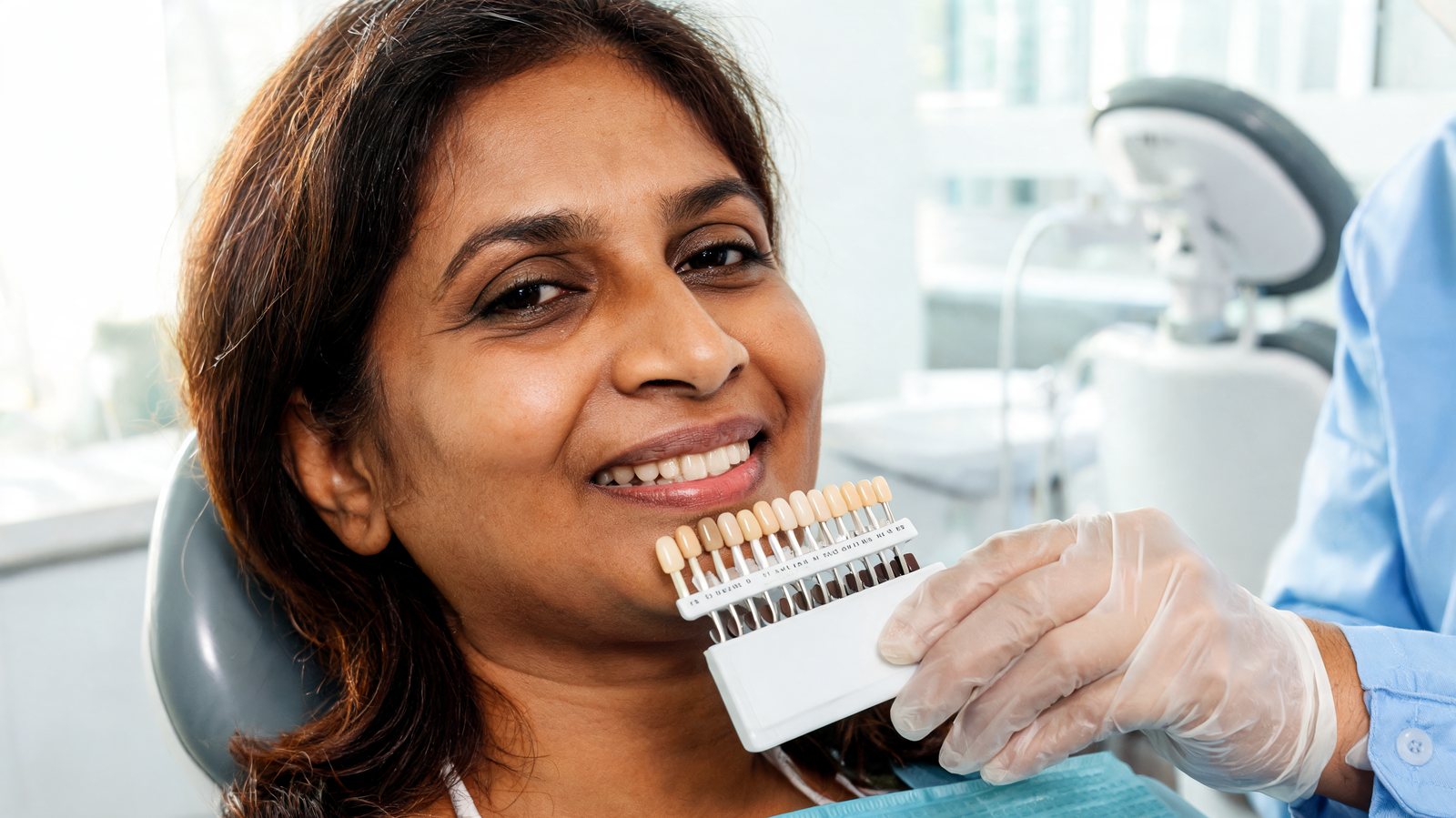
Missing a few teeth changes more than your smile. You start chewing on one side, you avoid certain foods, and you might catch yourself smiling with your mouth closed in photos. Over time the teeth next to the gaps can drift and tip into the empty space.
If you still have some healthy natural teeth, a partial denture is one of the simplest ways to fill those gaps. It is removable, it does not require surgery, and it can replace several missing teeth at once, even when they are in different parts of your mouth.
This guide explains how partial dentures work, the main types, how they compare with bridges and implants, what getting one looks like at our Sherman Oaks office, and how to care for it so it lasts. If you would like to talk about your own situation, call us at (818) 784-5889.
TL;DR
A partial denture is a removable appliance that replaces some, but not all, of your teeth. It clips onto your remaining natural teeth for support, so no surgery is needed. Partials are often a more affordable way to replace several missing teeth than bridges or implants, they help stop your other teeth from shifting, and they can be adjusted as your mouth changes. Expect a few weeks to get used to one, brush it daily, and see your dentist for follow up adjustments.
Key Takeaways
- Partial dentures replace several missing teeth while your remaining natural teeth hold them in place.
- No surgery is needed, and a partial can fill gaps in different areas of the same arch.
- They help prevent your remaining teeth from shifting into the gaps.
- Most people adjust within a few weeks, with follow up visits to fine tune the fit.
- Brush your partial daily, keep it clean and moist when it is out, and keep up with checkups.
What A Partial Denture Is, And What It Can Do For You

A partial denture is a custom made, removable set of replacement teeth attached to a base that sits on your gums. It is held in place by small clasps or attachments that grip your remaining natural teeth. You take it out to clean it and put it back in each morning.
A well made partial can help you:
- Chew more comfortably on both sides of your mouth
- Speak more clearly when missing teeth affected certain sounds
- Smile with confidence, especially when the gaps are visible
- Keep your other teeth in place, since teeth next to a gap can drift or tip over time
- Support your lips and cheeks so your face does not look sunken where teeth are missing
A partial is a good fit when you are missing several teeth but still have healthy natural teeth that can support it. If you are missing all of the teeth in an arch, a full denture is the option to discuss instead. Our full and partial dentures page covers both.
The Main Types Of Partial Dentures
There are a few common designs. Which one suits you depends on how many teeth you are missing, where the gaps are, the health of your remaining teeth, and your budget.
Metal framework partials
These use a thin, strong metal framework with tooth colored replacement teeth and gum colored acrylic. Metal clasps hook around nearby natural teeth to hold the partial steady. They are durable and relatively slim, which many people find comfortable.
Acrylic partials
These are made mostly of acrylic. They are often used as a temporary or transitional option, for example while gums heal after an extraction or while a longer term plan is being finished.
Flexible partials
These use a flexible material and clasps that blend in with your gums rather than showing metal. Some people prefer them for comfort and appearance. They are not right for every mouth, so we will tell you honestly whether they suit yours.
Implant supported options
For extra stability, dentures can also be anchored to dental implants. That does involve surgery, but it is good to know the door stays open: many patients start with a removable denture and move to an implant supported option later.
Not sure which type fits your mouth? A consultation with X-rays will tell us. Call or book online and we will walk you through it.
Call (818) 784-5889Book onlinePartial Denture Vs Bridge Vs Implant

These are the three main ways to replace missing teeth when you still have some of your own. Here is how they compare in plain terms.
- Partial denture: removable, no surgery, can replace several teeth in different spots at once, and is often the most affordable of the three. The trade off is that it is not fixed in place, and it takes some getting used to.
- Bridge: fixed in place, so it never comes out. A dental bridge uses the teeth on either side of a gap as anchors, which means those teeth are reshaped and crowned. Best for one or a few teeth in a row with healthy neighbors.
- Implant: a post placed in the jawbone that holds a crown. It is the closest to a natural tooth and does not rely on neighboring teeth, but it requires surgery, healing time, and enough bone.
There is no single right answer. Some people choose a partial because they want to avoid surgery. Others choose one because they are missing teeth in several places. Some use a partial for now and plan an implant later. We will explain the options that actually fit your mouth and your budget, and you decide.
Getting A Partial Denture At Riverside Dental
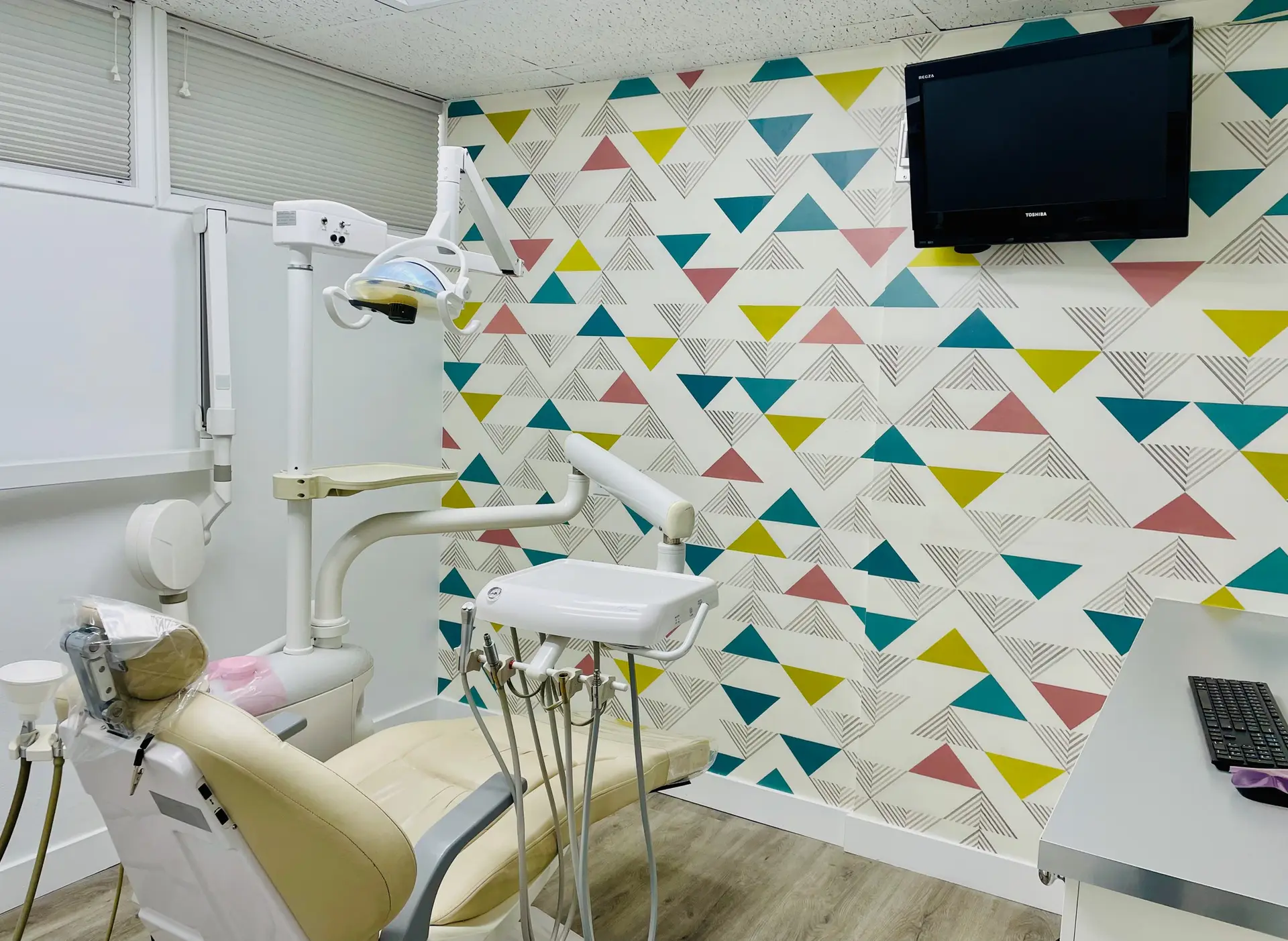
Here is how the process works at our Sherman Oaks office.
1. Consultation and evaluation
We look at your oral health, your remaining teeth, your bone, and your goals. If needed, we take impressions and X-rays to guide the plan. Any cavities or gum problems on the supporting teeth are best treated first, because your partial depends on them.
2. Extractions, if needed
If a tooth cannot be saved, we can handle gentle extractions here and plan healing time or a temporary option so you are not left without teeth.
3. Designing your partial
We take precise measurements and impressions so the partial fits well and looks natural. You preview and approve the tooth shape and shade.
4. Fitting and adjustments
When your partial is ready, we check the fit, comfort, and bite, and make adjustments so it feels right. Small sore spots in the first weeks are common and usually easy to fix at a follow up visit.
5. Ongoing support
We show you how to put it in, take it out, and clean it, and we see you for follow ups to keep it fitting well.
Getting Used To Your Partial
New dentures can feel awkward for a few weeks. The American Dental Association’s MouthHealthy page on dentures notes that they may feel loose while your cheek and tongue muscles learn to keep them in place, that minor irritation or soreness is not unusual, and that saliva flow may increase for a while. These usually settle as your mouth adjusts.
A few tips that help:
- Start with soft foods cut into small pieces, and chew on both sides at once.
- Read out loud for a few minutes a day if certain words feel strange at first.
- Put it in and take it out by hand, never by biting it into place, which can bend the clasps.
- Come back if something rubs. Persistent soreness is a reason to see us, not something to push through.
Caring For Your Partial So It Lasts
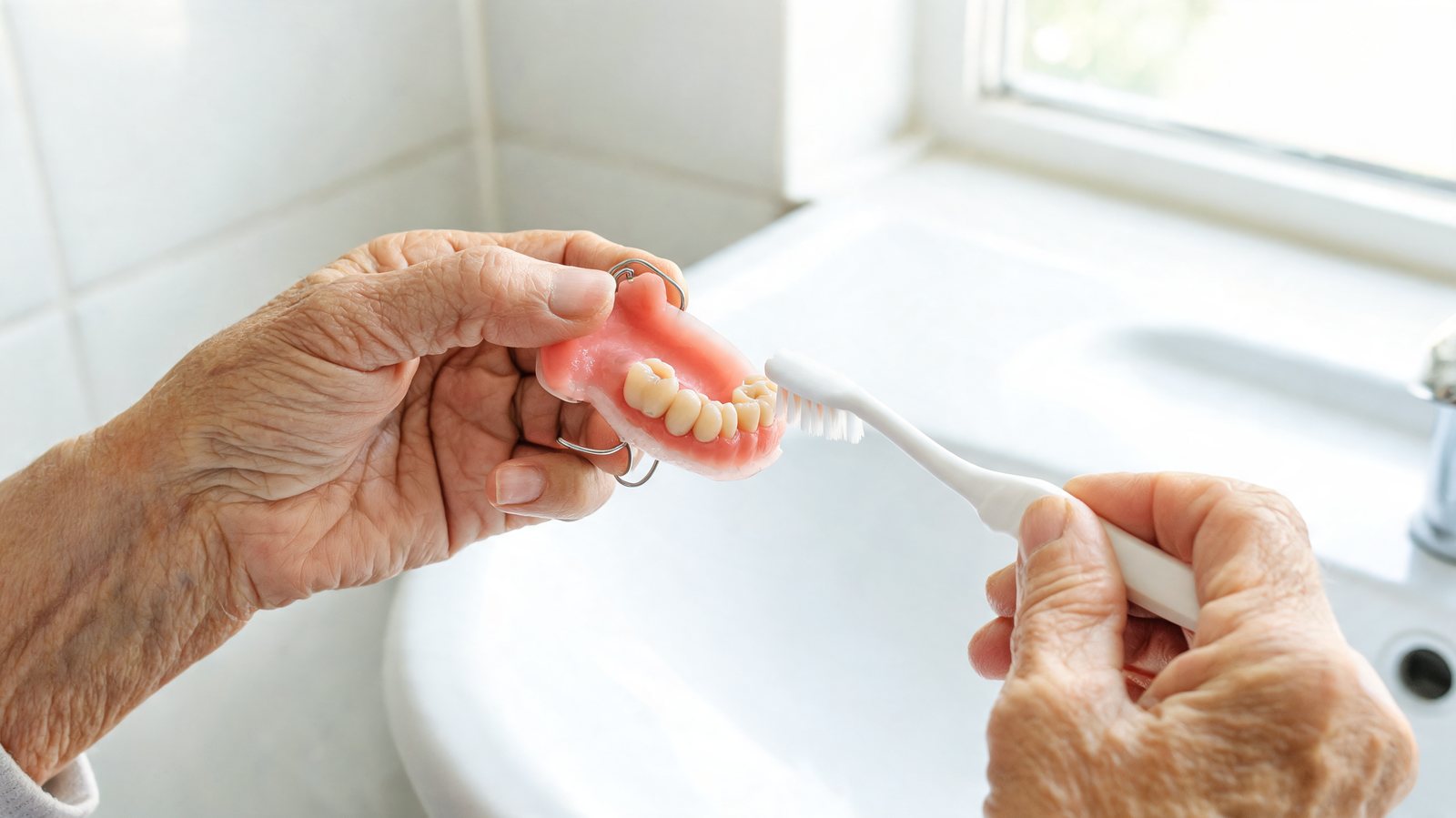
Good care keeps your partial comfortable and protects the natural teeth that hold it.
- Rinse it after eating to remove loose food.
- Brush it daily with a soft brush and a non abrasive denture cleanser. Regular toothpaste can scratch it.
- Clean your natural teeth carefully, especially the ones the clasps touch, because they are doing extra work.
- Keep it moist when it is out, in water or a denture soaking solution, so it does not dry out or warp.
- Handle it over a folded towel or a sink full of water so it does not break if you drop it.
- Never try to adjust it yourself. Bending a clasp can change the fit or break it.
With proper care, dentures typically last 5 to 10 years. Your gums and bone change over time, so occasional adjustments or relines are normal. Regular checkups let us catch fit problems early.
What About Cost And Coverage?
Cost depends on the type of partial, how many teeth it replaces, and whether you need any treatment first. Many dental plans cover part of the cost of dentures. We verify your benefits before treatment, give you a clear estimate, and offer CareCredit and other financing options. We accept most insurance plans, including Medi-Cal and Denti-Cal. See our insurance and financing page for more.
Frequently Asked Questions
Do partial dentures require surgery?
No. A partial denture rests on your gums and is held in place by clasps or attachments on your natural teeth, so no surgery is needed. Implant supported options do involve surgery.
How long does it take to get used to a partial denture?
Most people need a few weeks. It may feel loose or bulky at first and you may notice some soreness or extra saliva. Follow up visits help fine tune the fit.
How long do partial dentures last?
With proper care, dentures typically last 5 to 10 years. Occasional adjustments or relines are normal as your gums change.
Is a partial denture better than a bridge?
It depends. A partial is removable, needs no surgery, and can replace teeth in several places. A bridge is fixed but relies on crowning the teeth next to the gap. Your dentist can tell you which fits your mouth.
Can I sleep with my partial denture in?
Many dentists recommend taking a partial out at night to give your gums a rest and keep it clean. Ask us what is best in your case.
Does insurance cover partial dentures?
Many dental plans cover part of the cost. Riverside Dental verifies your benefits and gives you an estimate before treatment. We also accept Medi-Cal and Denti-Cal and offer financing.
Ready To Fill The Gaps?
If missing teeth are changing how you eat, speak, or smile, a partial denture may be the simplest way to get that back, with no surgery. The first step is an exam to see what your remaining teeth can support.
We are at 12926 Riverside Dr, Suite D, Sherman Oaks, CA 91423, an easy drive from Studio City, Encino, Valley Village, and Van Nuys. Call (818) 784-5889 or book online. New to our office? Our $75 New Patient Special includes a comprehensive exam and full X-rays.