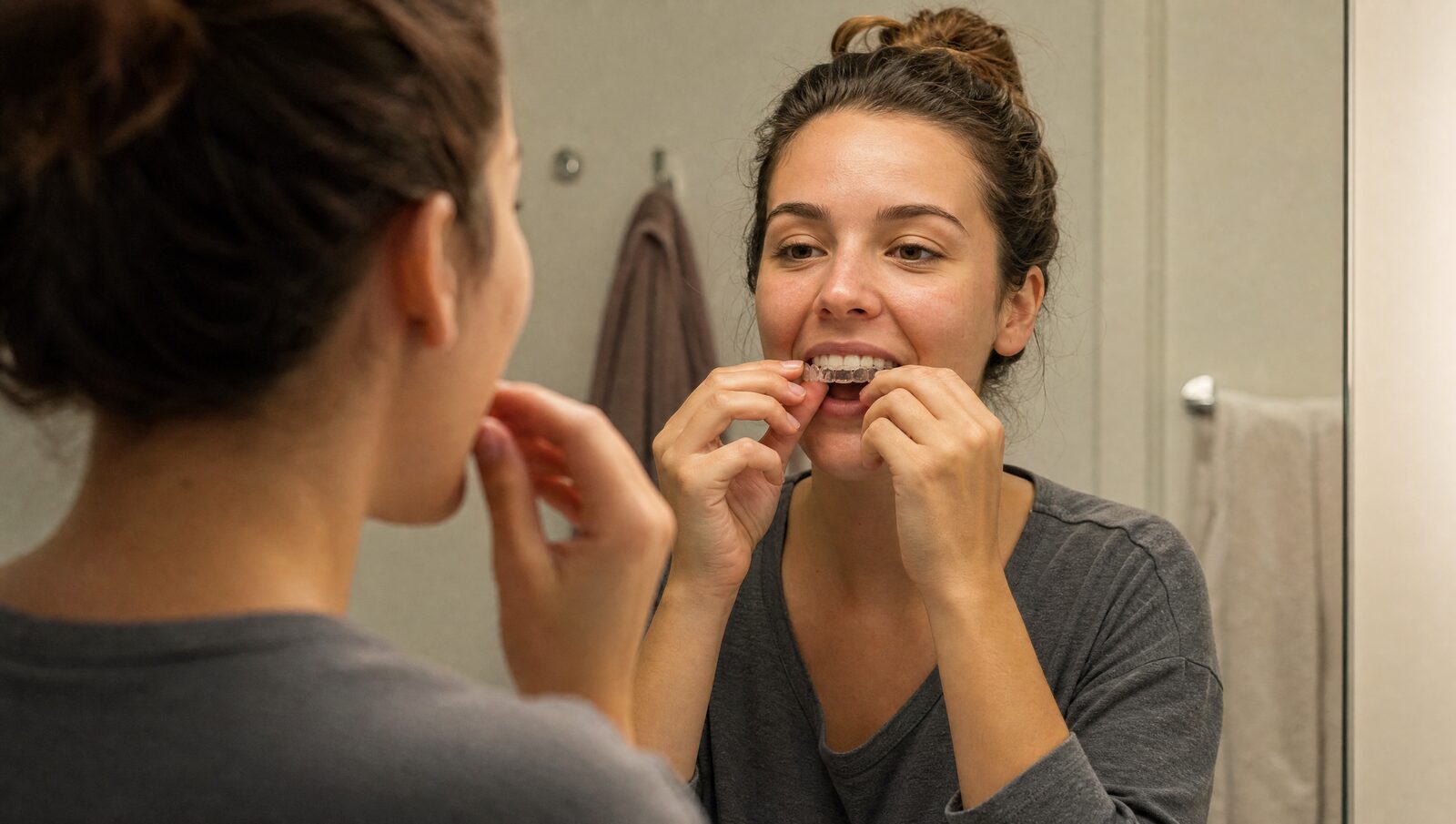
You finished braces or clear aligners, your smile is exactly where you want it, and then someone hands you a retainer and mentions, almost casually, that you will be wearing it indefinitely. It feels like the one detail nobody put on the brochure.
The honest answer: yes, some form of retainer wear is a lifetime commitment if you want your teeth to stay where treatment put them. The good news is that the commitment shrinks dramatically over time, from all-day wear at first to a few nights a week for the long haul, and most people stop noticing it entirely.
Here is why teeth refuse to stay put on their own, what the realistic wear schedule looks like, the differences between retainer types, and what to do if your retainer has been sitting in a drawer since sometime last year.
Why Teeth Move Back: The Part Nobody Explains
Teeth are not set in the jaw like fence posts in concrete. Each one hangs in its socket in a sling of tiny elastic fibers called the periodontal ligament. Orthodontic treatment works precisely because this system responds to sustained pressure: bone remodels, and the tooth migrates.
The catch is that the system never switches off. After braces or Invisalign come off, the stretched fibers around each tooth pull like rubber bands trying to return to their old shape. The bone around the newly moved teeth takes months to fully harden into its new configuration. During that window, teeth drift back toward their old positions with surprising speed. Orthodontists call it relapse, and it is the reason the months right after treatment are when retainer discipline matters most.
Even after the bone matures, the forces never fully retire. Chewing, swallowing, tongue pressure, clenching, and ordinary aging all nudge teeth over the years. That slow lifelong drift happens to everyone, including people who never had braces, which is why lower front teeth crowd on so many adults in their forties. A retainer is simply the thing that holds your finished smile against that tide.
The Realistic Wear Schedule, Phase By Phase
Exact instructions vary by case, and your orthodontic provider’s plan for you wins over any article. But the typical arc looks like this:
- The first months after treatment: full-time wear. The teeth are at their most mobile and the retainer comes out for meals and brushing, and that is about it.
- After the initial stabilization: nights only. Once your provider confirms things are holding, wear drops to while you sleep.
- The long term: a few nights a week, forever. Enough to catch any drift before it becomes visible. Most people fold it into their routine as automatically as brushing.
A useful self-check for the maintenance years: the retainer should always slide on easily. If it feels snug one night, that is not the retainer shrinking. That is your teeth having moved slightly since the last wear, and the snugness is the retainer doing its job and pulling them back. Tightness is your signal to wear it more often, not less.
The Three Kinds Of Retainers, And Where Each Shines
Clear plastic retainers
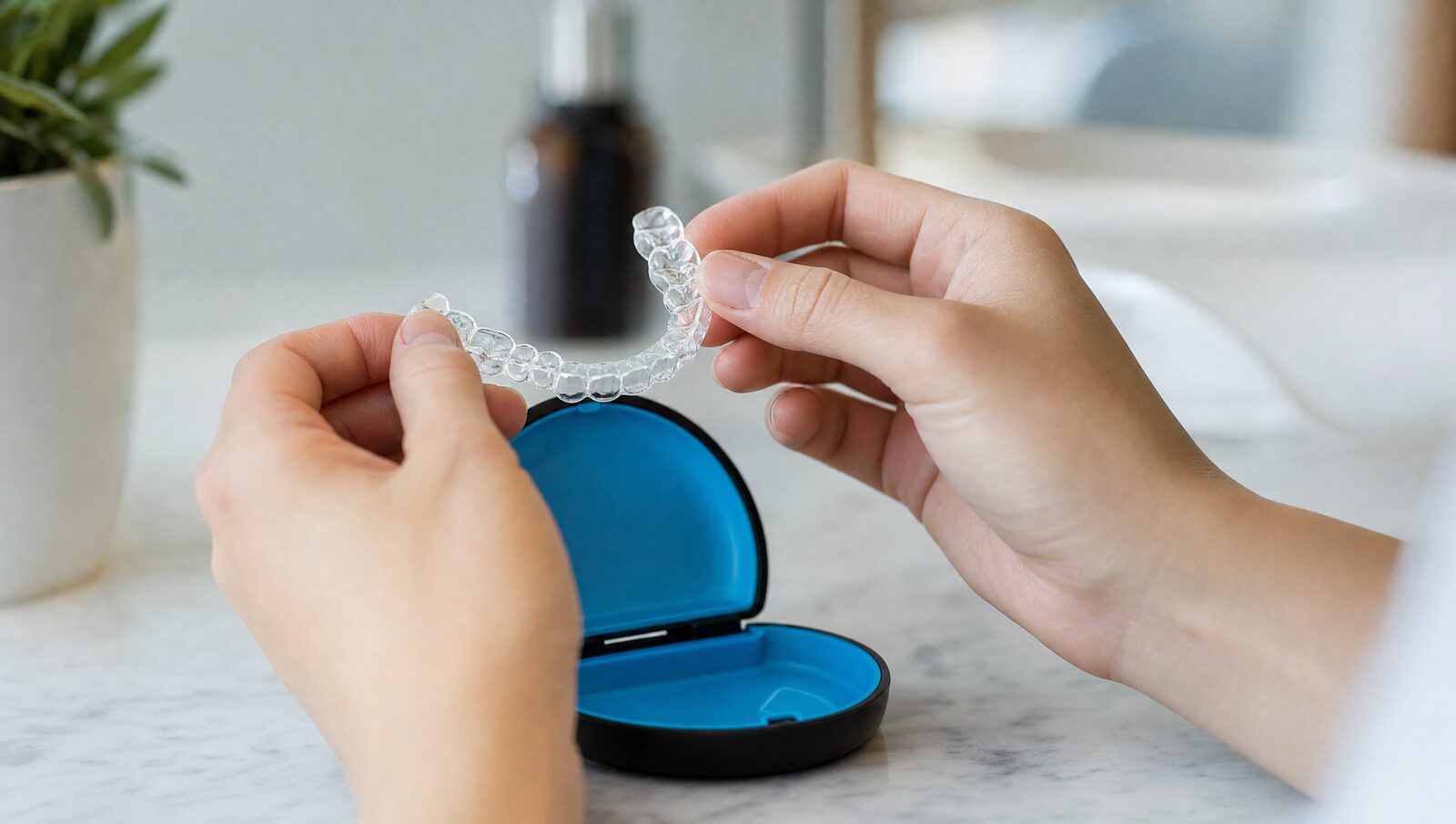
Thin, transparent trays molded to your teeth, similar in look to aligners. They are nearly invisible, inexpensive to replace, and the most common choice after clear aligner treatment. They wear out with grinding and need replacing every few years, and they should stay away from hot water, which warps them.
Hawley retainers
The classic acrylic plate with a wire across the front teeth. Less discreet, but durable, adjustable, and repairable; a well-cared-for Hawley can last many years. Some cases hold better with the precise adjustability the wire allows.
Bonded (permanent) retainers
A thin wire glued to the back of the front teeth, invisible from the outside and working around the clock with zero effort or memory required. The trade-offs: it protects only the teeth it is bonded to, it makes flossing that area more technique-dependent, and the bond needs periodic checking. Many patients end up with a bonded wire on the lower front teeth plus a removable retainer worn at night: the wire guards the teeth most prone to relapse while the tray holds everything else.
Which combination fits you depends on your bite, your history, and honestly, your habits. That conversation is part of every orthodontic plan at Riverside Dental, whether treatment was with traditional braces, clear braces, or ClearCorrect aligners, and you can read more on our retainers page.
Caring For A Retainer So It Lasts
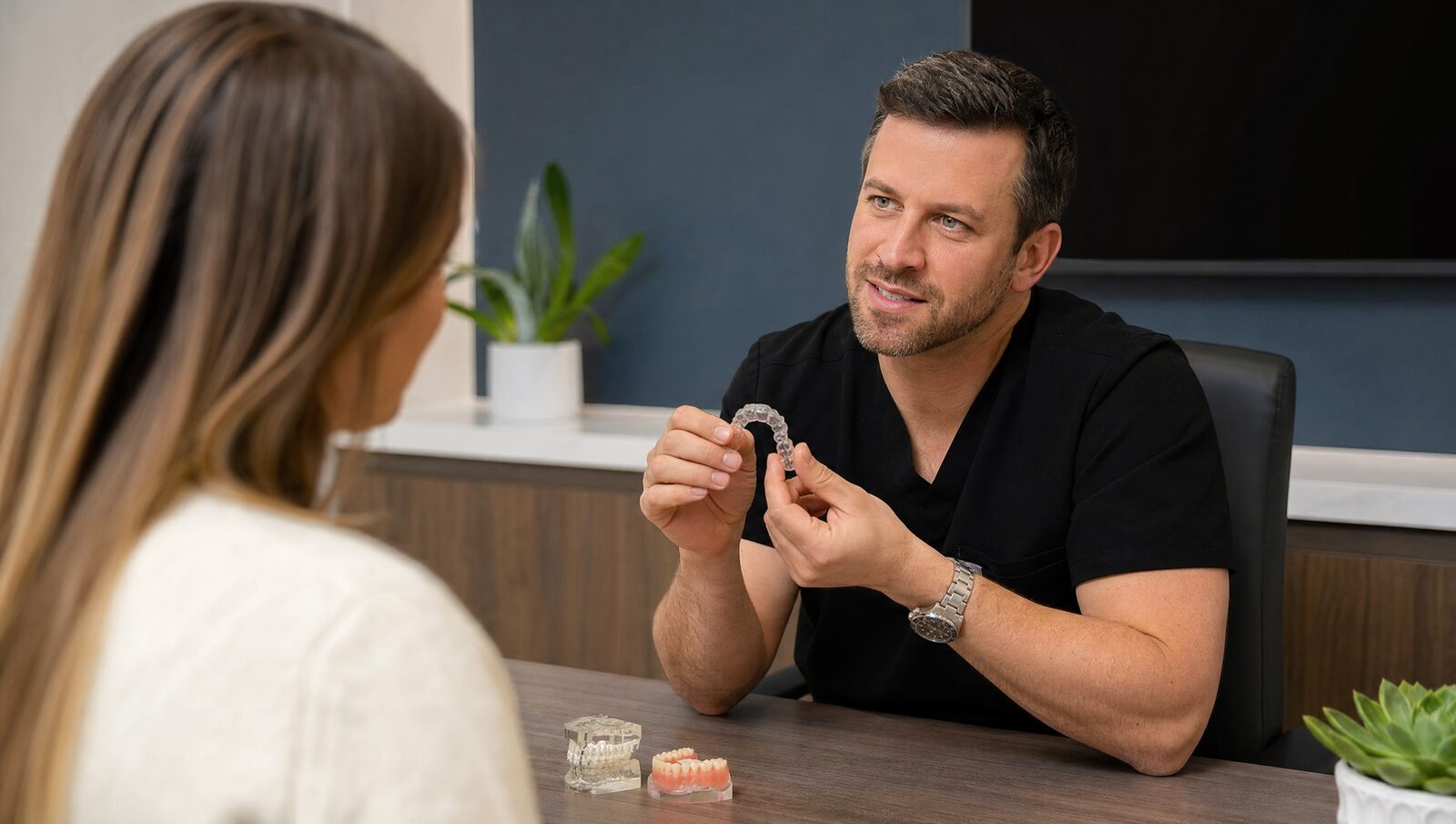
- Rinse and brush it gently with cool water when it comes out. Skip toothpaste on clear plastic; it is abrasive enough to cloud the tray.
- Keep it in its case whenever it is out of your mouth. Napkins at restaurants are where retainers go to get thrown away, and dogs find them irresistible.
- Keep it away from heat. Car dashboards, dishwashers, and boiling water all warp plastic.
- Bring it to your checkups. We can check the fit and condition in seconds during a regular cleaning visit.
One more habit worth naming: if you grind your teeth at night, tell us. Grinding chews through clear retainers, and in some cases the right answer is a plan that accounts for both retention and grinding, which is a different job than a standard night guard alone.
What A Retainer Check Actually Involves

A retainer check takes minutes and piggybacks on visits you are already making. We look at three things: whether the retainer still seats fully and passively on the teeth, whether the plastic or wire shows cracks, thinning, or calculus buildup, and whether the teeth themselves have drifted since the last visit. A bonded wire gets an extra look at each glue point, since a single debonded pad can let one tooth rotate quietly while the wire looks intact from the outside.
Two practical habits save patients the most grief. First, if you travel often, keep your previous retainer as a labeled spare in your suitcase; a lost retainer on a two-week trip is enough time for fresh treatment results to wander. Second, replace a clear retainer when it clouds, cracks, or feels loose rather than waiting for it to fail outright, because the replacement is inexpensive compared to re-treating drift. Teenagers deserve one extra nudge here: the first year after braces is precisely when wear matters most and enthusiasm fades fastest, so building the retainer into a nightly routine early, right next to brushing, is the single best predictor of whose smile still looks finished five years later.
Skipped It For Months? Here Is What To Do
First, do not force a retainer that no longer fits. If it slides on with mild pressure and just feels tight, consistent nightly wear will usually settle minor drift over a couple of weeks. If it will not seat, or it causes real pain, forcing it can damage teeth and the retainer both.
The right move is an exam. Sometimes the answer is a new retainer that locks in your teeth where they are now, and sometimes modest movement is worth correcting with a short round of aligners before new retainers hold the corrected result. What you should not do is wait another year while the drift compounds. Small relapse is cheap to address; established relapse is a treatment plan.
Frequently Asked Questions
Do I really have to wear a retainer forever?
If you want your teeth to hold their finished positions, yes, in the limited sense of a few nights a week long term. Teeth drift throughout life. The retainer is what stops that drift from undoing your investment.
How fast can teeth actually shift without one?
Fastest in the first months after treatment, when the bone and ligaments are still settling; noticeable movement can happen within weeks right after braces come off. Years later the drift is slower but never zero.
How often do retainers need replacing?
Clear plastic retainers typically last a few years before wear or cracking calls for a replacement. Hawley retainers last considerably longer with care. Bonded wires stay until they debond or the plan changes, with the bond checked at regular visits.
I had braces as a teenager and my teeth have shifted. Am I starting over?
Usually not. Adult relapse is one of the most common reasons people start short aligner treatments, and modest crowding often corrects in months rather than years. An exam and a scan tell us which category you are in, and you will get the honest version either way.
Protecting The Smile You Already Paid For
Orthodontic treatment is a real investment of time and money, and a retainer is the inexpensive insurance policy on it. A few nights a week keeps teeth where years of work put them.
If your retainer is lost, warped, or suspiciously tight, or you finished treatment elsewhere and never got a long-term plan, we can help. Our $75 New Patient Special covers a comprehensive exam and full digital X-rays, the starting point for an honest look at where your teeth stand. Riverside Dental is at 12926 Riverside Dr, Suite D, Sherman Oaks, CA 91423, serving Sherman Oaks, Studio City, Encino, Valley Village, and Van Nuys. Call (818) 784-5889 or book through our contact page.