
Your dentist or doctor performs an oral cancer screening to check for early signs of cancer in your mouth, tongue, throat, and lips. This quick and painless exam usually happens during your regular dental visits, so you don’t need a separate appointment.
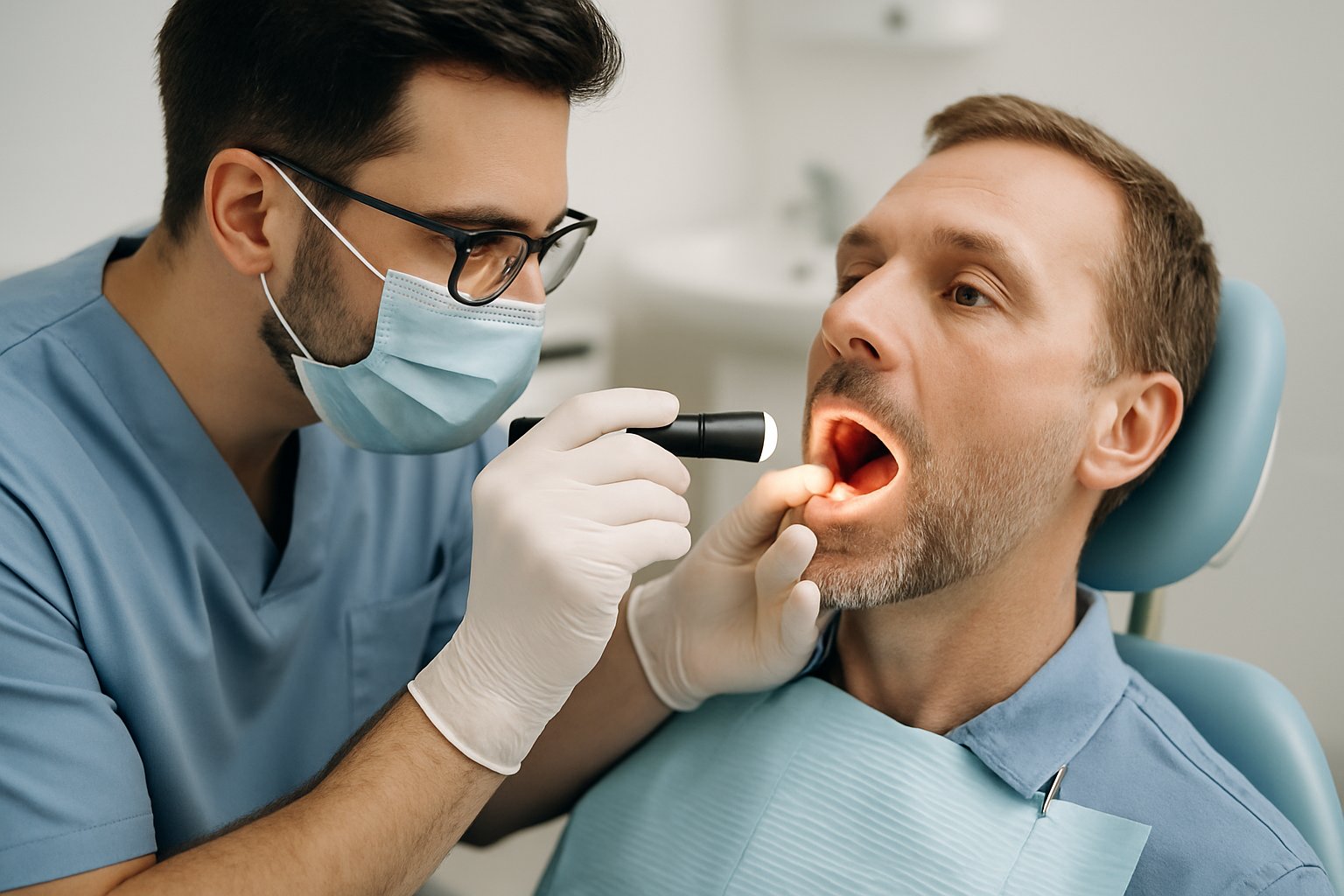
Your dentist looks closely at your mouth tissues and feels for any unusual lumps or bumps. They check your lips, gums, tongue, cheeks, and the roof and floor of your mouth for any red or white patches, sores, or other changes.
The process takes just a few minutes and does not cause discomfort. Your dentist might use special lights or dyes to spot areas that need more attention.
Key Takeaways
- Oral cancer screenings are quick, painless exams that check your mouth for early signs of cancer during regular dental visits.
- The screening includes looking at and feeling your mouth tissues to find any unusual changes or growths.
- Dentists may use special tools like lights or dyes to better identify areas that need further examination.
Step-by-Step: What to Expect During an Oral Cancer Screening
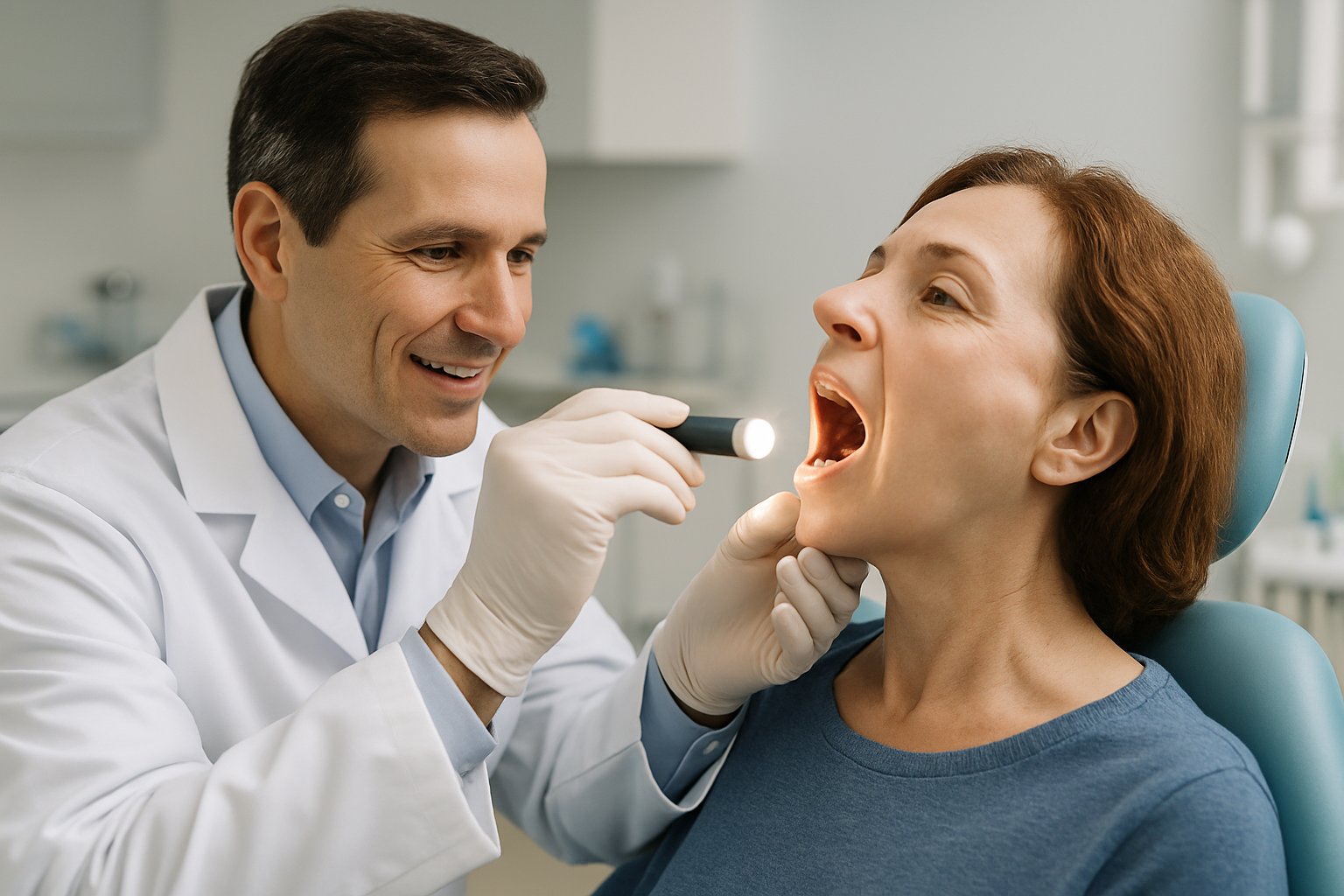
Your dentist follows a clear process for oral cancer screening. They review your health history, examine your mouth visually, and check for lumps through touch.
The whole process is quick and painless. It usually takes about 10 to 15 minutes during your regular dental visit.
Your dentist uses three main methods to check for signs of oral cancer. These include a visual examination, a physical examination using touch, and a review of your medical history.
Your dentist looks for unusual changes in your mouth. These might include mouth sores, red or white patches, or lumps.
Most screenings happen during routine dental checkups. This makes it easy to get checked regularly.
Your dentist starts by asking about your health history. They want to know about habits that might increase your risk of oral cancer.
Initial Consultation and Patient History
Common questions include:
- Do you use tobacco products?
- How much alcohol do you drink?
- Have you had mouth sores that don’t heal?
- Do you have a family history of cancer?
Tell your dentist about any changes you have noticed in your mouth. Mention sores that last more than two weeks, lumps, or areas that feel different.
Your dentist may also ask about symptoms like pain, difficulty swallowing, or changes in your voice. Sharing this information helps them assess your risk.
Visual Examination of the Oral Cavity
The visual exam is an important part of your screening. Your dentist uses a bright light to look at all areas inside your mouth.
They check your lips, gums, the roof and floor of your mouth, tongue, cheeks, and throat. Your dentist looks for red or white patches and mouth sores that look unusual.
Normal mouth tissue is pink and smooth. Your dentist may ask you to stick out your tongue so they can see all sides. They might use gauze to hold your tongue for a better view.
Physical Examination and Palpation
Your dentist uses their hands to feel for lumps inside and outside your mouth. They press gently on areas like under your tongue, the sides of your neck, your jaw, and your throat.
This helps find lumps that are not visible. Your dentist feels for hard areas or swelling.
The pressure is gentle and should not hurt. If you feel discomfort, let your dentist know.
Some dentists use special lights or dyes during the screening. These tools help them see problem areas more clearly.
Advanced Screening Methods and Next Steps
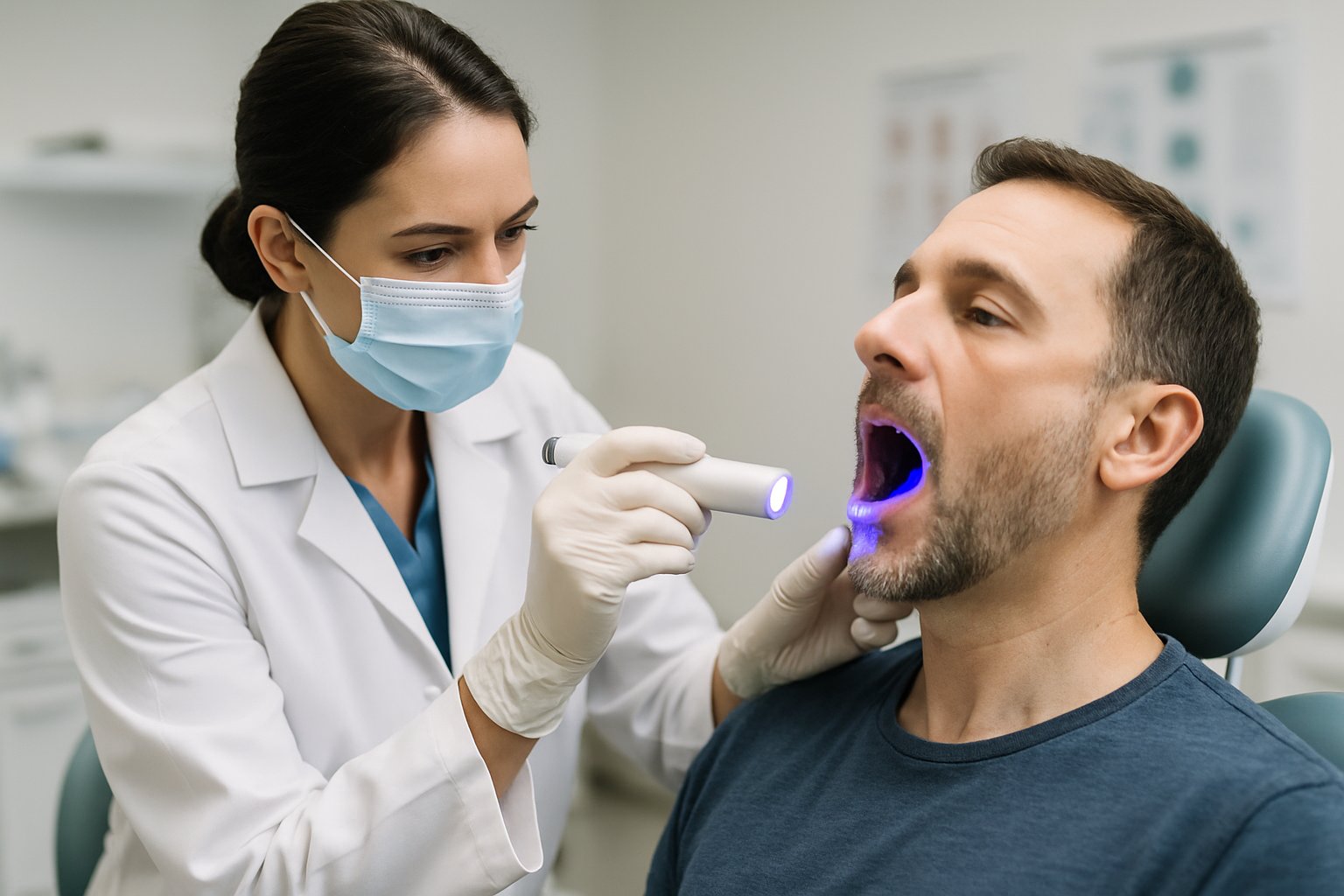
Some dentists use special tools and lights to find problems that regular exams might miss. If your dentist finds something unusual during your screening, they will explain the next steps and may order more tests.
Special Diagnostic Tools and Techniques
Your dentist might use special lights or dyes during your oral cancer screening. These tools help them see areas that look different from normal tissue.
VELscope is a blue light that makes healthy tissue glow green. Areas with problems appear dark.
Toluidine blue is a dye that sticks to abnormal cells. Your dentist applies it to suspicious areas in your mouth. The dye turns problem areas blue or dark.
Some dentists use oral cancer screening devices that work like cameras. These tools take pictures of your mouth and throat.
Brush biopsies collect cells from suspicious areas. Your dentist uses a small brush to gather cells, and a lab checks these cells for cancer or pre-cancer changes.
What Happens if Something Suspicious Is Found
Finding something unusual does not mean you have oral cancer. Most mouth sores and strange-looking areas are not cancer.
Your dentist will explain what they found. They might take photos to track changes over time.
You may need to come back in two weeks for another look. If the area does not heal or go away, your dentist will refer you to a specialist, usually an oral surgeon or ENT doctor.
The specialist might do a biopsy by taking a small piece of tissue to test. This is the only way to know for sure if cancer cells are present.
Biopsy types include:
- Punch biopsy (small round sample)
- Incisional biopsy (part of the area)
- Excisional biopsy (whole suspicious area)
Follow-Up Care and Additional Testing
After a biopsy, you wait for results. This usually takes one to two weeks.
If results show no cancer, you still need regular check-ups. Your dentist will watch the area closely during future visits.
If cancer cells are found, your doctor will order more tests to learn about the cancer’s size and spread.
Additional tests may include:
- CT scans of your head and neck
- MRI to see soft tissues
- PET scans to check for cancer spread
- Blood tests
Your doctor will create a treatment plan based on test results. Early-stage oral cancer often has good treatment outcomes.
Regular follow-up is important even after treatment. You will need oral cancer screenings every few months at first, then less often over time.
Frequently Asked Questions
Many patients have questions about oral cancer screenings, such as how the examination is performed, what symptoms to watch for, and how often to get screened. Knowing what to expect can help you feel more at ease during your appointment.
How is an oral cancer screening performed by a dental professional?
Your dentist examines the inside of your mouth with their hands and eyes. They look at your lips, gums, tongue, and the roof and floor of your mouth.
The dentist feels your neck and jaw area to check for lumps or swelling. They also check the lining of your cheeks for unusual spots or sores.
This screening takes just a few minutes during your regular dental visit. You will not feel any pain during this examination.
What symptoms might indicate the need for an oral cancer screening?
White or red patches in your mouth that do not go away may signal a problem. Sores that bleed easily or do not heal after two weeks should be checked.
Difficulty swallowing or a persistent sore throat can be warning signs. A lump in your neck or changes in your voice may also indicate concern.
Numbness in your tongue or mouth requires attention. Pain when chewing or moving your tongue should not be ignored.
How often is it recommended to undergo an oral cancer screening?
You should get screened during every routine dental checkup. Most dentists recommend visiting every six months for regular care.
Adults over 40 should be especially careful about regular screenings. People who use tobacco or drink alcohol often may need more frequent checks.
Your dentist will tell you if you need screenings more often based on your risk factors. Some patients may need screening every three to four months.
Can oral cancer be detected at an early stage during routine dental check-ups?
Yes, dentists can spot early signs of oral cancer during regular visits. Early detection often happens before you notice any symptoms.
Catching cancer early gives you the best chance for successful treatment. Many oral cancers are found during routine dental exams when they are still small.
What does the use of special lights or equipment during an oral cancer screening entail?
Some dentists use special blue lights to make abnormal tissue easier to see. These lights help identify areas that need closer examination.
The light is safe and painless to use. You may be asked to rinse with a special solution before the light examination.
Not all dental offices use these special tools. A visual and physical exam by your dentist is still the most common screening method.
Is there any preparation required from a patient prior to an oral cancer screening?
You do not need to do anything special before your screening. Brush your teeth and arrive for your regular dental appointment.
Remove any lipstick or lip balm before the exam so your dentist can see your lips clearly. Take out any removable dental appliances you wear.
Tell your dentist about any sores or changes you have noticed in your mouth. Share your medical history and any medications you take.