
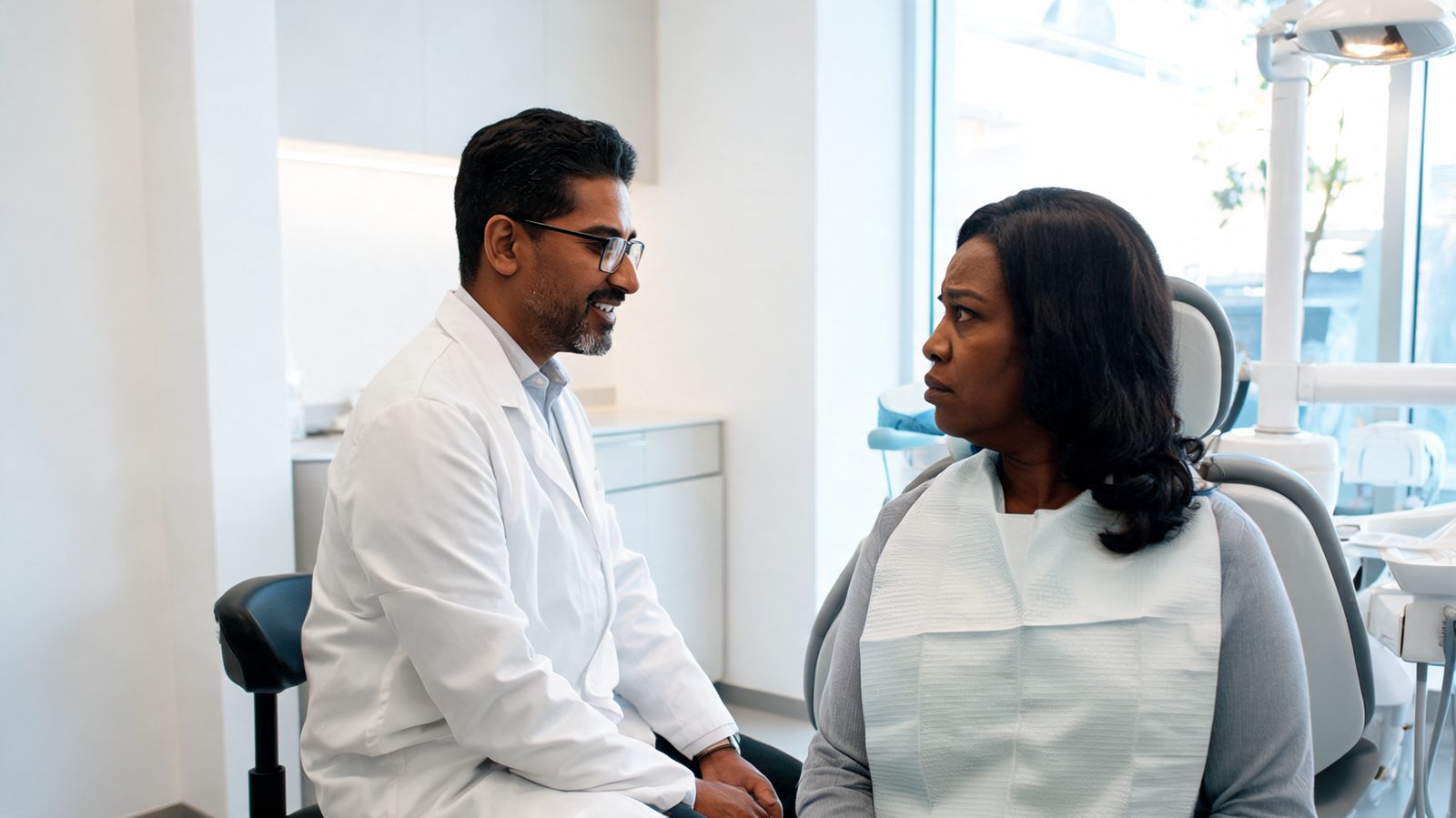
Nitrous oxide (laughing gas) is the lighter option: you breathe it through a small nose mask, stay awake, and it wears off soon after the mask comes off, so you can usually drive yourself home. Oral sedation is a prescription pill taken before your visit that relaxes you more deeply, and you will need someone to drive you home.
With either one you stay conscious and can respond to your dentist. At Riverside Dental Sherman Oaks we offer both, always alongside local anesthetic to keep the treatment area numb. General anesthesia is not used in our office.
This guide compares how each one feels, how long it lasts and how to decide which fits you. If you already know dental visits make you anxious, call us at (818) 784-5889 and we can talk through your options before you book treatment.
TL;DR
Nitrous oxide is breathed through a small nose mask, works within minutes, keeps you awake and wears off quickly, so you can drive yourself home. Oral conscious sedation is a prescription pill that relaxes you more deeply; you may not remember much of the visit, and you need a ride home. Milder nerves often fit nitrous oxide, while stronger anxiety or a longer visit may fit oral sedation. Your dentist reviews your health and medications before recommending either one.
Key Takeaways
- Nitrous oxide is the lighter, quicker option, and you can drive yourself home afterward.
- Oral sedation relaxes you more deeply, and you will need someone to drive you home.
- With both options you stay conscious and can respond to your dentist.
- Local anesthetic is still used with either one to keep the area numb.
- Your medical history and current medications help decide which option is safest for you.
Nitrous Oxide vs Oral Sedation at a Glance
Here is how the two compare on the questions patients ask most.
Nitrous oxide (laughing gas)
- How you take it: breathed in through a small mask over your nose
- How it feels: calm and relaxed, sometimes light-headed or tingly
- Awake? Yes, you can hear and answer your dentist
- Wears off: soon after the mask is removed
- Driving home: you can usually drive yourself
Oral conscious sedation
- How you take it: a prescription pill taken before your appointment
- How it feels: drowsy and deeply relaxed, and you may not remember much
- Awake? Yes, though you may doze off and can still respond
- Wears off: recovery can take up to 24 hours, so plan to rest
- Driving home: someone else needs to drive you
If you want a broader overview of every level of sedation, including the deeper options used in hospitals and surgery centers, our post on what sedation dentistry is covers the full range.
How Nitrous Oxide Works

Nitrous oxide is mixed with oxygen and breathed through a small mask that rests over your nose. You simply breathe normally. According to the American Dental Association’s MouthHealthy page on nitrous oxide, you should start to feel the effects within a few minutes. Some people feel light-headed or notice tingling in their arms and legs, and some say their arms and legs feel heavy. The goal is that you feel calm and comfortable.
Nitrous oxide is not meant to put you to sleep. You can still hear your dentist and respond to directions the whole time. Your dentist can adjust how much you receive during the visit, and when treatment is finished you breathe pure oxygen, which quickly clears the gas out.
Because the effects fade soon after the mask comes off, you can usually drive yourself home and get on with your day.
How Oral Conscious Sedation Works

Oral conscious sedation is a prescription medication you take before your appointment. It works more deeply than nitrous oxide. You will feel drowsy and very relaxed, and many people do not remember much about the visit afterward.
You are still conscious with oral sedation, and you can respond when your dentist asks you to open wider or turn your head. Cleveland Clinic’s guide to sedation dentistry notes that the medication can make you very tired and that some people fall asleep during treatment, and if that happens your dentist simply wakes you when needed.
The tradeoff is recovery time. The effects last much longer than nitrous oxide, so you need a trusted adult to drive you home. Cleveland Clinic advises not driving for 24 hours after oral sedation and taking it easy the next day.
Not sure which option is right for you? We review your medical history and your level of anxiety, then recommend the safest choice. Call or book online.
Call (818) 784-5889Book onlineWhich One Is Right for You?
Your dentist weighs how anxious you feel, how long the procedure will take, your health and your preferences.
Nitrous oxide may suit you if
- You feel mildly or moderately nervous about dental visits
- You want to drive yourself and get back to your day
- Your visit is a routine one, like a cleaning or a filling
- You would like to stay fully aware of what is happening
Oral sedation may suit you if
- Your dental anxiety is strong enough that you have put off care
- You have a sensitive gag reflex or a hard time sitting still in the chair
- You need a longer visit or several procedures done in fewer appointments
- You would rather not remember much of the appointment
Simple comforts like headphones, breaks and a hand signal to pause still help too. Our post on how dentists help nervous patients relax covers those techniques.
Safety, Side Effects and Who Should Wait
Sedation is given only after your dentist reviews your medical history, and you are monitored throughout treatment. A few things are worth knowing before your visit.
- Your medications matter. Some affect how sedation works, so bring a full list. Your dentist may ask you to pause certain ones.
- You may need to fast. For some types of sedation, your dentist may ask you to avoid food and drink for several hours beforehand. Follow the instructions you are given.
- Side effects are usually short lived. Cleveland Clinic lists dry mouth, drowsiness, headaches, and nausea or vomiting as possible side effects, and most go away within a day.
- Pregnancy. Regular checkups are still important during pregnancy, but your dentist may suggest waiting until after the baby arrives for procedures that involve sedation.
If you still feel groggy 24 hours after an appointment with sedation, or you have ongoing nausea or vomiting, call your dentist.
What to Expect at Riverside Dental
1. Consultation and health review
We listen to your concerns and review your medical history to make sure you are a safe candidate for sedation.
2. Sedation planning
We explain your options, give you instructions to follow beforehand, and schedule your treatment.
3. The day of your visit
Nitrous oxide is given in the office. With oral sedation, you take your medication in the office or beforehand, depending on the plan. Local anesthetic keeps the treatment area numb either way.
4. Recovery and aftercare
Nitrous oxide wears off quickly. With oral sedation, you will need a driver. We give you aftercare instructions before you leave.
Anxiety free, comfort focused dentistry is one of Dr. Aryan Sadighim’s areas of expertise, and Dr. Ruben Soleymani’s gentle touch and calming manner make him popular with patients who feel anxious. You can read more on our sedation dentistry in Sherman Oaks page, and if fear has kept you away for a while, our dental anxiety page explains how we help.
Frequently Asked Questions
Is nitrous oxide or oral sedation stronger?
Oral conscious sedation is the deeper of the two. Nitrous oxide gives a lighter, quicker sense of calm that wears off soon after the mask is removed, while oral sedation makes you drowsy and deeply relaxed, and its effects last much longer.
Can I drive myself home after nitrous oxide?
Usually, yes. The effects of nitrous oxide fade soon after the mask comes off, so most people can drive themselves home. After oral sedation you need someone else to drive you.
Will I be asleep during oral sedation?
No. With oral conscious sedation you stay conscious and can respond to your dentist, although you may feel very drowsy, doze off, and not remember much of the visit.
Do I still get a numbing shot with sedation?
Yes. Sedation helps you relax, and local anesthetic numbs the treatment area. With either option, the area being treated is numbed so the procedure stays comfortable.
Does Riverside Dental offer general anesthesia?
No. We offer nitrous oxide and oral conscious sedation, together with local anesthetic. General anesthesia is not used in our office.
Feel Calm at Your Next Visit
If nerves have made you put off the dentist, a little help to relax can make care much easier. It starts with a conversation about your health and your worries.
We are at 12926 Riverside Dr, Suite D, Sherman Oaks, CA 91423, an easy drive from Studio City, Encino, Valley Village, and Van Nuys. Call (818) 784-5889 or book online. New to our office? Our $75 New Patient Special includes a comprehensive exam and full digital X-rays.